Crispy Garlic Butter Brussels Cabbage
Equipment
- Large Cast Iron Skillet
- Chef’s Knife
- Cutting Board
Ingredients
Main Ingredients
- 1 lb Brussels Sprouts trimmed and halved (quarter if large)
- 0.5 head Savoy Cabbage cored and shredded into 1/4 inch ribbons
- 4 slices Thick-cut Bacon chopped into lardons
- 2 tbsp Unsalted Butter
- 3 cloves Garlic freshly minced
- 1 tsp Apple Cider Vinegar or fresh lemon juice
- 1 pinch Salt and Black Pepper to taste
Instructions
- Prep the Vegetables: Trim the woody ends off the Brussels sprouts and slice them in half vertically. Remove the core from the cabbage and slice it into thin 1/4 inch strips. Mince the garlic and chop the bacon.
- Render the Bacon: Place chopped bacon in a cold, large cast-iron skillet. Turn heat to medium and cook for 5-7 minutes until crispy. Remove bacon bits with a slotted spoon, leaving the rendered fat in the pan.
- Sear the Sprouts: Increase heat to medium-high. Place Brussels sprouts cut-side down in the hot fat. Do not touch them for 3-4 minutes to achieve a dark golden-brown char. Stir and cook for another 2 minutes.
- Wilt and Finish: Add the butter to the skillet. Once foamy, toss in the shredded cabbage and sauté vigorously until wilted. Add minced garlic, salt, and pepper; cook for 2-3 minutes. Stir the crispy bacon back in, remove from heat, and splash with vinegar or lemon juice before serving.
Notes
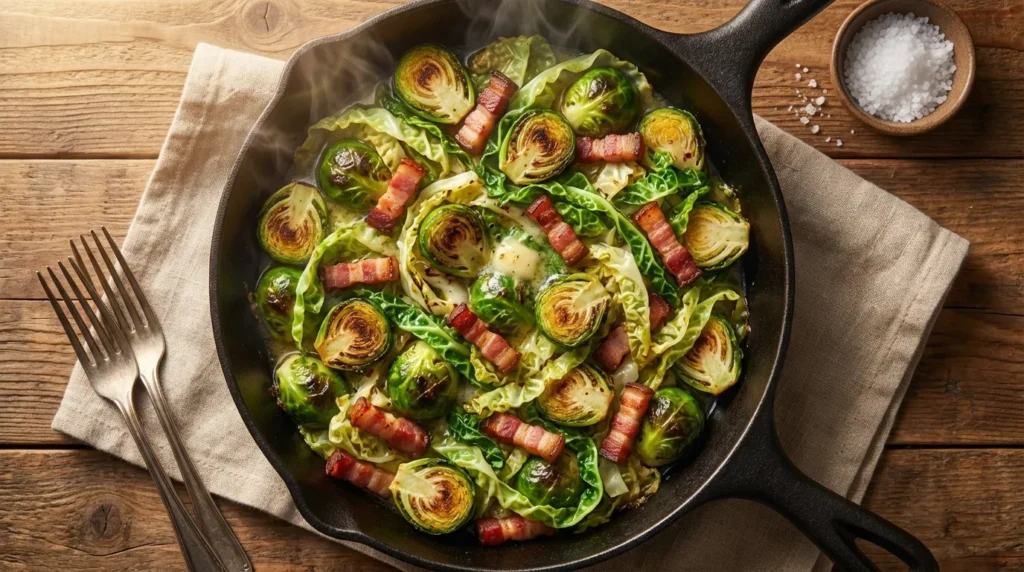
Imagine the smell of smoky bacon fat rendering slowly in a cast-iron skillet, mingling with the nutty aroma of charred brassicas and sweet, caramelized garlic. That is exactly what you get with this dish. If you have been searching for the ultimate side dish that converts even the staunchest vegetable skeptics, you have found it.
This isn’t just a bowl of steamed greens; it is a textural masterpiece. By combining the tender, ribbon-like strands of Savoy cabbage with the hearty, caramelized crunch of Brussels sprouts, we create a dish that feels far more luxurious than the sum of its parts. I developed this brussels cabbage recipe specifically for weeknights when I needed something high-impact but low-effort. It’s vibrant, savory, and incredibly fast.
I remember the first time I served this at a family Thanksgiving. There was a massive turkey on the table, yet the platter that was scraped clean first was this sauté. The secret lies in the heat management—getting that perfect sear without turning the vegetables into mush. Whether you are pairing it with a holiday roast or a simple weeknight chicken breast, this brussels cabbage recipe is about to become a permanent fixture in your culinary rotation.
Why You’ll Love This Brussels Cabbage Recipe
- Double the Texture: By using two types of brassicas, you get the soft, melt-in-your-mouth quality of wilted cabbage alongside the satisfying crunch of seared sprouts.
- One-Pan Wonder: This entire dish comes together in a single large skillet, meaning fewer dishes for you to wash later.
- Nutrient Dense: This is a powerhouse of Vitamin C and K, but because it’s cooked in good fats (bacon or butter), your body can actually absorb those fat-soluble vitamins better.
- Ready in Under 20 Minutes: Unlike roasting, which can take 40+ minutes, this stovetop method relies on high heat and surface area to cook everything rapidly.
Ingredients & Substitutions
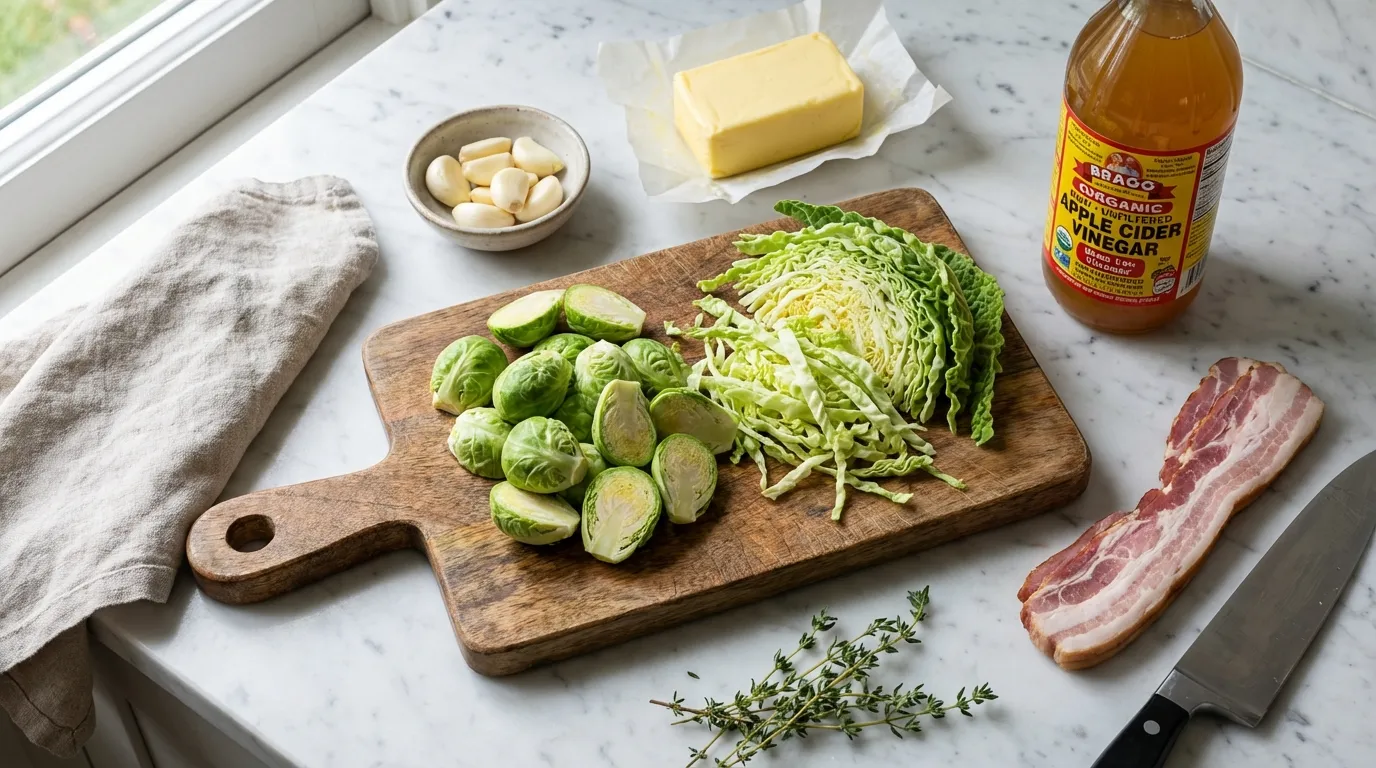
To make a restaurant-quality dish, ingredient selection is paramount. Here is what you need and why:
- Brussels Sprouts: Look for small to medium-sized sprouts that are tightly closed. The smaller ones tend to be sweeter and less bitter. If you only have large ones, quarter them instead of halving to ensure they cook through.
- Cabbage: I highly recommend using Savoy cabbage for this brussels cabbage recipe. Its crinkly leaves hold onto the garlic butter sauce beautifully. However, standard Green cabbage works well too—it just takes a minute longer to soften.
- Bacon: Thick-cut bacon is essential here. We need the rendered fat to cook the vegetables, and the meaty bits provide a salty contrast.
Vegetarian Option:* Skip the bacon and use 2 tablespoons of olive oil or smoked paprika for that savory depth.
- Butter: Use unsalted butter so you can control the sodium levels, especially since bacon is already salty.
- Garlic: Fresh cloves only, please. Jarred garlic lacks the spicy, aromatic punch needed to cut through the richness of the cabbage.
- Acid: A splash of apple cider vinegar or fresh lemon juice at the end is non-negotiable. It brightens the dish and cuts through the fat.
- Nuts (Optional): Toasted pecans or walnuts add a lovely earthiness that complements this cabbage brussel sprouts recipe perfectly.
How to Make Brussels Cabbage Recipe
This method relies on timing. We want to layer the ingredients so everything finishes cooking at the exact same moment.
Phase 1: The Prep Work
Mise en place (having everything ready) is crucial here because the cooking happens fast.
1. Prep the Sprouts: Trim the woody ends off the Brussels sprouts and slice them in half vertically. If they are large, quarter them.
2. Shred the Cabbage: Remove the core from your cabbage and slice it into thin strips, about 1/4 inch thick. You want ribbons, not chunks.
3. Aromatics: Mince your garlic and chop your bacon into bite-sized lardons.
Phase 2: Rendering the Base
1. Place your bacon pieces in a cold, large skillet (cast iron is best). Turn the heat to medium.
2. Chef’s Tip: Starting with a cold pan allows the fat to render out slowly without burning the meat. Cook until the bacon is crispy (about 5-7 minutes).
3. Remove the crispy bacon bits with a slotted spoon and set aside, leaving that liquid gold (bacon fat) in the pan.
Phase 3: The Hard Sear
1. Increase the heat to medium-high. Place the Brussels sprouts in the hot fat, cut-side down.
2. Crucial Step: Do not touch them! Let them sear undisturbed for 3-4 minutes. We are looking for a deep, dark golden-brown color (the Maillard reaction). This is the flavor foundation of a great brussels cabbage recipe.
3. Once charred, give them a stir and cook for another 2 minutes until they just start to tenderize.
Phase 4: Wilting and Marrying Flavors
1. Add the butter to the skillet. Once foamy, toss in the shredded cabbage.
2. Sauté vigorously. The volume will look like too much at first, but the cabbage will wilt down rapidly.
3. Add the minced garlic, salt, and black pepper. Continue tossing for 2-3 minutes until the cabbage is tender but still has a slight “bite” (al dente).
4. Final Touch: Stir the crispy bacon back in. Remove from heat and immediately splash with your vinegar or lemon juice. Taste and adjust salt if needed.
Expert Tips for Perfect Results
I have made this brussels cabbage recipe dozens of times, and here are the small adjustments that separate a home cook from a pro:
- Don’t Overcrowd the Pan: If your skillet is too small, the vegetables will release moisture and steam rather than sear. If you don’t have a 12-inch skillet, cook the sprouts and cabbage in two separate batches and combine them at the end.
- The “Cut-Side Down” Rule: When making any brussel sprout cabbage dish, always prioritize getting color on the flat side of the sprout. That caramelized surface is where the sweetness lives, counteracting the natural bitterness of the vegetable.
- Room Temperature Ingredients: If possible, let your sprouts sit out for 20 minutes before cooking. Ice-cold vegetables cool down the pan temperature too quickly, hindering that beautiful sear we are aiming for.
- Garlic Timing: Never add the garlic at the beginning with the sprouts. It will burn and turn bitter before the vegetables are cooked. Always add it in the last 2-3 minutes of cooking.
Storage & Reheating
This dish is best eaten fresh, but leftovers can be delicious if handled correctly.
- Fridge: Store in an airtight container for up to 3-4 days. The cabbage will soften further as it sits.
- Freezing: I do not recommend freezing this brussels cabbage recipe. The cabbage releases too much water upon thawing, resulting in a soggy, unappealing texture.
- Reheating: Avoid the microwave if you want to maintain the texture. Reheat in a hot skillet with a tiny dab of butter for 2-3 minutes until sizzling. This “re-fries” the edges and brings the crunch back.
Serving Suggestions
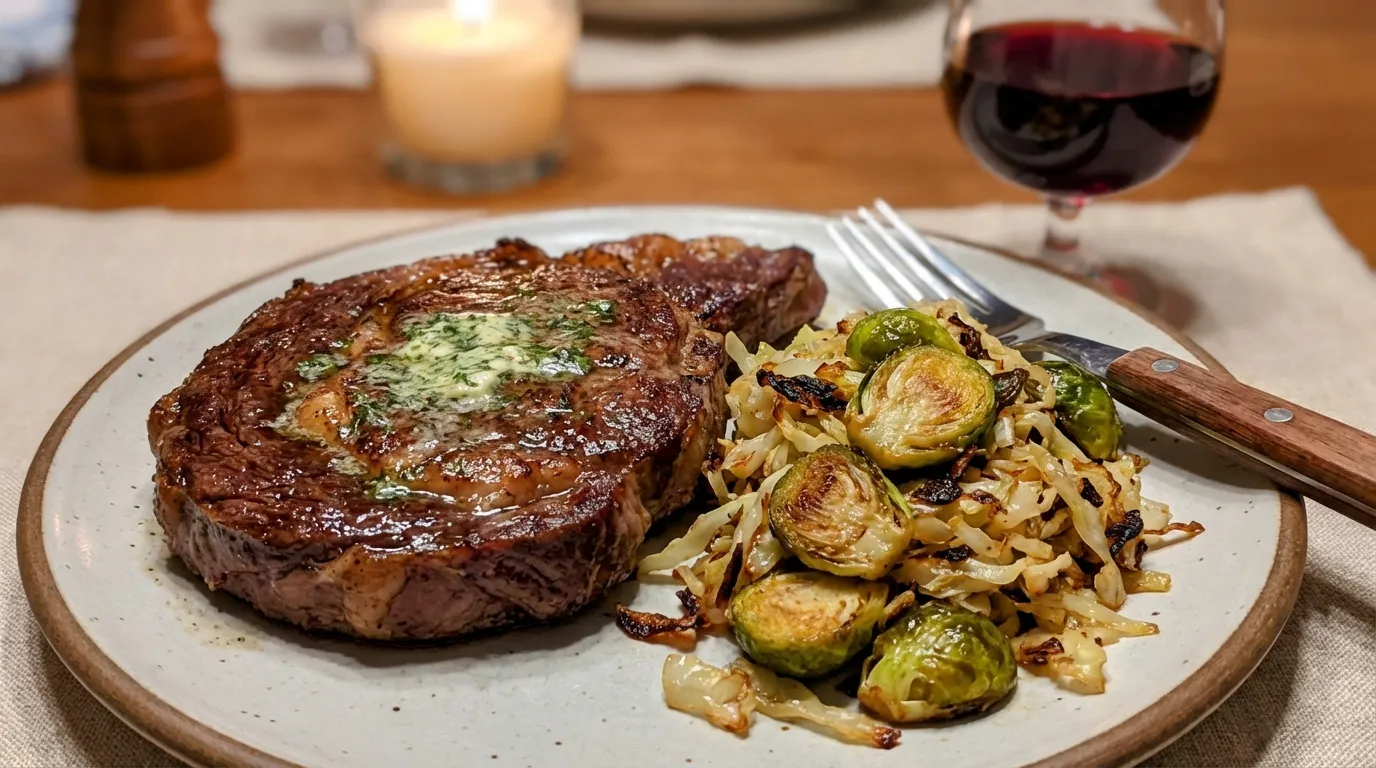
This dish is incredibly versatile. It has enough savory depth to stand up to red meats but is light enough for fish.
- Main Course Pairings: It is the perfect partner for a pan-seared ribeye, roast chicken, or glazed pork chops.
- Starch Pairing: If you are looking for a carb to round out the meal, you need something that doesn’t compete for stovetop space. I highly recommend making a fluffy microwave baked potato while the cabbage cooks. It’s a time-saver that keeps your oven free.
- The Brunch Twist: Top the leftover brussels cabbage hash with a poached or fried egg for an incredible low-carb breakfast.
Conclusion
There is a reason this brussels cabbage recipe has become a staple in my kitchen. It transforms humble, affordable ingredients into a dish that feels sophisticated and tastes indulgent. It’s smoky, buttery, crispy, and tender all at once.
Cooking doesn’t have to be complicated to be delicious. By treating the vegetables with respect—searing rather than steaming, and seasoning aggressively—you unlock flavors that boiling simply cannot achieve.
Did you try this recipe? I’d love to hear how it turned out! Leave a comment and a rating below.
Common Questions About This Brussels Cabbage Recipe
What is the difference between cabbage and Brussels sprouts?
While they look different, they are actually close relatives! Both are cultivars of the same species, cabbage and brussel sprouts (Brassica oleracea). Brussels sprouts are essentially tiny cabbages that grow along a thick stalk, while standard cabbage grows as a single large head on the ground. This is why their flavors pair so effortlessly in this dish.
Can I roast this instead of sautéing?
Yes, but the texture will change. To roast, toss the brussels cabbage mixture in oil and spread on a baking sheet. Roast the sprouts for 15 minutes at 400°F (200°C) first, then add the cabbage and roast for another 10 minutes. If you add them at the same time, the cabbage will burn before the sprouts are tender.
Is this recipe Keto or Low Carb?
Absolutely. This brussels cabbage recipe is naturally low in carbohydrates and high in fiber and healthy fats, making it perfect for Keto, Paleo, and Whole30 (if you use compliant bacon) diets.
Can I use purple cabbage?
You can, and it will taste delicious, but be aware that purple cabbage will bleed its color into the Brussels sprouts and butter, turning the entire dish a shade of blue-purple. For the most appetizing visual presentation, Green or Savoy cabbage is preferred.