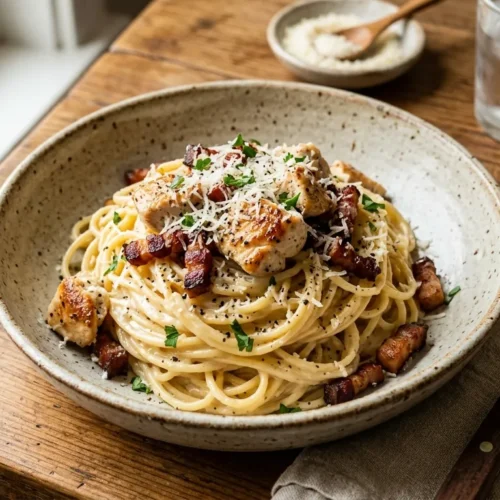
The Ultimate Chicken Carbonara
Equipment
- Large Skillet
- Large Pasta Pot
- Tongs
Ingredients
Main Ingredients
- 1 lb spaghetti, linguine, or rigatoni bronze-die extruded preferred
- 6 oz guanciale or pancetta chopped into small cubes
- 1 lb boneless, skinless chicken breasts cut into bite-sized pieces
- 1 cup Pecorino Romano freshly grated
- 0.5 cup Parmigiano Reggiano freshly grated
- 3 whole eggs room temperature
- 2 egg yolks room temperature
- 1 tbsp black pepper freshly cracked
- 1 pinch salt for pasta water and chicken
Instructions
- Phase 1: Prep Work – Bring a large pot of heavily salted water to a boil. In a medium bowl, whisk together the eggs, egg yolks, Pecorino Romano, Parmigiano Reggiano, and black pepper until it forms a thick paste. Chop the pork and chicken, seasoning the chicken lightly with salt.
- Phase 2: Cooking the Base – Drop the pasta into the boiling water and set a timer for one minute less than al dente. Place the chopped pork in a cold skillet over medium-low heat to render the fat. Once crispy, remove the pork with a slotted spoon. Turn heat to medium-high, add the seasoned chicken to the pork fat, and sear for 3 minutes. Toss and cook until internal temp reaches 165°F.
- Phase 3: Finishing Touches – Transfer the cooked pasta directly into the skillet with the chicken using tongs. Do not drain the pasta water! Toss pasta and chicken together.
- Crucial Step – Remove the skillet completely off the heat. Pour the egg and cheese paste over the pasta. Toss vigorously and continuously, adding a splash of hot pasta water (about 1/4 cup). Keep tossing until a thick, glossy cream forms. Fold the crispy pork back in and serve immediately.
Notes
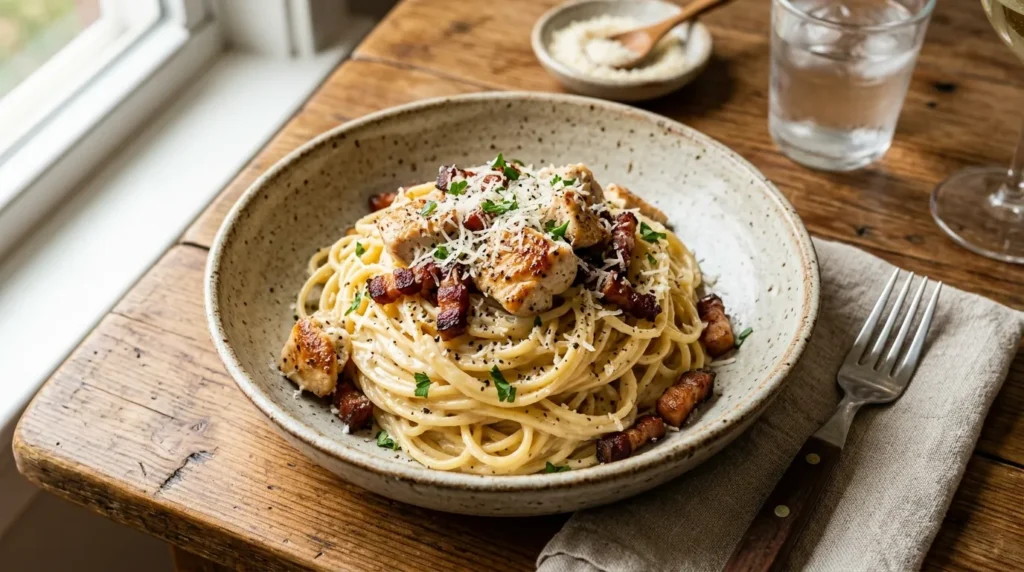
Imagine twirling your fork into a mountain of al dente spaghetti, coated in a glossy, rich sauce that smells intensely of toasted black pepper and nutty cheese. Now, add juicy, golden-seared chicken and crispy bites of salty pancetta to the mix. This is the absolute best chicken carbonara recipe you will ever make in your own kitchen. My family fights over the last piece of chicken every time I serve this, and it has easily become the most requested meal on busy weeknights.
Traditionalists might argue about adding poultry to a Roman classic, but once you taste how the savory pan drippings elevate the meat, you will be hooked. When I first started cooking for my family, I used heavy cream in my pasta sauces. Then, I learned the traditional method of emulsifying eggs, cheese, and starchy pasta water. The result is a melt-in-your-mouth, silky texture that feels incredibly decadent. This specific chicken carbonara recipe takes that beloved egg-based sauce and turns it into a protein-packed powerhouse that leaves everyone at the table completely satisfied.
Why You’ll Love This chicken carbonara recipe
- Authentic Creaminess Without Cream: The luxurious texture comes entirely from an emulsion of eggs, hard cheese, and starchy pasta water. No heavy cream is needed or wanted here.
- Ready in Under 30 Minutes: While the pasta boils, you cook the meat and whisk the sauce. Everything comes together in the time it takes to cook a box of spaghetti.
- One-Pan Magic: Aside from your pasta pot, all the magic happens in a single large skillet. The chicken cooks in the rendered pork fat, absorbing all those incredible savory flavors.
- Foolproof Technique: If you have ever been terrified of scrambling the eggs in a chicken carbonara recipe, my step-by-step tempering method guarantees a glossy, smooth finish every single time.
Ingredients & Substitutions
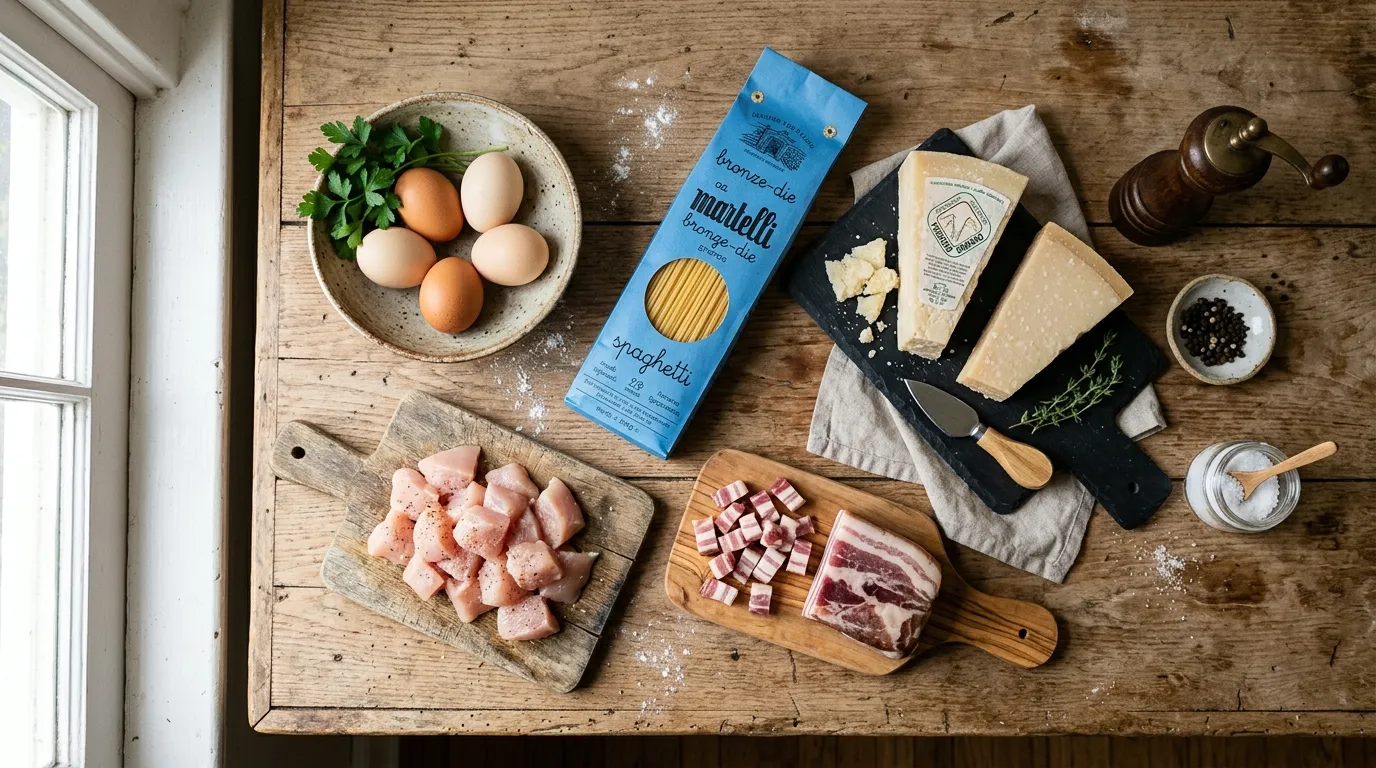
To achieve restaurant-quality results, the ingredients you choose matter immensely. Because this dish relies on just a few components, quality is everything.
The Pasta
I highly recommend using a high-quality bronze-die extruded spaghetti, linguine, or rigatoni. Bronze-die pastas have a rough, chalky exterior that grips the sauce beautifully, ensuring every noodle is coated.
The Pork
Guanciale (cured pork jowl) is the traditional choice and offers a deeply savory, slightly sweet flavor. However, high-quality pancetta or even thick-cut, unsmoked bacon are excellent substitutes. The goal is to render the fat slowly until the meat is crispy.
The Chicken
Boneless, skinless chicken breasts or thighs work perfectly. I prefer breasts cut into bite-sized pieces for this dish. They cook quickly and soak up the rendered pork fat, keeping them incredibly juicy.
The Cheese
Please, leave the green shaker can at the grocery store. You need freshly grated cheese for it to melt properly into a smooth sauce. A blend of Pecorino Romano (for sharp, salty bite) and Parmigiano Reggiano (for nutty depth) is the chef’s secret to the perfect chicken carbonara.
The Eggs
Use the freshest, highest-quality eggs you can find, as they are the foundation of your sauce. You will need a mix of whole eggs and extra yolks for maximum richness. Always let your eggs come to room temperature before starting; cold eggs drop the temperature of the pasta and are harder to emulsify.
Black Pepper
Freshly cracked black pepper is non-negotiable. Pre-ground pepper tastes like dust in comparison. The floral, spicy bite of fresh pepper cuts through the richness of the eggs and cheese.
How to Make This chicken carbonara recipe
Phase 1: Prep Work
Before you turn on the stove, prep everything. This dish moves incredibly fast at the end, and you cannot stop to grate cheese or chop chicken while the pasta is hot.
First, bring a large pot of heavily salted water to a boil. In a medium bowl, whisk together your room-temperature eggs, egg yolks, freshly grated Pecorino Romano, Parmigiano Reggiano, and a generous amount of freshly cracked black pepper. Whisk until it forms a thick, golden paste. Set this aside. Chop your pork into small cubes and cut your chicken into bite-sized pieces, seasoning the chicken lightly with salt.
Chef’s Tip: Do not over-salt the chicken. The cured pork and the Pecorino Romano are both incredibly salty, so you want to use a light hand with additional salt until you taste the final dish.
Phase 2: Cooking the Base
Drop your pasta into the boiling water and set a timer for one minute less than the package instructions for al dente.
Place a large, cold skillet on the stove, add the chopped pancetta or guanciale, and turn the heat to medium-low. Starting in a cold pan allows the fat to render out slowly, leaving you with crispy pork bites and a pool of liquid gold. Once crispy, use a slotted spoon to remove the pork, leaving the fat in the pan.
Turn the heat up to medium-high. Add your seasoned chicken pieces in a single layer. Let them sear undisturbed for about 3 minutes to develop a golden crust, then toss and cook until they reach an internal temperature of 165°F. The chicken will absorb the smoky, salty flavors of the rendered fat. It is truly the best part of this chicken carbonara recipe.
Phase 3: Finishing Touches
When your pasta is done, use tongs to transfer the noodles directly from the pot into the skillet with the chicken. Do not drain the pasta water in the sink! You need that starchy water to build your sauce. Toss the pasta and chicken together.
Now for the most critical step: take the skillet completely off the heat. I cannot stress this enough. If you leave the pan on the hot burner, you will end up with chicken and scrambled eggs.
Pour your egg and cheese paste over the pasta. Toss vigorously and continuously. As you toss, add a splash of the hot, starchy pasta water (about 1/4 cup to start). The residual heat from the pasta will gently cook the eggs, while the starchy water emulsifies with the fat and cheese to create a thick, glossy cream. When mixing the chicken with carbonara sauce, keep your tongs moving rapidly until the sauce clings to every noodle. Fold the crispy pork back into the pan.
Expert Tips for Perfect Results
Taking your chicken carbonara recipe from good to restaurant-tier requires a few insider kitchen tricks. After testing this dozens of times, here is what you need to know:
- Temper the Eggs: If you are extremely worried about scrambling the eggs, you can temper them. Take a tablespoon of the hot pasta water and rapidly whisk it into the egg and cheese mixture before adding the mixture to the pan. This gently raises the temperature of the eggs.
- Pasta Water is Liquid Gold: The starch released from the pasta into the boiling water is the magical binding agent that forces the fat and water to mix. Always save at least a cup of pasta water before draining. If your sauce looks too thick or sticky, add another splash of water and keep tossing.
- Off the Heat: I will say it again because it is the number one mistake home cooks make. The skillet must be completely removed from the heat source before the eggs touch the pan. The heat of the freshly boiled noodles is more than enough to cook the eggs safely to create a silky sauce.
Storage & Reheating
Pasta dishes with egg-based sauces are notoriously difficult to store and reheat, but it is not impossible if you know the right technique.
If you have leftovers of this chicken carbonara recipe, store them in an airtight container in the refrigerator for up to 3 days. I do not recommend freezing this dish, as the emulsion will break and the texture will become grainy upon thawing.
To reheat, avoid the microwave if possible, as it will instantly scramble the eggs and dry out the chicken. Instead, place the leftover pasta in a skillet over medium-low heat. Add a splash of milk or water to the pan and gently toss with tongs until warmed through. The added moisture helps revive the sauce, bringing back that creamy texture without overcooking the eggs.
Serving Suggestions
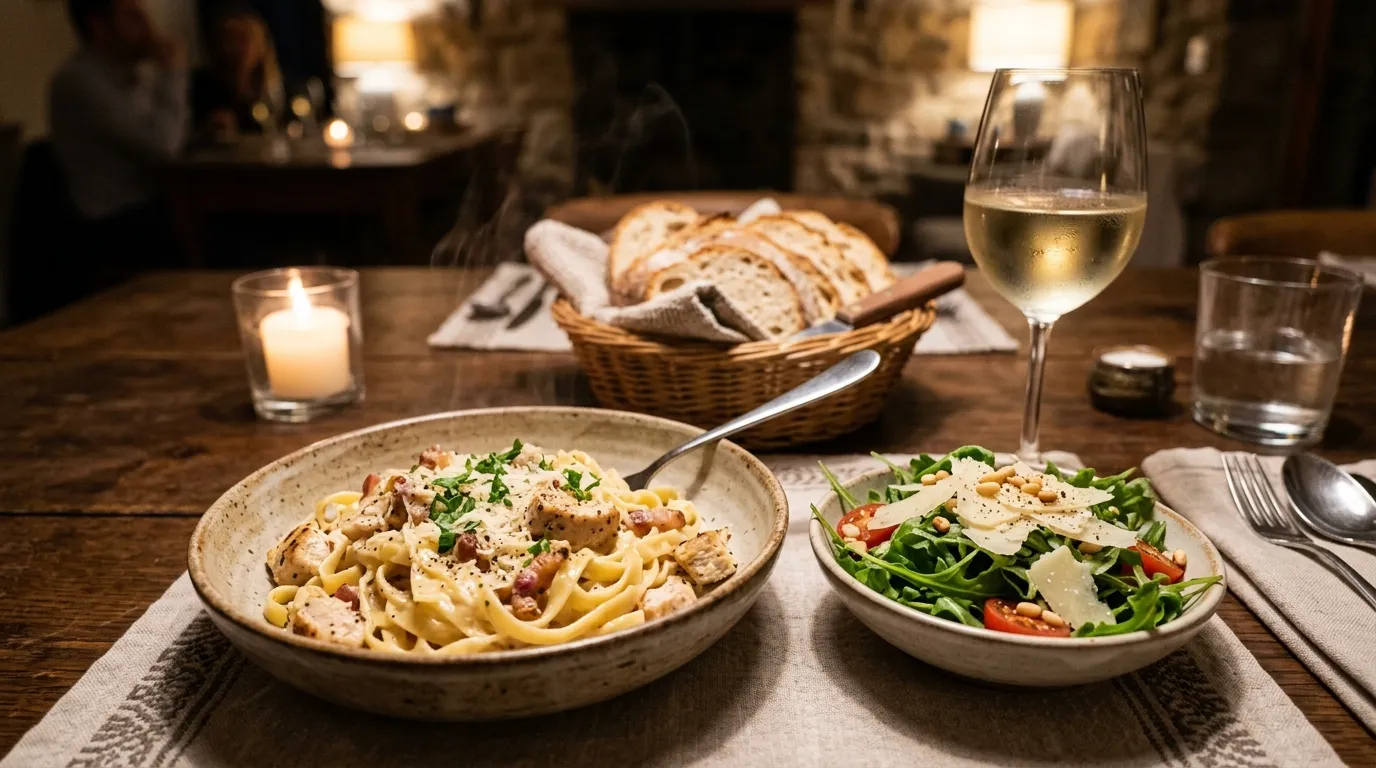
Because this chicken carbonara recipe is incredibly rich and savory, it pairs best with sides that offer a bright, acidic contrast. A simple arugula salad dressed with lemon juice, olive oil, and shaved parmesan is my go-to side dish. The peppery bite of the arugula cuts right through the richness of the egg yolk sauce.
You also cannot go wrong with a basket of warm, crusty bread to mop up any leftover sauce at the bottom of the bowl. If you love creamy chicken pastas, you should also try my favorite garlic parmesan chicken pasta recipe, which is another fantastic weeknight dinner that always gets rave reviews. Pair your meal with a crisp, dry white wine like Pinot Grigio or Sauvignon Blanc to cleanse the palate between bites.
Conclusion
There is a reason this dish has stood the test of time, and adding seared, juicy poultry only makes it better. By mastering the simple technique of emulsifying eggs, cheese, and starchy water, you unlock a culinary skill that will impress anyone who sits at your table. This chicken carbonara recipe proves that you do not need heavy cream to create a luxurious, comforting bowl of pasta.
The next time you need a meal that feels gourmet but takes less than 30 minutes to throw together, grab your skillet and give this a try. Did you make this chicken carbonara recipe? Rate the recipe below and let me know how it turned out in the comments!
Common Questions About This chicken carbonara recipe
Can I use cream in this chicken carbonara recipe?
Traditionally, no. Authentic carbonara gets its creamy texture strictly from the emulsion of eggs, cheese, and pasta water. Adding heavy cream mutes the sharp flavor of the Pecorino Romano and makes the dish overly heavy. Trust the egg emulsion process—you won’t miss the cream!
How do I prevent scrambled eggs?
The key is temperature control. Always remove your skillet from the heat entirely before pouring in the egg mixture. Toss the pasta rapidly and continuously the moment the eggs hit the pan. Using room-temperature eggs also helps prevent them from shocking and scrambling when they touch the hot pasta.
Can I use leftover cooked chicken?
Yes! If you have leftover rotisserie chicken or grilled chicken breasts, you can absolutely use them to save time. Simply shred or chop the cooked chicken and toss it into the skillet during the last minute of cooking the pork to warm it through and allow it to absorb the savory pan drippings.
Is it safe to eat the eggs in this sauce?
Yes, it is safe. Even though the skillet is removed from the heat, the boiling hot pasta and the hot rendered fat raise the temperature of the eggs to a safe consumption level (above 160°F) without scrambling them. The eggs are gently cooked into a safe, velvety sauce.
What if I can’t find guanciale or pancetta?
While guanciale is traditional and pancetta is the next best thing, thick-cut bacon is a perfectly acceptable substitute for the home cook. Try to find an unsmoked bacon if possible, so the smoky flavor doesn’t overpower the delicate balance of the cheese and black pepper.