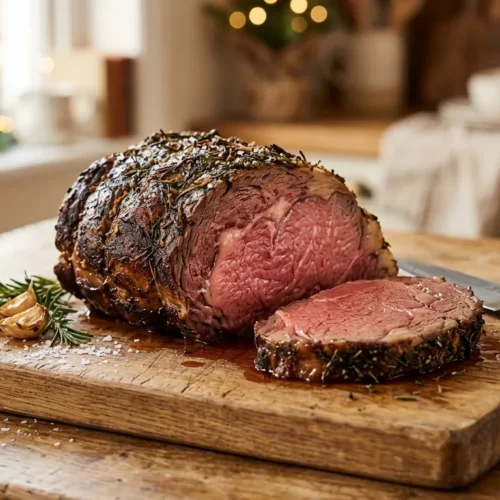
Melt-in-Your-Mouth Ribeye Roast
Equipment
- Baking Sheet
- Wire Rack
- Digital Meat Thermometer
Ingredients
The Meat & Brine
- 1 whole beef rib eye roast bone-in or boneless, well-marbled
- 2 tablespoons Kosher salt coarse
Garlic-Herb Butter Crust
- 0.5 cup unsalted butter softened at room temperature
- 2 tablespoons Dijon mustard
- 6 cloves fresh garlic minced
- 2 tablespoons fresh rosemary finely chopped
- 2 tablespoons fresh thyme finely chopped
- 1 teaspoon black pepper freshly cracked
Instructions
- Phase 1: Prep Work (Dry Brining) – The day before cooking, pat the roast completely dry with paper towels. Generously season all sides with coarse Kosher salt. Place the meat on a wire rack set inside a baking sheet and leave it uncovered in the refrigerator for at least 12 hours, or up to 24 hours.
- Remove the roast from the refrigerator at least two hours before cooking to allow it to come to room temperature.
- Phase 2: Cooking the Base – Preheat your oven to a low 250°F (120°C). In a small bowl, mash together the softened butter, Dijon mustard, minced garlic, chopped rosemary, thyme, and black pepper to create a thick paste.
- Rub the herb butter paste evenly over the top and sides of the roast. Insert an oven-safe meat thermometer into the exact center of the thickest part of the meat.
- Place the roast (still on its wire rack and baking sheet) into the oven. Slow-roast until the internal temperature reaches 115°F (46°C) for medium-rare. This usually takes 2 to 2.5 hours.
- Phase 3: Finishing Touches – Remove the roast from the oven and loosely tent it with aluminum foil. Let it rest on the counter for 30 to 40 minutes. Meanwhile, increase your oven temperature to 500°F (260°C).
- After resting, remove the foil and return the roast to the hot 500°F oven for 10 to 15 minutes, just until the crust is deeply browned and caramelized. Slice against the grain and serve immediately.
Notes
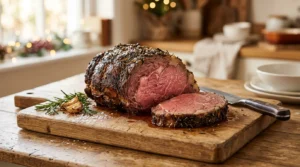
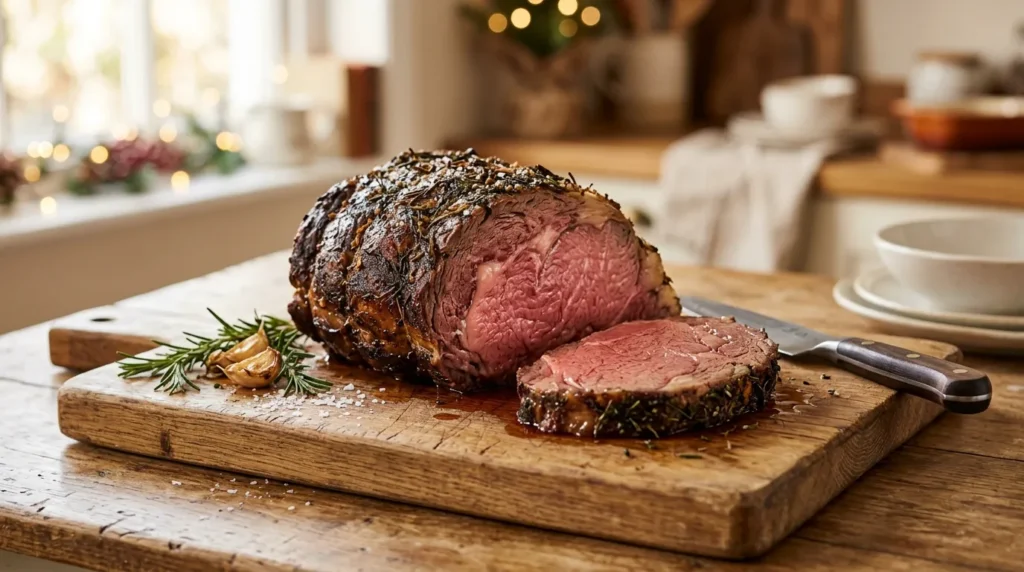
Imagine pulling a massive, sizzling cut of beef from the oven. The intoxicating aroma of roasted garlic, toasted rosemary, and rich, bubbling beef fat instantly fills your kitchen. When you finally slice into it, your knife glides effortlessly through the caramelized, peppery crust to reveal a perfectly pink, edge-to-edge medium-rare center.
This is exactly what you get with my ultimate ribeye roast recipe. The first time I hosted a major holiday dinner, I was terrified of ruining such an expensive piece of meat. But after testing multiple methods, I landed on this foolproof technique. My family actually fought over the crusty end pieces, and it was hands-down the best thing I ate all week.
If you want a centerpiece dish that melts like butter and requires surprisingly little hands-on effort, you are in the right place. This method takes the guesswork out of roasting, ensuring perfectly juicy meat every single time.
Why You’ll Love This ribeye roast recipe
- Foolproof Reverse Sear Method: By starting the roast at a low temperature and finishing it with a blast of high heat, you guarantee an even, edge-to-edge pink center without the dreaded gray ring of overcooked meat.
- The Ultimate Garlic-Herb Crust: We use a compound butter and Dijon mustard paste that clings to the meat, creating a savory, deeply caramelized exterior that locks in the juices.
- No Marinating Required: Thanks to the dry-brining technique, you do not need to mess with wet marinades. The salt does all the heavy lifting to tenderize the muscle fibers.
- Predictable Timing: This ribeye roast recipe uses a meat thermometer as your guide, meaning you will never have to guess if the center is done.
Ingredients & Substitutions
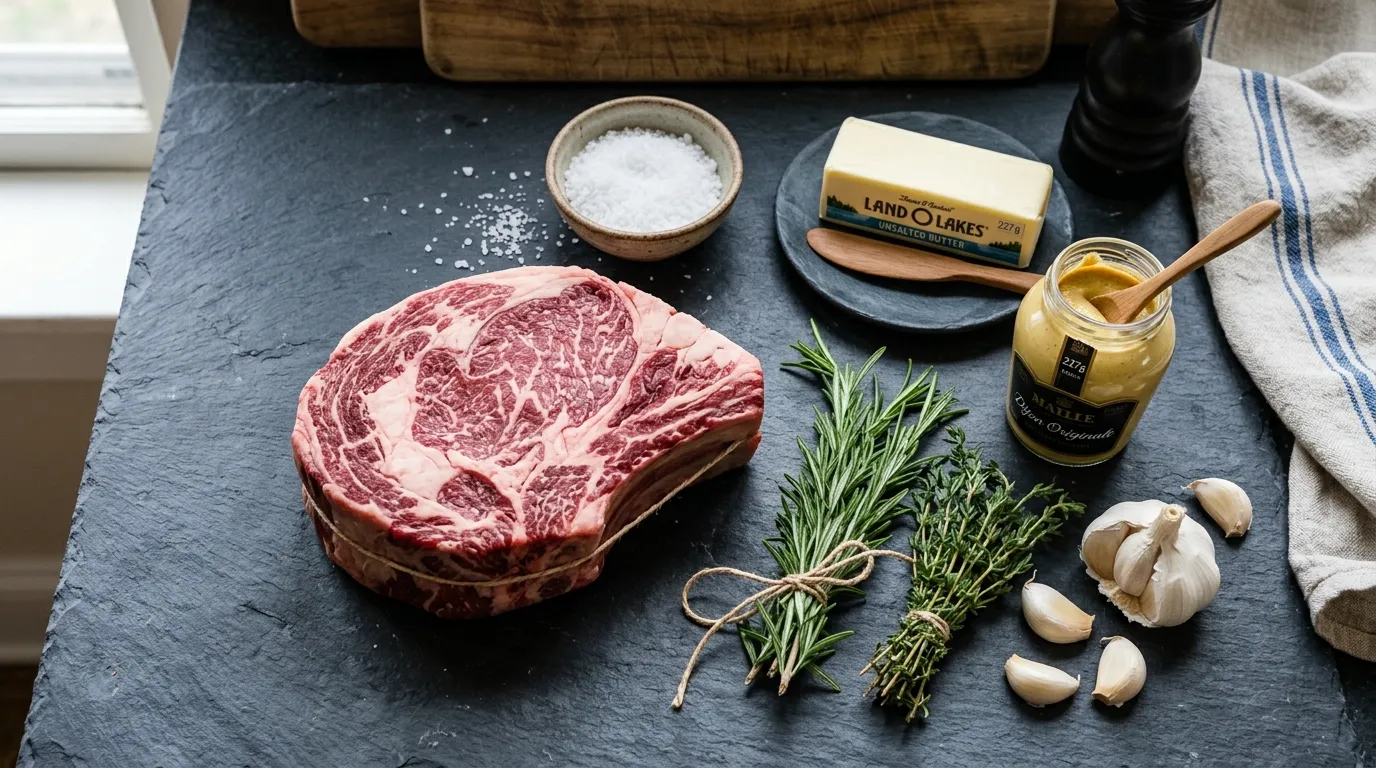
To make a restaurant-quality roast at home, the quality of your ingredients matters just as much as the technique. Here is what you need and why:
- The Meat: You are looking for a high-quality beef rib eye roast (boneless is easier to carve, but bone-in works beautifully too). Look for excellent marbling—those little white flecks of fat inside the red meat. That fat is what melts during cooking, basting the meat from the inside out and making it incredibly tender.
- Kosher Salt: I exclusively use coarse Kosher salt for dry brining. Table salt is too fine and will make your roast overly salty. The coarse flakes draw out the meat’s natural moisture, which dissolves the salt and gets reabsorbed, seasoning the roast all the way through.
- Unsalted Butter: Make sure it is completely softened at room temperature. We use unsalted so we can control the sodium levels. The butter acts as the carrier for our herbs and promotes beautiful browning.
- Dijon Mustard: This is my secret weapon. Dijon acts as an emulsifier. It binds the butter, garlic, and herbs together into a thick paste that will not immediately slide off the meat when it hits the hot oven.
- Fresh Garlic: Please, step away from the jarred, pre-minced garlic. It has a harsh, acidic bite. Freshly smashed and minced garlic cloves will give you that sweet, aromatic flavor as it roasts.
- Fresh Herbs: Fresh rosemary and thyme are non-negotiable. Dried herbs will burn and turn bitter in the oven. Fresh herbs release essential oils that perfume the entire rib eye roast as it cooks.
How to Make ribeye roast recipe
Phase 1: Prep Work
The secret to a perfect roast begins the day before you plan to cook it. Pat your roast completely dry with paper towels. Generously season all sides with coarse Kosher salt. Place the meat on a wire rack set inside a baking sheet and leave it uncovered in the refrigerator for at least 12 hours, or up to 24 hours.
This process is called dry brining. The salt will pull moisture out of the meat, dissolve, and then pull back into the muscle fibers, seasoning it deeply while drying out the surface. A dry surface is the absolute key to achieving a gorgeous, crispy crust later.
Chef’s Tip: Pull the roast out of the fridge at least two hours before you plan to cook it. Roasting a freezing-cold piece of meat will cause the outside to overcook before the inside even gets warm. Room temperature meat cooks evenly.
Phase 2: Cooking the Base
Preheat your oven to a low 250°F (120°C). While the oven heats, make your herb paste. In a bowl, mash together your softened butter, Dijon mustard, minced garlic, finely chopped rosemary, thyme, and a heavy pinch of freshly cracked black pepper.
Rub this thick, fragrant paste all over the top and sides of your room-temperature roast. Insert an oven-safe meat thermometer into the exact center of the thickest part of the meat.
Place the roast (still on its wire rack and baking sheet) into the low oven. We are going to slow-roast it until the internal temperature reaches 115°F (46°C) for medium-rare. Depending on the size of your roast, this usually takes about 2 to 2.5 hours, but always trust your thermometer, not the clock.
Chef’s Tip: Do not open the oven door constantly to check on it. Every time you open the door, you lose heat and disrupt the gentle, even cooking process that makes this ribeye roast recipe so incredibly tender.
Phase 3: Finishing Touches
Once the roast hits 115°F, pull it out of the oven and loosely tent it with aluminum foil. Let it rest on the counter for 30 to 40 minutes. Do not skip this! Resting allows the muscle fibers to relax and reabsorb the bubbling juices.
While the meat rests, crank your oven up as high as it will go—usually 500°F (260°C).
After the resting period, remove the foil and pop the roast back into the screaming hot oven for 10 to 15 minutes. Watch it closely. You are looking for the herb butter to sizzle, brown, and form a deep, dark, caramelized crust. Because the meat has already rested, you can slice and serve it immediately after this final sear.
Expert Tips for Perfect Results
Mastering exactly how to cook a ribeye roast comes down to a few professional kitchen secrets that will elevate your dish from simply good to absolute perfection:
- Understand Carryover Cooking: Meat continues to cook after you take it out of the oven. The internal temperature of your roast will rise by 5 to 10 degrees while it rests. Pulling it at 115°F ensures it will peak at a perfect 125°F to 130°F (ideal medium-rare) by the time you serve it.
- Invest in a Good Thermometer: A high-quality, leave-in digital meat thermometer is the single most important tool for this ribeye roast recipe. Cooking by time alone is a recipe for disaster because every oven and every cut of meat is slightly different.
- Save the Drippings: The pan underneath your wire rack will catch melted beef fat and toasted herbs. Pour this liquid gold over your sliced meat, or use it to make a quick, savory au jus or gravy.
- Slice Against the Grain: When carving, identify the direction of the muscle fibers and slice perpendicular to them. This shortens the fibers, making each bite incredibly tender.
Storage & Reheating
If you are lucky enough to have leftovers, you need to store and reheat them carefully to protect that beautiful pink center.
Storage: Wrap any leftover roasted ribeye roast tightly in plastic wrap or place it in an airtight container. It will keep in the refrigerator for 3 to 4 days. You can also freeze slices in heavy-duty freezer bags for up to 2 months, though the texture is always best fresh.
Reheating: Never put this beautiful meat in the microwave; it will turn gray, rubbery, and tough in seconds. Instead, place your slices in a baking dish with a splash of beef broth. Cover the dish tightly with foil and warm it in a 250°F (120°C) oven just until heated through (about 10-15 minutes). This gentle method prevents the meat from overcooking. Honestly, it is also fantastic served cold thinly sliced on a crusty baguette with horseradish mayo!
Serving Suggestions
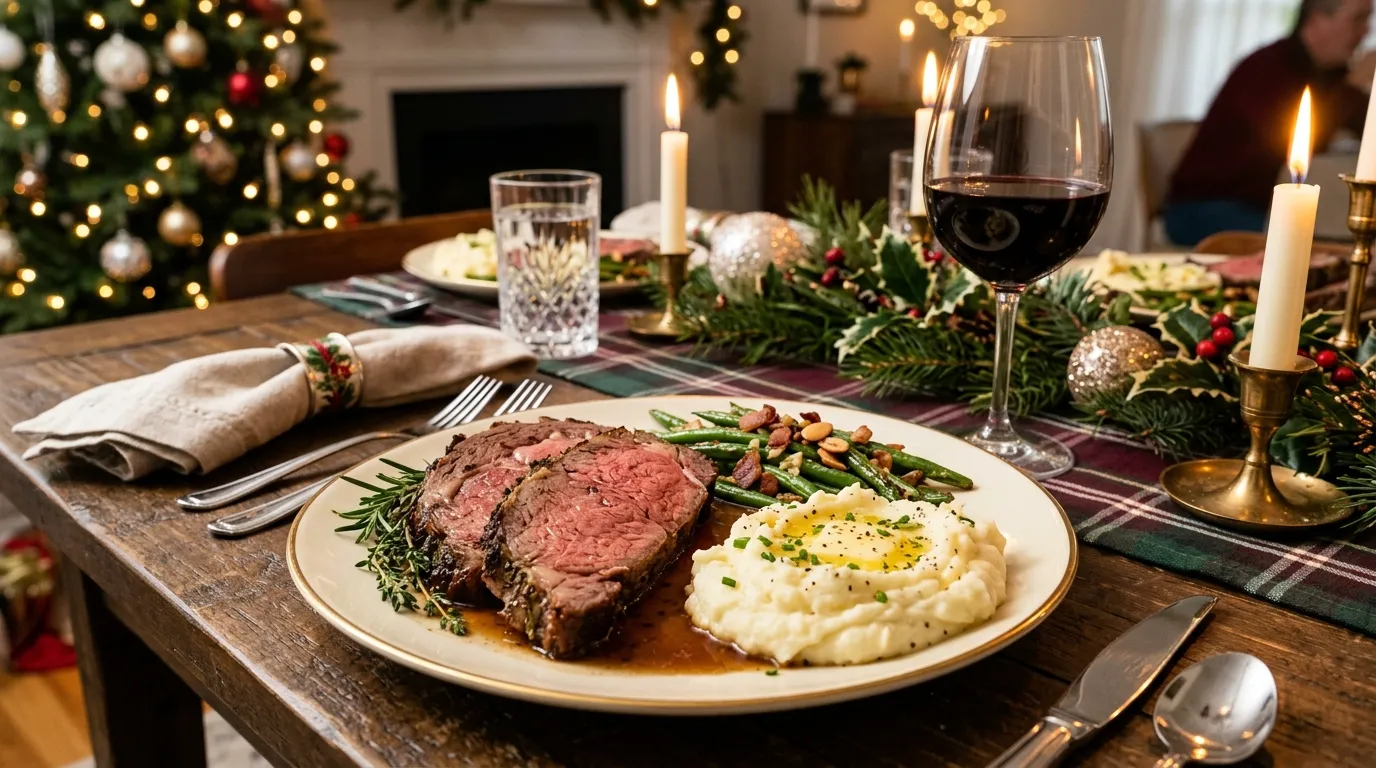
A rich, buttery centerpiece like this rib eye roast recipe demands side dishes that can stand up to its bold flavors without overshadowing it. I always serve this with a mountain of creamy, garlic mashed potatoes to soak up the pan drippings. Blistered green beans with lemon zest or honey-glazed roasted carrots add a necessary pop of color and a touch of sweetness to cut through the richness of the beef.
If you love the deep, beefy flavor of this roast but are looking for something a bit more budget-friendly for a casual weeknight dinner, I highly recommend trying out an amazing chuck eye steak recipe. Chuck eye is often called the “poor man’s ribeye” because it shares that same tender, marbled quality when cooked correctly.
For wine pairings, pour a bold, dry red wine. A Cabernet Sauvignon or a peppery Syrah works beautifully, as the tannins in the wine bind with the rich proteins and fats in the beef, cleansing your palate between bites.
Conclusion
Cooking a large cut of beef does not have to be an anxiety-inducing experience. By trusting the dry-brine method, relying on a meat thermometer, and using the reverse sear technique, this ribeye roast recipe guarantees a spectacular, perfectly cooked dinner every single time. The rich garlic-herb crust and the melt-in-your-mouth tender center will have your guests talking about this meal for years to come.
Did you make this ribeye roast recipe for your holiday table? I want to hear all about it! Leave a comment and rate the recipe below, and let me know what delicious side dishes you served it with.
Common Questions About ribeye roast recipe
Can I make this ribeye roast recipe ahead of time?
You cannot completely cook the roast ahead of time without sacrificing the medium-rare texture when reheating. However, you can (and should!) do the dry-brining and prep work up to 24 hours in advance. The herb butter can also be mixed a day ahead and kept in the fridge—just let it soften before rubbing it on the meat.
What is the difference between a prime rib and a ribeye roast?
They are essentially the same cut of meat from the rib section of the cow. “Prime rib” usually refers to a bone-in standing rib roast, often graded as “Prime” by the USDA. A ribeye roast is the exact same meat, just typically with the bones removed. This ribeye roast recipe works beautifully for both bone-in and boneless cuts; just note that bone-in cuts may take slightly longer to reach temperature.
Do I have to use a wire rack?
Yes, using a wire rack is highly recommended. Elevating the meat allows the hot oven air to circulate completely around the roast, ensuring it cooks evenly on the bottom as well as the top. If you place the meat directly on the pan, the bottom will steam in its own juices rather than roasting.
What if I don’t have Dijon mustard?
If you are out of Dijon, you can substitute it with whole grain mustard or even a tiny bit of mayonnaise. The goal is to provide an emulsifying base that helps the butter and herbs stick to the meat. Do not use standard yellow hot dog mustard, as the vinegar flavor is too overpowering for this dish.
Can I cook this at a higher temperature to save time?
I strongly advise against it. Roasting at a traditional 350°F or 400°F will cause the outside inches of the meat to overcook and turn gray and tough before the center even gets warm. The low-and-slow 250°F method used in this ribeye roast recipe is the absolute best way to ensure edge-to-edge perfection. Patience is the secret ingredient here!