

Creamy Tuscan-Style Ceci Beans Recipe
Equipment
- Large heavy-bottomed skillet
- Potato masher or wooden spoon
Ingredients
Main Ingredients
- 2 cans ceci beans (chickpeas) drained, but not aggressively rinsed
- 3 tablespoons extra virgin olive oil plus extra for drizzling
- 3 cloves garlic finely minced
- 1 sprig fresh rosemary leaves picked and roughly chopped
- 1 cup vegetable or chicken broth low-sodium
Finishing Touches
- 1 squeeze fresh lemon juice
- 1 pinch flaky sea salt and black pepper to taste
- 2 tablespoons Parmesan cheese freshly grated (optional)
Instructions
- Phase 1: Prep Work. Start by finely mincing your garlic right before cooking to prevent bitterness. Pick the rosemary leaves off their stems and give them a rough chop. Drain your canned ceci beans, leaving a little bit of the starchy bean liquid clinging to them.
- Phase 2: Cooking the Base. Place a large, heavy-bottomed skillet over medium-low heat. Add 3 tablespoons of olive oil. Once shimmering, add the minced garlic and chopped rosemary. Sizzle for 60 to 90 seconds until fragrant and pale golden. Do not let the garlic brown.
- Phase 3: Simmering and Smashing. Pour the drained beans into the pan and stir to coat in the aromatic oil. Cook for 2 minutes to blister slightly. Pour in the broth and bring to a gentle simmer. Using a potato masher or wooden spoon, gently smash about one-quarter of the beans directly in the pan to release their starches.
- Phase 4: Finishing Touches. Simmer for another 5 to 7 minutes, stirring occasionally, until the broth thickens into a glossy sauce. Remove from heat. Stir in a squeeze of fresh lemon juice. Season generously with freshly cracked black pepper, flaky sea salt, and optional Parmesan cheese. Finish with a fresh drizzle of olive oil.
Notes
There is something undeniably magical about the smell of fresh rosemary and crushed garlic sizzling in a pool of rich, green olive oil. When the weather turns chilly or I simply do not have the energy to spend hours at the stove, this is the best thing I ate all week. The velvety texture of the simmering legumes, the nutty aroma that fills the kitchen, and the way the broth thickens into a glossy, savory glaze—it is pure comfort in a bowl.
My family fights over the last piece of crusty sourdough bread just to mop up the remaining sauce from the bottom of the pan. I developed this ceci beans recipe on a rainy Tuesday evening when my fridge was nearly empty, and it has since become a weekly staple. It is incredibly easy, exceptionally flavorful, and transforms a humble pantry staple into a dish that tastes like it took hours to develop. If you are looking for the absolute best way to elevate a simple can of beans, you have found it.
Why You’ll Love This ceci beans recipe
Creating a restaurant-quality meal at home does not require complicated techniques or a laundry list of expensive ingredients. The beauty of this ceci beans recipe lies in its brilliant simplicity and culinary science.
- Uses One Pan: From blooming the aromatics to simmering the broth, everything happens in a single skillet. That means maximum flavor development and minimal cleanup.
- Naturally Creamy Without Dairy: By using a chef’s trick of mashing a portion of the beans, their natural starches release into the broth. This emulsifies with the olive oil to create a rich, creamy sauce without a drop of heavy cream.
- Pantry-Friendly: You likely already have everything you need sitting in your cupboards right now. It is the ultimate rescue meal.
- Highly Customizable: Whether you want to add wilted greens, a pinch of red pepper flakes, or a squeeze of fresh lemon, this base takes on new flavor profiles beautifully.
Ingredients & Substitutions
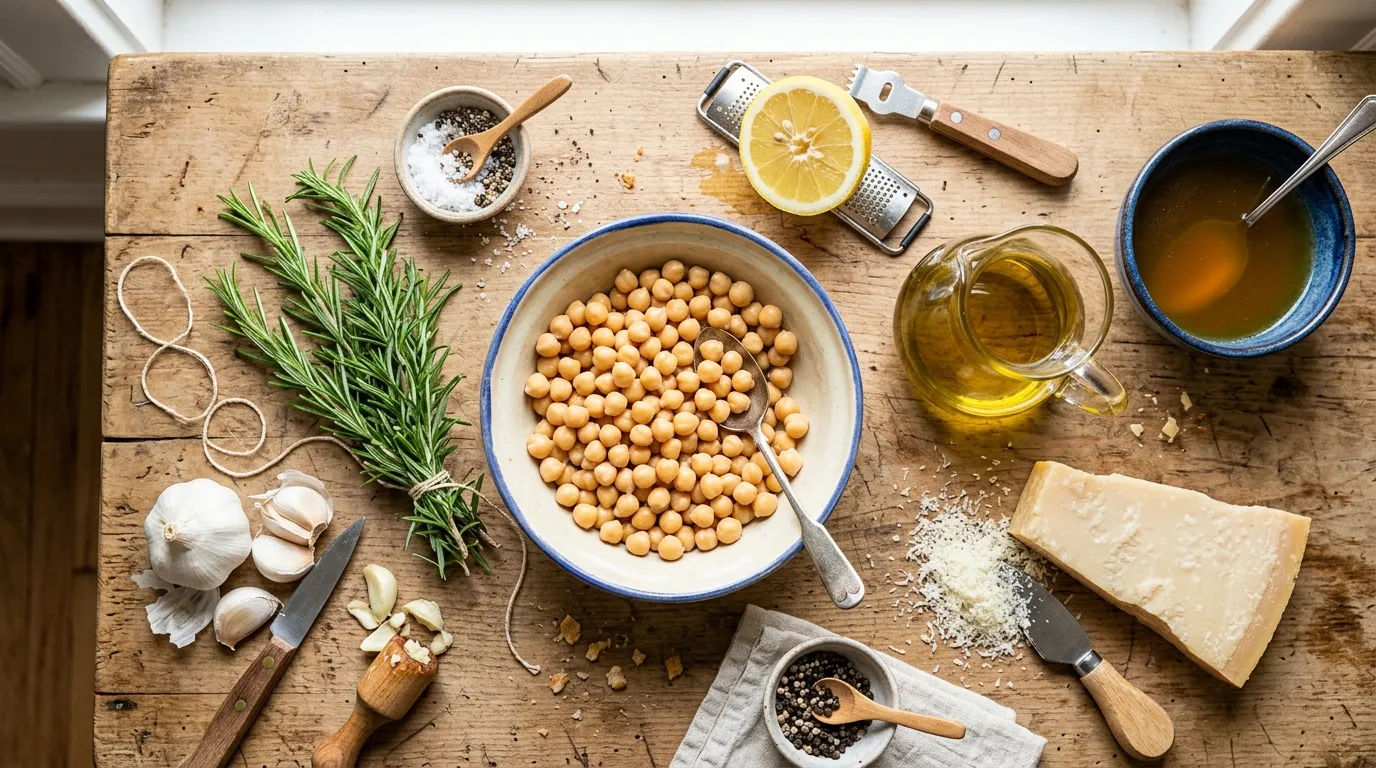
To get that luxurious, melt-in-your-mouth texture, ingredient quality matters. Because this dish relies on so few components, each one needs to pull its weight.
Ceci Beans (Chickpeas): You can use canned or dried. For a quick weeknight dinner, high-quality canned beans are perfect. Just be sure not to rinse them too thoroughly; that residual starchy liquid helps thicken the sauce. If you are exploring various garbanzo bean recipes to meal prep for the week, cooking dried beans from scratch with an onion half and a bay leaf will yield the most tender, flavorful results.
Extra Virgin Olive Oil: This is not the time for neutral cooking oils. You want a robust, peppery extra virgin olive oil. It acts as the primary fat and flavor carrier.
Garlic & Fresh Rosemary: Fresh garlic cloves and a sprig of fresh rosemary are non-negotiable. Dried rosemary resembles pine needles in a quick sauté and will not release the same fragrant oils. Every great garbanzo beans recipe starts with a solid aromatic base, and these two are a match made in heaven.
Vegetable or Chicken Broth: Use a low-sodium broth so you can control the salt levels yourself. If you do not have broth, water mixed with a teaspoon of white miso paste provides a fantastic umami substitution.
Parmesan Cheese (Optional): A dusting of freshly grated Parmesan adds a salty, nutty finish. For a vegan option, nutritional yeast or a squeeze of fresh lemon juice offers a similar bright, savory punch.
How to Make This ceci beans recipe
Phase 1: Prep Work
Preparation is key to a stress-free cooking experience. Start by finely mincing your garlic and picking the rosemary leaves off their stems, giving them a rough chop. Drain your canned beans, but do not aggressively rinse them under cold water. Leaving a little bit of the bean liquid (aquafaba) clinging to the legumes will give our sauce a head start on thickening.
Chef’s Tip: Do not mince your garlic too far in advance, or it will oxidize and develop a harsh, bitter flavor. Mince it right before it hits the pan.
Phase 2: Cooking the Base
Place a large, heavy-bottomed skillet over medium-low heat. Add a generous glug of olive oil—about three tablespoons. Once the oil is shimmering but not smoking, add your minced garlic and chopped rosemary. We want to gently toast the aromatics, not fry them. Let them sizzle for about 60 to 90 seconds until the kitchen smells incredible and the garlic is just starting to turn pale golden.
Chef’s Tip: Keep the heat moderate. If the garlic turns brown, it will taste acrid, and you will need to start over. Patience here builds a sweeter, deeper flavor profile.
Phase 3: Simmering and Smashing
Pour the drained beans directly into the fragrant oil. Stir them well so every single bean is coated in the garlic-rosemary oil. Let them cook for about two minutes, allowing them to blister slightly. Next, pour in your broth. Bring the liquid to a gentle simmer.
Here is the most crucial step of this ceci beans recipe: take a potato masher or the back of a wooden spoon and gently smash about one-quarter of the beans directly in the pan. As the smashed beans break down, they release their starches into the simmering broth, transforming it from a watery liquid into a thick, velvety gravy.
Phase 4: Finishing Touches
Let the mixture simmer for another 5 to 7 minutes, stirring occasionally, until the sauce coats the back of a spoon. Remove the pan from the heat. Stir in a squeeze of fresh lemon juice to brighten the earthy flavors, and season generously with freshly cracked black pepper and flaky sea salt.
Chef’s Tip: Always add your acid (lemon juice) off the heat. Boiling lemon juice can dull its vibrant, fresh flavor.
Expert Tips for Perfect Results
Taking a dish from “good” to “restaurant quality” is all about attention to detail. Over the years of making this ceci beans recipe, I have learned a few tricks that guarantee perfection every single time.
- Do Not Overcrowd the Pan: Use a wide skillet rather than a deep saucepan. A wider surface area allows the broth to reduce and thicken faster, concentrating the flavors without turning the beans to mush.
- The Power of the Rind: If you have a leftover Parmesan cheese rind sitting in your fridge, toss it into the pan while the broth simmers. It infuses the liquid with a deep, salty umami flavor that is absolutely incredible.
- Temperature Matters for Oil: Always start your garlic and herbs in cold or slightly warm oil, bringing them up to temperature together. Dropping garlic into screaming hot oil is a one-way ticket to burnt, bitter flavors.
- Finish with Fresh Fat: A final drizzle of your highest-quality olive oil right before serving adds a silky mouthfeel and a fruity, grassy finish that elevates the entire dish.
Storage & Reheating
If you manage to have leftovers, you are in luck. The flavors of this ceci beans recipe continue to meld and deepen as they sit in the fridge, making it an exceptional option for meal prep.
Storage: Allow the beans to cool completely to room temperature. Transfer them to an airtight glass container and store them in the refrigerator for up to 5 days. You can also freeze this dish for up to 3 months. Just be aware that the texture of the beans might soften slightly upon thawing.
Reheating: Because the starches will cause the sauce to solidify in the cold fridge, the beans will look quite thick the next day. The absolute best way to reheat them is on the stovetop over medium-low heat. Add a splash of water or broth to the pan and stir gently until the sauce regains its creamy, glossy consistency. Avoid the microwave if possible, as it can heat the beans unevenly and cause them to explode.
Serving Suggestions
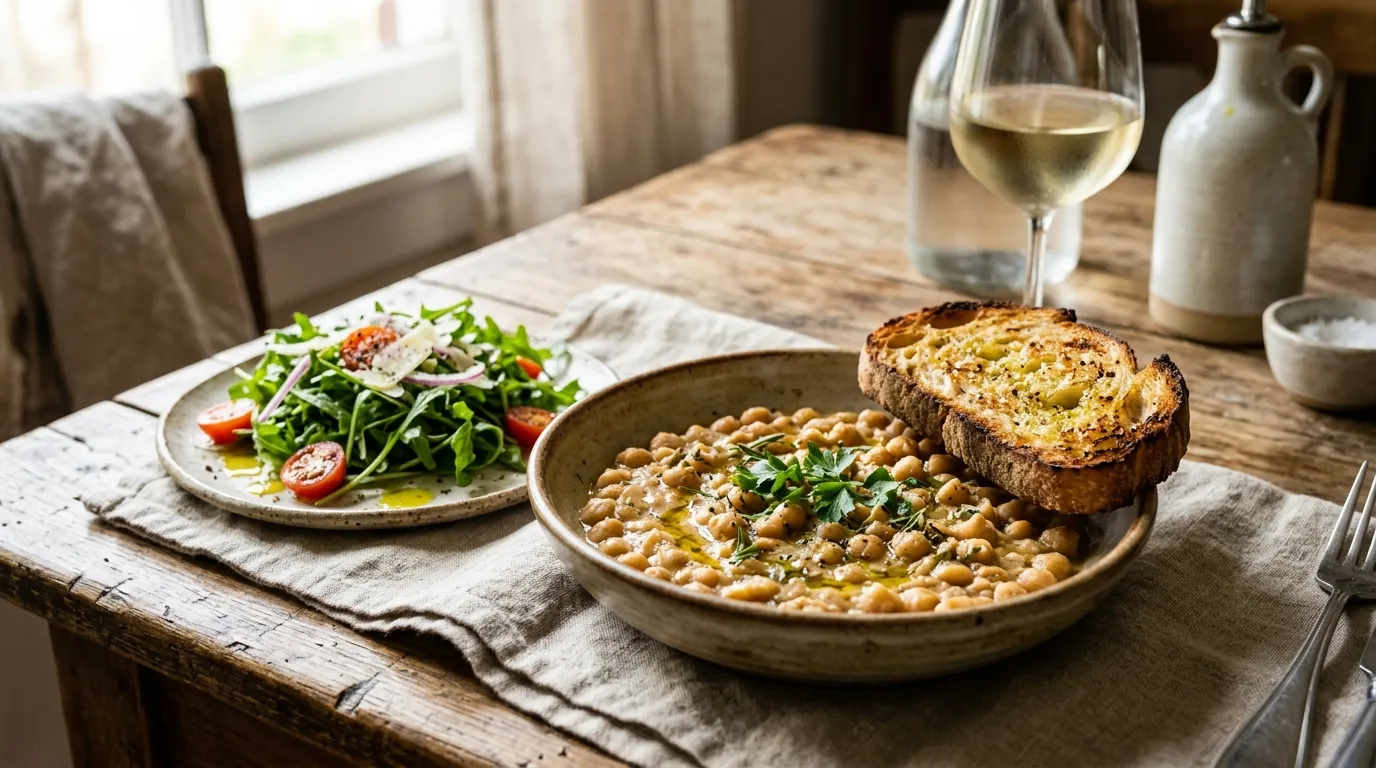
This versatile dish can play the starring role or act as a brilliant supporting character on your dinner table. I almost always serve this ceci beans recipe in a shallow bowl with a thick slice of garlic-rubbed sourdough bread to soak up every last drop of the savory broth.
It pairs beautifully with a simple, peppery arugula salad dressed in lemon vinaigrette to cut through the richness of the beans. If you are serving a crowd and want to offer a dynamic spread of plant-based proteins, these aromatic beans look and taste spectacular alongside a classic creamy white beans dish. The contrasting textures and flavor profiles of the different legumes make for a hearty, rustic Italian feast. You can also spoon these beans over creamy polenta, toss them with short pasta like orecchiette, or serve them alongside a piece of pan-seared white fish.
Conclusion
Mastering a few humble ingredients is the true mark of a great home cook, and this ceci beans recipe is the perfect place to start. It is affordable, nourishing, and delivers a depth of flavor that usually requires hours of simmering. Whether you are cooking a quick weeknight dinner for yourself or serving a rustic appetizer to dinner guests, this dish never fails to impress.
Did you make this ceci beans recipe? I would love to hear how it turned out for you! Rate the recipe below, and let me know in the comments if you added your own special twist, like a handful of spinach or a dash of smoked paprika.
Common Questions About This ceci beans recipe
Can I use dried beans instead of canned?
Absolutely. If you prefer using dried beans, you will need to soak them overnight and boil them until tender before starting this recipe. Reserve about a cup of the starchy cooking liquid to use in place of the broth for an even richer sauce.
Can I make this ahead of time?
Yes! In fact, the garlic and rosemary flavors intensify after a day in the fridge. It is a fantastic make-ahead meal. Just remember to add a splash of liquid when reheating to bring the creamy sauce back to life.
What meat pairs well with this dish?
While this dish is incredibly satisfying on its own, it pairs wonderfully with savory meats. Searing some spicy Italian sausage or crispy pancetta in the pan before adding the garlic and herbs adds a phenomenal smoky, meaty depth to the final dish.
Why did my sauce not thicken?
If your sauce is still watery, you likely did not mash enough beans, or you need to let the broth reduce for a few more minutes. Simply take your spoon, smash another handful of beans against the side of the skillet, and let it simmer for another 3 to 4 minutes. The starches will do their job!