Pan-Seared Chuck Eye Steak Recipe
Equipment
- Cast Iron Skillet
- Meat Thermometer
- Tongs
Ingredients
The Steak
- 2 Chuck Eye Steaks at least 1-inch thick, room temperature
- 1 tbsp Coarse Kosher Salt adjust to taste
- 2 tbsp Avocado Oil or grapeseed oil
The Butter Baste
- 3 tbsp Unsalted Butter
- 4 cloves Garlic smashed, skin on
- 3 sprigs Fresh Thyme or rosemary
- Freshly Cracked Black Pepper to serve
Instructions
- Prep and Temper: Remove the chuck eye steaks from the refrigerator 30 to 45 minutes before cooking to reach room temperature. Pat them completely dry with paper towels and season generously with Kosher salt on all sides.
- Heat the Pan: Place a cast-iron skillet over high heat. Wait until the pan is smoking hot. Add the avocado oil and swirl to coat the bottom.
- The Hard Sear: Carefully lay the steaks into the pan away from you. Let them sear undisturbed for 2–3 minutes to develop a dark brown crust. Flip the steaks and cook the second side for 2 minutes.
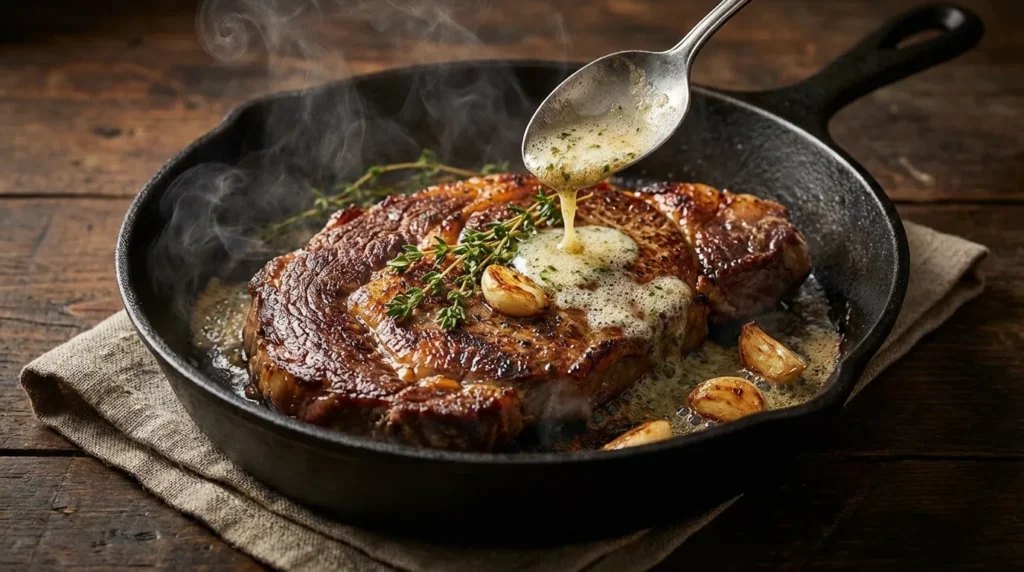
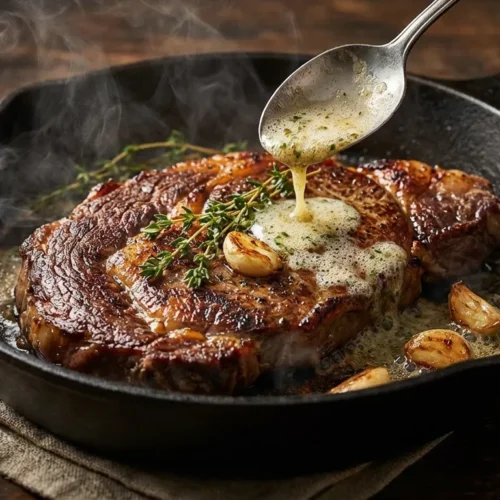
- Butter Baste (Arrosé): Reduce heat to medium. Add the butter, smashed garlic, and herbs. As the butter foams, tilt the pan and continuously spoon the hot liquid over the steaks for 1–2 minutes.
- Rest: Check internal temperature (target 130°F/54°C for medium-rare). Transfer steaks to a board, pour remaining pan butter over them, and rest for 5 to 7 minutes before slicing against the grain.
Notes
Reheating: Gently reheat in a skillet over low heat with a little butter; do not microwave.
There is a moment right when a steak hits a screaming hot cast-iron skillet—that aggressive hiss and the immediate rise of savory smoke—that tells you dinner is going to be incredible. If you are looking for that steakhouse experience without the sixty-dollar price tag, you have arrived at the right place.
Many home cooks walk right past the chuck eye at the grocery store, mistaking it for a tough pot roast cut. That is a huge mistake. Known affectionately by butchers as the “Poor Man’s Ribeye,” this cut sits right next to the ribeye primal. It shares that same intense beefy flavor and luscious marbling but costs a fraction of the price. My version of this chuck eye steak recipe focuses on a simple, high-heat sear followed by a garlic-herb butter baste that coaxes every bit of tenderness out of the meat.
I remember the first time I cooked this for my skeptical father-in-law. He swore by ribeyes and nothing else. After one bite of this medium-rare steak, dripping with thyme-infused butter, he asked if I’d won the lottery. It’s that good. This isn’t just a budget alternative; it is a standalone star in the kitchen. Let’s get cooking.
Why You’ll Love This Chuck Eye Steak Recipe
If you are intimidated by cooking steak at home, this is the perfect entry point. It is forgiving, flavorful, and fast. Here is why this specific method works so well:
- Ribeye Flavor on a Budget: Because these steaks come from the fifth rib (where the chuck meets the ribeye), you get that premium, rich mouthfeel for roughly half the cost.
The Butter Baste Technique: We don’t just fry the meat; we finish it with a technique French chefs call arrosé*. Basting the steak with foaming butter, garlic, and herbs cooks it gently from the top while adding a nutty, aromatic crust.
- Ready in Under 20 Minutes: Unlike roasts that need hours, this chuck eye steak recipe is a quick-fire meal. 5 minutes of prep, 10 minutes of cooking, and a crucial 5-minute rest.
- No Fancy Equipment: All you really need is a heavy pan (preferably cast iron) and a meat thermometer.
Ingredients & Substitutions
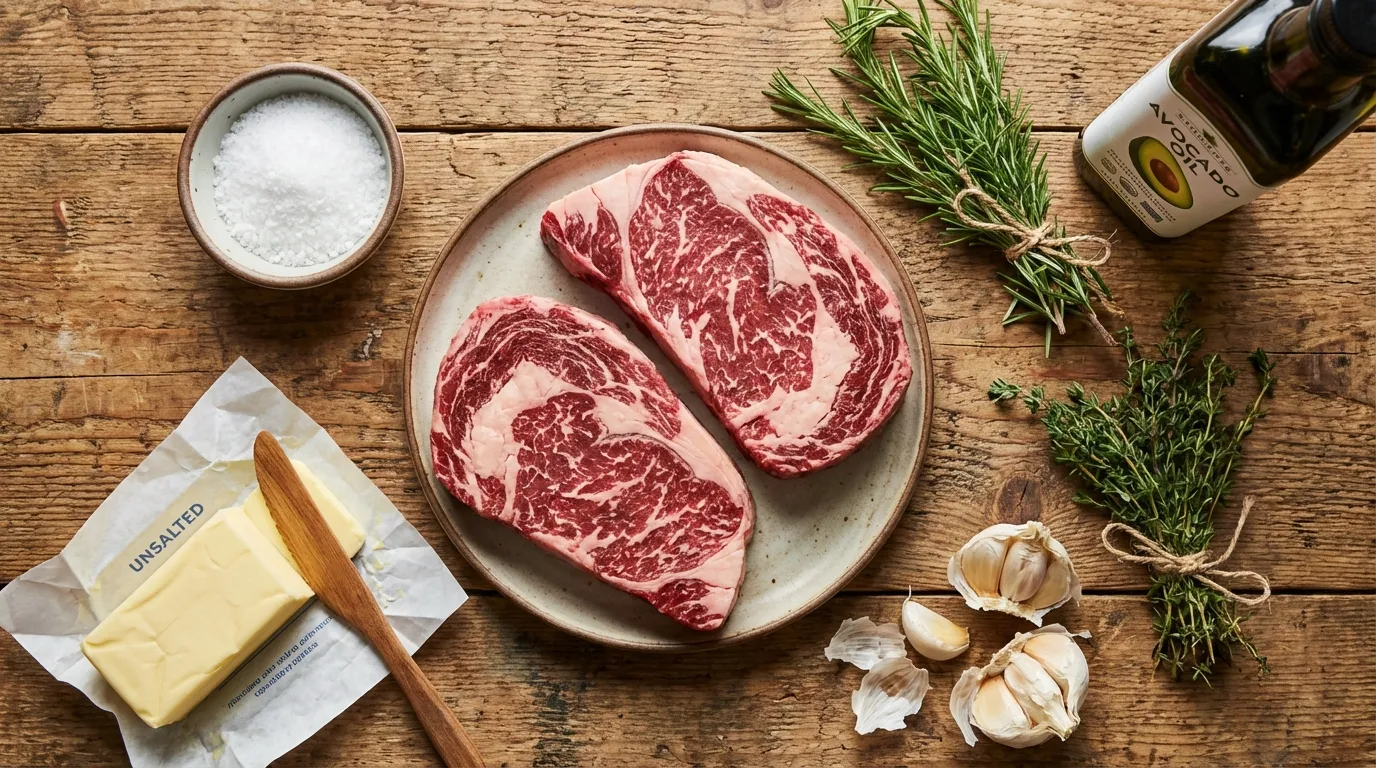
To make a restaurant-quality steak, you don’t need a laundry list of ingredients. You just need high-quality basics. Here is what you need to grab for this beef chuck eye steak recipe.
- Chuck Eye Steaks: Look for chuck eye steaks that are at least 1-inch thick. Thickness is crucial for getting a good crust without overcooking the inside. Look for plenty of white flecks of fat (marbling) within the red meat—that is where the flavor lives.
- Coarse Kosher Salt: Do not use table salt. I use Diamond Crystal Kosher Salt because the flakes adhere to the meat perfectly and draw out moisture to create a dry surface for searing. If you use table salt, cut the amount in half or it will be inedibly salty.
- High Smoke Point Oil: You need oil that can handle high heat without burning and turning bitter. Avocado oil or Grapeseed oil are my go-to choices. Extra Virgin Olive Oil has a smoke point that is too low for the initial sear.
- Unsalted Butter: Use unsalted so you can control the seasoning. This is for the finishing baste.
- Fresh Aromatics: Smash 3-4 cloves of garlic (keep the skin on to prevent burning) and grab a few sprigs of fresh thyme or rosemary. Dried herbs will burn instantly in the hot fat, so stick to fresh.
Freshly Cracked Black Pepper: Add this after* the sear or during the basting phase. Pepper burns at high heat and can taste acrid if added too early.
Dietary Swaps:
- Dairy-Free: Substitute the butter for a high-quality vegan butter block, or simply stick to the oil sear for a cleaner beef taste.
- Gluten-Free: This recipe is naturally gluten-free.
How to Make Chuck Eye Steak Recipe
Cooking a steak is all about temperature control and timing. Follow these steps closely, and I promise you will have the best steak of your life.
Phase 1: The Prep and Temper
The biggest mistake home cooks make is taking a cold steak out of the fridge and throwing it directly into a hot pan. This seizes the muscle fibers, leading to a tough chew.
1. Take your beef chuck eye steak out of the refrigerator 30 to 45 minutes before cooking. Let it come to room temperature.
2. Pat the steaks completely dry with paper towels. Moisture is the enemy of the sear; if the steak is wet, it will steam instead of brown.
3. Season generously with Kosher salt on all sides. Don’t be shy—beef needs salt to wake up the flavor.
Phase 2: The Hard Sear
1. Place a cast-iron skillet over high heat. Let it get smoking hot—literally. You should see wisps of white smoke rising from the dry pan.
2. Add 2 tablespoons of avocado oil and swirl to coat.
3. Carefully lay the steaks into the pan away from you (to avoid oil splatter).
4. Chef’s Tip: Do not touch it! Let it sear undisturbed for 2–3 minutes. You want a deep, dark brown crust (the Maillard reaction). If you try to lift it and it sticks, it’s not ready.
5. Flip the steaks. The first side should be beautifully caramelized. Cook the second side for 2 minutes.
Phase 3: The Butter Baste (Arrosé)
This is the secret to this chuck eye steak recipe.
1. Reduce the heat to medium.
2. Toss in 3 tablespoons of unsalted butter, the smashed garlic cloves, and your fresh herbs.
3. As the butter melts and begins to foam and smell nutty, tilt the pan slightly so the butter pools at the bottom.
4. Using a large spoon, continuously scoop that hot, garlic-infused butter over the steaks. This adds incredible flavor and helps cook the steak evenly. Baste for about 1–2 minutes.
Phase 4: The Rest
1. Check the internal temperature. For a perfect medium-rare, pull the steak at 130°F (54°C). It will rise to 135°F as it rests.
2. Transfer the steaks to a cutting board or warm plate. Pour the remaining butter from the pan over them.
3. Crucial Step: Let the meat rest for at least 5 to 7 minutes. If you cut into it now, all those delicious juices will run out onto the board, leaving you with dry meat.
Expert Tips for Perfect Results
I have cooked hundreds of these steaks, and I have learned a few tricks along the way to ensure consistency.
- Use a Cast Iron Skillet: You need a pan with high thermal mass to retain heat when the cold meat hits it. Stainless steel is a good second choice, but non-stick pans generally cannot generate the heat needed for a proper crust on chuck rib eye steak recipes.
- Don’t Overcrowd the Pan: If you are cooking for a crowd, cook in batches. If you pack four steaks into one skillet, the temperature of the pan drops drastically, and the steaks will boil in their own juices rather than searing.
- Trust the Thermometer, Not the Touch: The “poke test” (touching your face to compare firmness) is unreliable. Chuck eye steaks can vary in density. A digital instant-read thermometer is the only way to guarantee you don’t overcook this cut.
- Slice Against the Grain: While chuck eye is tender, it still has muscle fibers. Slice perpendicular to the direction of the fibers to shorten them, making every bite melt-in-your-mouth tender.
Storage & Reheating
If you happen to have leftovers (which is rare in my house), this steak stores beautifully.
- Storage: Store the cooked steak in an airtight container in the refrigerator for up to 3 days. Pour any solidified butter from the pan over the steak before sealing—it acts as a protective barrier and adds flavor.
- Freezing: You can freeze cooked steak, but it loses some texture. It is better to freeze raw chuck eye steaks tightly wrapped in plastic and foil for up to 3 months.
- Reheating: Never use the microwave! It will turn your beautiful medium-rare steak into a rubber boot. Instead, slice the cold steak thin and let it come to room temperature, or reheat it gently in a skillet over low heat with a little butter just until warm.
Serving Suggestions
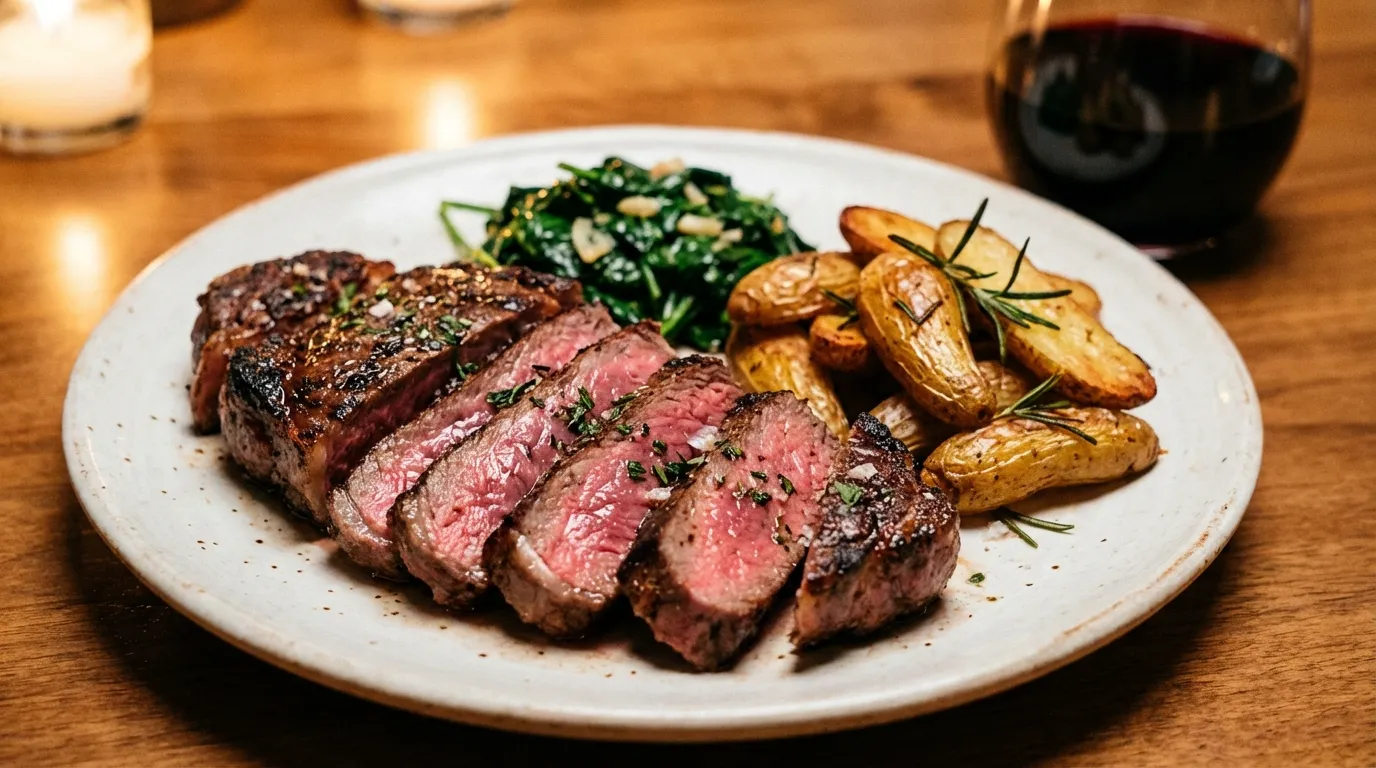
This dish is rich and savory, so it pairs best with sides that can cut through the fat or soak up that delicious garlic butter.
- Potatoes: A classic match. Garlic mashed potatoes, roasted fingerlings, or a crispy baked potato work wonders.
- Greens: Sautéed spinach with lemon, roasted asparagus, or a sharp arugula salad with balsamic glaze helps balance the richness of the beef.
- Wine Pairing: A bold Cabernet Sauvignon or a Malbec stands up well to the fatty, beefy flavor of the chuck eye.
If you are looking for a different way to utilize beef cuts or perhaps have some trimmings left over, I highly recommend trying a slow-cooked method for a change of pace. If you love deep beef flavor but want a set-it-and-forget-it meal for busy weeknights, my beef tips crock pot recipe is the perfect comfort food follow-up.
Conclusion
The chuck eye steak recipe is truly the best-kept secret of the butcher counter. It delivers the decadence of a ribeye with the practicality of a weeknight meal. By treating the meat with respect—tempering, searing hard, and basting with love—you transform a humble cut into a centerpiece dish.
Next time you are at the market, look past the expensive strips and filets and hunt for the chuck eye. Your wallet and your tastebuds will thank you.
Did you try this recipe? Leave a comment and a star rating below! I love hearing how it turned out in your kitchen.
Common Questions About Chuck Eye Steak Recipe
Is chuck eye steak tough?
Not if you cook it correctly! While it is surrounded by tougher muscles from the shoulder, the “eye” itself is very tender, similar to a ribeye. However, if you overcook beef chuck eye steak past medium, it can become chewy. Keep it medium-rare to medium (130°F – 135°F) for the best texture.
Is chuck eye steak the same as chuck roast?
No, they are different. A chuck roast is a large, tough cut meant for slow cooking (braising) to break down connective tissue. Chuck eye steaks are sliced from a specific tender part of the chuck primal, right next to the rib section, making them suitable for grilling and searing.
Do I need to marinate chuck eye steak?
You don’t have to. Because chuck eye steak recipes rely on the natural marbling for flavor, a simple salt and pepper seasoning is usually enough. However, if you want to add a different flavor profile, a marinade with a little acid (like lemon juice or vinegar) can help tenderize it further, but limit marinating time to 2-4 hours so the meat doesn’t get mushy.
Can I cook this in an air fryer?
Technically, yes, but I don’t recommend it. An air fryer is essentially a convection oven. It will cook the steak, but you will miss out on the deep, caramelized crust that you get from direct contact with a hot cast-iron pan. For how to cook chuck eye steak perfectly, the stovetop sear is superior.
Where can I buy chuck eye steaks?
Since there are only two chuck eye steaks per cow, they can be scarce. Go to the grocery store early in the day or, better yet, make friends with your local butcher and ask them to set aside the beef chuck eye steak cuts for you.