Flaky & Buttery Empanada Dough Recipe
Equipment
- Mixing Bowl
- Pastry Blender or Fork
- Rolling Pin
- 5-inch Pastry Cutter
Ingredients
Dry Ingredients & Fat
- 3 cups unbleached all-purpose flour
- 1 teaspoon salt
- 1 cup unsalted butter ice-cold and diced into small cubes
Wet Ingredients
- 1 egg yolk
- 1 teaspoon white vinegar or apple cider vinegar
- 1/3 cup ice water plus 1 ice cube to keep it cold
Instructions
- Phase 1: Prep Work. Dice your butter into small cubes and place them back in the refrigerator for at least 15 minutes. In a small glass, mix your water, egg yolk, and vinegar, and drop an ice cube into it to ensure it stays freezing cold.
- Phase 2: Mixing the Base. In a large mixing bowl, whisk together the all-purpose flour and salt. Drop your chilled butter cubes into the flour. Using a pastry blender, a fork, or your fingertips, quickly cut the butter into the flour until the mixture looks like coarse, wet sand with pea-sized chunks of butter remaining.
- Phase 3: Hydrating and Kneading. Remove the ice cube from your liquid mixture. Drizzle the wet ingredients over the flour and butter mixture, one tablespoon at a time, tossing gently with a fork. Turn the shaggy dough out onto a clean work surface. Gently knead it just 4 or 5 times until it forms a cohesive ball. Flatten into a thick disc, wrap tightly in plastic wrap, and chill in the refrigerator for at least 30 minutes.
- Phase 4: Rolling and Cutting. Once rested, unwrap the dough and place it on a lightly floured surface. Roll the dough out evenly until it is about 1/8-inch thick. Use a 5-inch or 6-inch round pastry cutter to cut out your circles. Gather the scraps, re-chill for 10 minutes, and roll them out again.
Notes
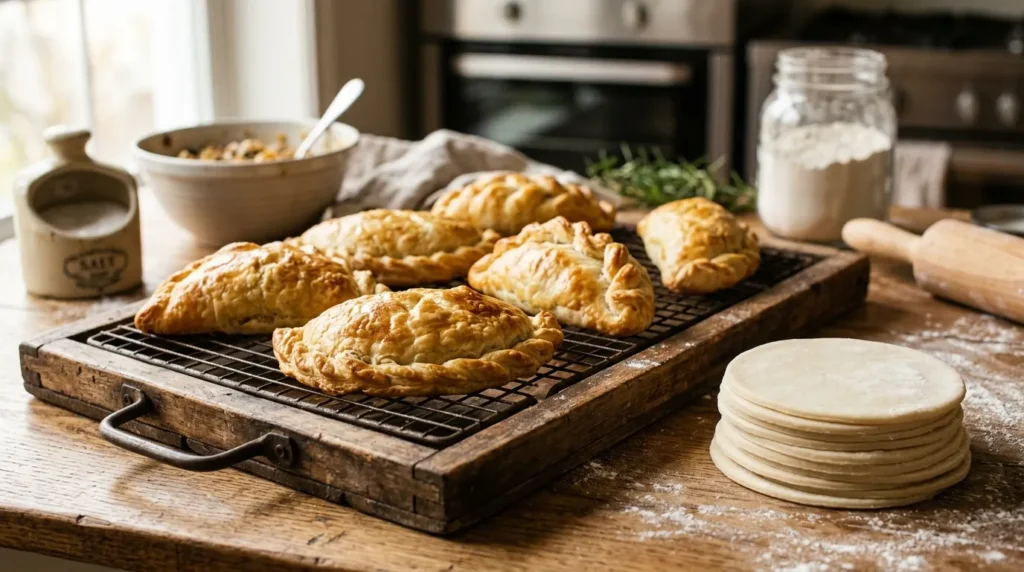
There is nothing quite like pulling a tray of freshly baked empanadas out of the oven. The nutty aroma of toasted flour and melting butter fills the kitchen, and that first bite—where the golden-brown crust shatters slightly, revealing a tender, melt-in-your-mouth interior—is pure magic. For years, I struggled with store-bought discs that were either too rubbery or completely lacked flavor. I wanted a crust that tasted as good as the filling inside it. After countless test batches, tweaking hydration levels and fat ratios, I finally perfected this empanada dough recipe.
This is the best thing I ate all week, and honestly, my family fights over the last piece every single time I make it. It strikes the perfect balance between a flaky pie crust and a sturdy pastry that can hold heavy, savory fillings without tearing. Whether you are planning to bake them until they are beautifully bronzed or fry them until they are sizzling and crispy, this dough handles beautifully. It is surprisingly simple, incredibly forgiving, and will completely transform your homemade Latin-inspired dinners.
Why You’ll Love This empanada dough recipe
Creating pastry from scratch can feel intimidating, but the science behind this specific formula is designed for home cooks. Here is why this recipe works every single time:
- No Yeast or Waiting: Unlike bread-based doughs, this pastry relies on the mechanical flakiness created by cutting fat into flour. There is no proofing required, meaning you can mix it and use it almost immediately.
- Perfectly Pliable: The secret addition of a single egg yolk and a splash of vinegar tenderizes the gluten. This makes the dough incredibly stretchy, so it won’t shrink back when you roll it out or crack when you fold it over your filling.
- Bake or Fry Friendly: Some doughs absorb too much oil when fried, while others dry out in the oven. This versatile base has the exact right fat content to excel in both cooking methods.
- Freezer-Friendly: You can make a massive double batch, cut out your discs, and freeze them. You will never have to rely on the bland supermarket freezer aisle versions again.
Ingredients & Substitutions
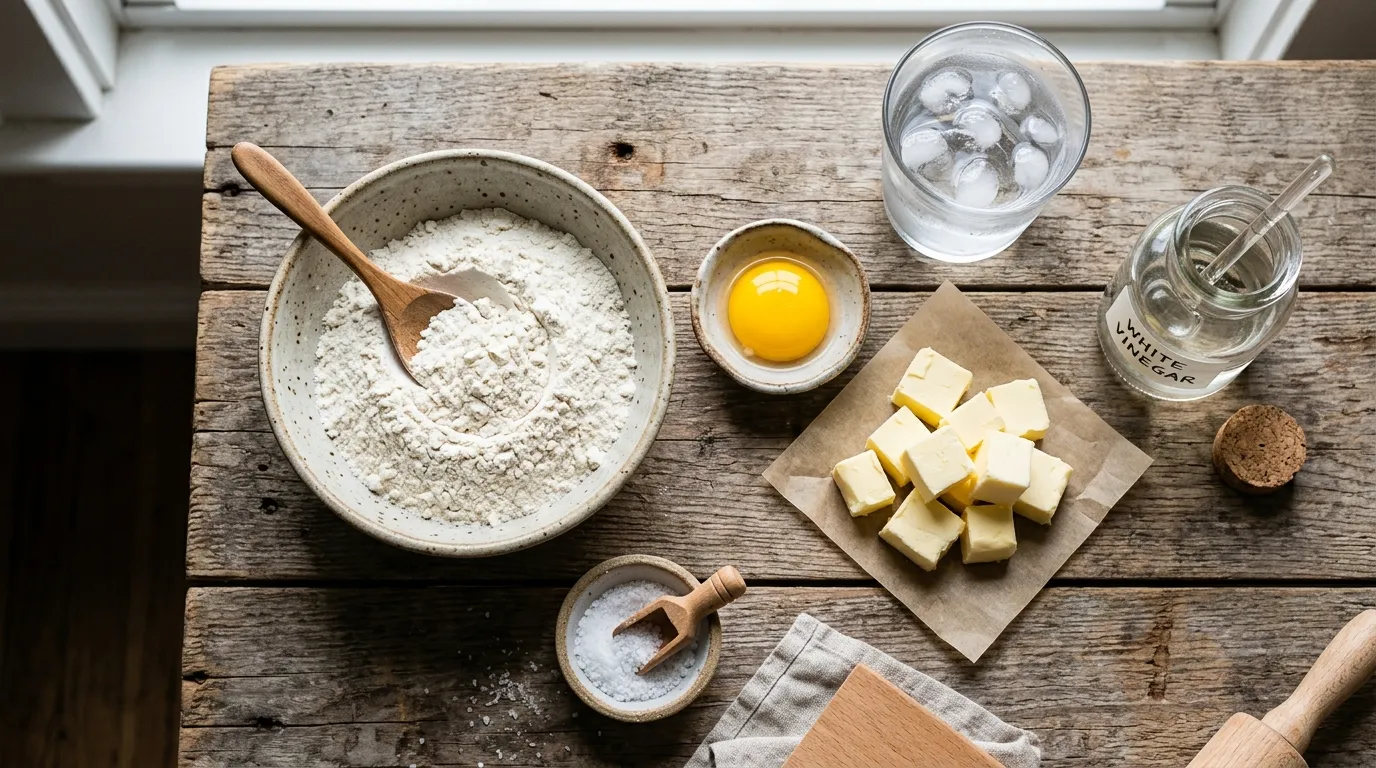
A truly great empanadas dough recipe does not require a massive grocery haul. You likely have everything you need in your pantry right now. However, the quality and temperature of these ingredients make all the difference.
- All-Purpose Flour: This is the structural foundation. I prefer standard unbleached all-purpose flour because it has a moderate protein content (around 10-11%). Bread flour will make the dough too tough and chewy, while cake flour will make it crumble and fall apart.
- Unsalted Butter: When searching for a reliable dough recipe for empanadas, the choice of fat is your biggest decision. I use ice-cold unsalted butter because the water content in the butter evaporates during baking, creating tiny steam pockets that lead to a flaky texture. You can substitute half of the butter with high-quality lard or vegetable shortening if you want a more traditional, ultra-tender crust, but all-butter provides the best flavor.
- Egg Yolk: This is a chef’s secret weapon. The fat and emulsifiers in the yolk enrich the dough, giving it a beautiful golden hue and a tender bite that doesn’t shatter into a million messy crumbs.
- White Vinegar: Just one teaspoon of white vinegar or apple cider vinegar inhibits gluten formation. This ensures your dough stays tender rather than turning tough and rubbery. You will not taste the vinegar in the final product.
- Ice Water: Temperature is critical. The water must be ice-cold to prevent the butter from melting before it hits the oven.
- Salt: Essential for flavor. Without salt, the pastry will taste flat and cardboard-like, regardless of how flavorful your filling is.
How to Make This empanada dough recipe
Phase 1: Prep Work
Before you even touch the flour, get your ingredients cold. Dice your butter into small cubes and place them back in the refrigerator for at least 15 minutes. In a small glass, mix your water, egg yolk, and vinegar, and drop an ice cube into it. Keeping everything cold is the golden rule of pastry.
Phase 2: Mixing the Base
In a large mixing bowl, whisk together the all-purpose flour and salt. Drop your chilled butter cubes into the flour. Using a pastry blender, a fork, or your fingertips, quickly cut the butter into the flour. You want the mixture to look like coarse, wet sand, but with some larger, pea-sized chunks of butter still visible. Those visible butter chunks are exactly what create flakiness.
If you are learning how to make empanada dough for the first time, you might be tempted to use a food processor. You absolutely can, but pulse it very briefly—no more than 8 to 10 short pulses.
Phase 3: Hydrating and Kneading
Remove the ice cube from your liquid mixture. Drizzle the wet ingredients over the flour and butter mixture, one tablespoon at a time, tossing gently with a fork.
Chef’s Tip: Do not pour all the liquid in at once. Flour absorbs moisture differently depending on the humidity in your kitchen. Stop adding liquid when the dough looks shaggy but holds together when you squeeze a handful of it.
Turn the shaggy dough out onto a clean work surface. Gently knead it just 4 or 5 times until it forms a cohesive ball. Do not overwork it, or you will develop too much gluten. Flatten the ball into a thick disc, wrap it tightly in plastic wrap, and chill it in the refrigerator for at least 30 minutes.
Phase 4: Rolling and Cutting
Once rested, unwrap the dough and place it on a lightly floured surface. Using a rolling pin, roll the dough out evenly until it is about 1/8-inch thick. If the dough resists or shrinks back, let it rest for 5 minutes to relax the gluten before continuing.
Use a 5-inch or 6-inch round pastry cutter (or an overturned cereal bowl) to cut out your circles. Gather the scraps, gently press them back together, re-chill for 10 minutes, and roll them out again.
Expert Tips for Perfect Results
Taking an easy empanada dough recipe from “good” to “restaurant quality” comes down to technique. Here are my top chef tips to ensure absolute perfection:
- Keep it Cold, Always: If your kitchen is very warm and you feel the butter melting into a greasy mess while you are rolling the dough, stop immediately. Put the dough on a baking sheet and pop it in the fridge for 10 minutes. Cold fat equals flaky crust. Warm fat equals hard, dense crust.
- Do Not Overfill: It is incredibly tempting to stuff as much delicious filling as possible into each disc. Resist the urge. Overfilling causes the empanadas to burst open in the oven or fryer, leaking juices everywhere and ruining the seal. Stick to about two tablespoons of filling per 5-inch disc.
- Master the Seal: To prevent leaks, lightly brush the outer edge of the dough half-circle with a tiny bit of water or egg wash. Fold the dough over the filling to create a half-moon shape. Press firmly to seal out any air pockets. You can crimp the edges with a fork, or try the traditional “repulgue” method, which involves tightly twisting and folding the edge over itself to create a beautiful rope-like pattern.
- The Egg Wash Finish: If you are baking this empanada dough recipe, brush the tops of the assembled pastries with a beaten egg mixed with a splash of milk. This is what creates that stunning, glossy, bakery-style golden-brown finish.
Storage & Reheating
One of the greatest benefits of this empanada dough recipe is how brilliantly it stores. I almost always make a double batch specifically for meal prep.
Storing Unbaked Dough:
You can keep the unrolled disc of dough wrapped tightly in plastic wrap in the refrigerator for up to 3 days. Let it sit on the counter for about 10 minutes to soften slightly before rolling.
Freezing Unbaked Discs:
To freeze, cut the dough into your circular discs. Stack them with a small square of parchment paper between each disc so they do not stick together. Place the stack in a heavy-duty freezer bag, squeeze out all the air, and freeze for up to 3 months. You can assemble your empanadas straight from the freezer—just let the discs thaw on the counter for 15 minutes until pliable.
Reheating Baked Empanadas:
Never use the microwave to reheat leftover empanadas; it will turn that beautiful, flaky crust into a soggy, chewy mess. Instead, preheat your oven to 350°F (175°C) or fire up your air fryer. Heat them for 5-8 minutes until they are warmed through and the crust is re-crisped and sizzling.
Serving Suggestions
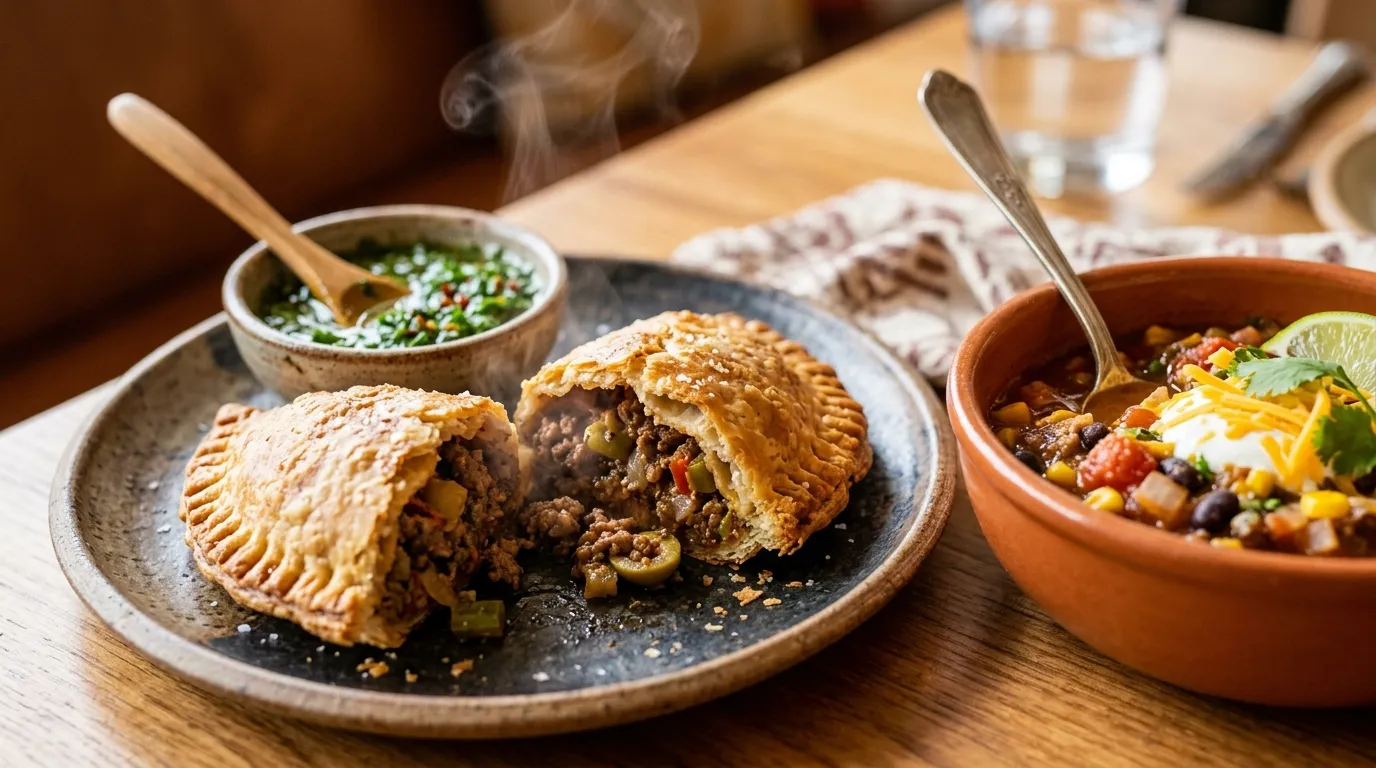
The beauty of this empanada dough recipe is its neutrality—it pairs beautifully with almost any flavor profile. I love filling them with classic Argentine beef, complete with green olives, hard-boiled eggs, and warm spices like cumin and smoked paprika. They are also phenomenal stuffed with shredded rotisserie chicken, caramelized onions, and gooey Oaxaca cheese.
When it comes to serving, sauces are mandatory. A bright, herbaceous chimichurri sauce cuts through the richness of the buttery crust perfectly. A spicy roasted tomato salsa or a creamy avocado-cilantro dip also works wonders.
If you are serving these as an appetizer or a side dish, they pair beautifully with a warm, comforting bowl of soup. I highly recommend serving them alongside this easy taco soup recipe for a complete, cozy family dinner. The rich, spiced broth of the soup and the flaky, buttery crunch of the empanadas are a match made in heaven.
Conclusion
Making pastry from scratch does not have to be a stressful ordeal. By keeping your ingredients cold, respecting the resting times, and handling the dough gently, you will be rewarded with a spectacular crust that elevates any filling. Once you try this empanada dough recipe, you will understand why making it at home is entirely worth the effort. The texture, the flavor, and the sheer satisfaction of pulling these golden beauties from the oven cannot be beaten.
Did you make this? I would love to hear what fillings you used! Rate the recipe below and let me know how they turned out in the comments.
Common Questions About This empanada dough recipe
Can I bake instead of fry this empanada dough recipe?
Yes, absolutely! This dough is specifically formulated to perform beautifully in the oven. To bake, arrange the assembled empanadas on a parchment-lined baking sheet, brush them generously with egg wash, and bake at 400°F (200°C) for 20-25 minutes until deeply golden brown.
Why did my crust shrink when I baked it?
Shrinking happens when the gluten in the flour is overdeveloped and hasn’t had time to relax. This usually occurs if you knead the dough too much or skip the chilling process. Always let the dough rest in the fridge for at least 30 minutes before rolling it out.
Can I use this empanada dough recipe for sweet fillings?
Yes! The dough itself is savory, but the subtle saltiness pairs wonderfully with sweet fillings like spiced apples, guava paste and cream cheese, or dulce de leche. If you know you are making dessert empanadas, you can add one tablespoon of granulated sugar to the dry ingredients during Phase 2.
Do I need a food processor to make this?
Not at all. While a food processor makes cutting the butter into the flour faster, doing it by hand with a pastry blender or your fingers is completely fine. In fact, making it by hand often prevents the common mistake of over-mixing the dough, giving you a flakier end result.