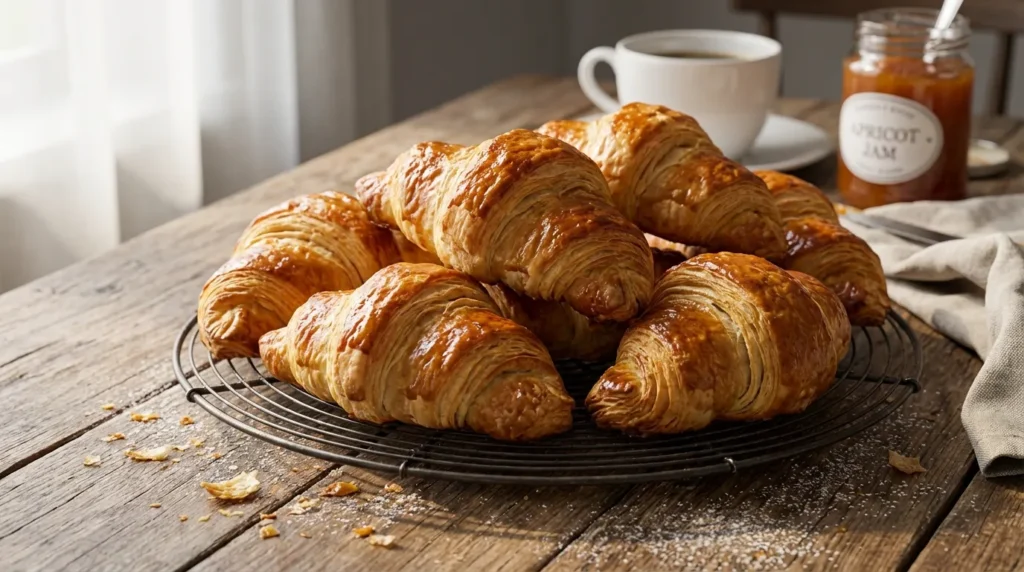

Authentic Butter Gipfeli Recipe (Swiss Croissants)
Equipment
- Stand Mixer
- Rolling Pin
- Baking Sheet
- Parchment Paper
- Pastry Brush
Ingredients
The Dough (Détrempe)
- 500 g Flour (Type 550 or mix of AP/Bread flour)
- 10 g Salt
- 40 g Sugar
- 20 g Fresh Yeast Or 7g active dry yeast
- 250 ml Whole Milk Lukewarm
- 50 g Butter Softened, for the dough
For Lamination
- 250 g European Style Butter Cold, min 82% fat
Assembly
- 1 Egg Yolk Mixed with 1 tbsp milk for wash
Instructions
- Activate the Yeast: In a small bowl, dissolve the yeast and sugar in lukewarm milk. Let sit for 5-10 minutes until frothy.
- Mix Dough: Combine flour and salt in a mixer. Add the yeast mixture and the 50g of softened butter. Knead on low speed for 8-10 minutes until smooth and elastic.
- First Proof & Chill: Cover and let rise at room temperature for 1 hour (doubled in size). Then, place the dough in the fridge for at least 30 minutes to chill thoroughly.
- Prepare Butter Block: Pound the cold 250g laminating butter between parchment paper into a 15x15cm square. Keep it pliable but cold.
- Lock-In: Roll chilled dough into a square larger than the butter. Place butter in center (diamond shape), fold corners over to seal like an envelope.
- Fold 1: Roll dough into a 20x60cm rectangle. Fold in thirds (letter fold). Wrap and chill for 30 minutes.
- Fold 2: Rotate dough 90 degrees. Roll out and fold in thirds again. Chill for 30 minutes.
- Fold 3: Repeat the rolling and folding process one last time. Chill.
- Shape: Roll dough to 4mm thickness. Cut into isosceles triangles (10-12cm base). Notch the base, stretch slightly, and roll up tightly, curving ends to form a crescent.
- Final Proof: Place on parchment-lined baking sheet. Cover loosely and proof for 45-60 minutes until they wobble when shaken.
- Bake: Preheat oven to 200°C (400°F). Brush with egg wash. Bake for 18-22 minutes until deep golden brown. Optional: Place a tray of ice cubes in the bottom of the oven at the start for steam.
Notes
Flour Note: If you cannot find Swiss Weissmehl, a mix of All-Purpose and Bread Flour works best to get the right protein content.
Imagine waking up on a Sunday morning to the aroma of caramelized butter and yeast wafting through your kitchen. That is the magic of the Swiss Sunday breakfast. While the French have their croissants, we Swiss have something arguably even better: the Gipfeli. If you have been searching for the ultimate gipfeli recipe to recreate that bakery-fresh experience at home, you have arrived at the right place.
Unlike the airy, honeycomb-interior of a French croissant, a traditional Swiss Buttergipfeli is slightly denser, curved into a distinct crescent shape, and possesses a nutty, savory finish that pairs perfectly with strong coffee. I’ve spent years tweaking ratios in my kitchen to find the perfect balance between a crispy, shattering crust and a tender, melt-in-your-mouth interior. This isn’t just another pastry guide; this is the only gipfeli recipe you will ever need to master the art of Swiss baking.
Why You’ll Love This Gipfeli Recipe
This recipe has been tested dozens of times to ensure it works in a standard home kitchen, not just a professional bakery with a sheeter. Here is why this specific version is a winner:
- Manageable Lamination: Many home cooks are intimidated by laminating dough (folding butter into dough). My method uses a simplified folding technique that guarantees flaky layers without the stress of a 3-day process.
- Perfect Texture Balance: This gipfeli recipe yields a pastry that is crispy on the outside but soft and substantial on the inside—perfect for dipping in hot chocolate or slicing open for sandwiches.
- Freezer Friendly: You can do the hard work ahead of time. These freeze beautifully before baking, meaning you can have fresh Swiss pastries on demand.
- Authentic Flavor Profile: By using a specific fermentation time, we develop that signature “bakery” flavor that 30-minute recipes simply cannot replicate.
Ingredients & Substitutions
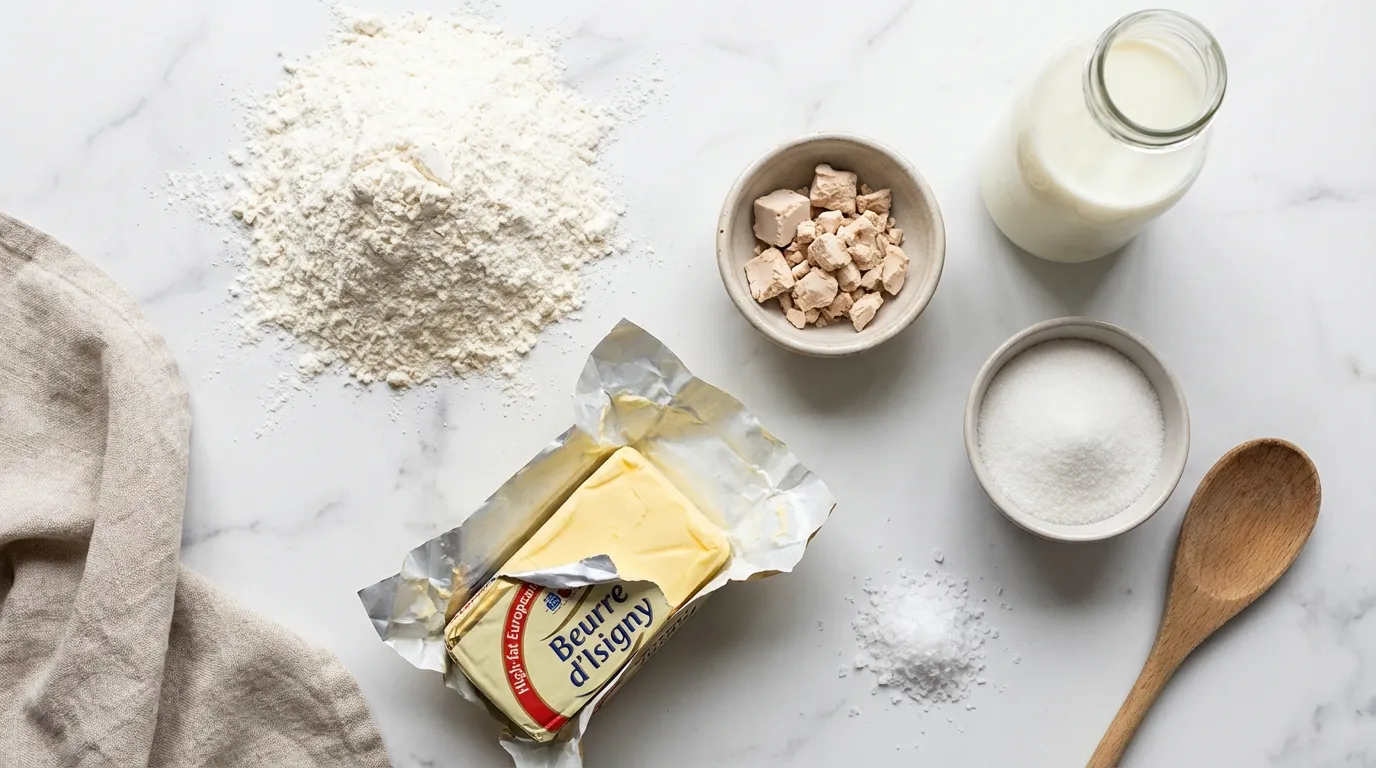
To get that professional sheen and taste, quality ingredients are non-negotiable. Here is what you need for this gipfeli recipe and why I chose them:
- Flour (Type 550 or All-Purpose/Bread Blend): In Switzerland, we typically use “Weissmehl” (Type 400 or 550). For US readers, a mix of All-Purpose and Bread Flour works best. You need enough protein (gluten) to hold the layers, but not so much that the pastry becomes tough.
- Yeast: I prefer fresh yeast for the most authentic rise and flavor. However, active dry yeast works perfectly fine. If using dry, use about 1/3 of the weight of fresh yeast.
- Milk (Whole): Do not use skim milk here. The fat content in whole milk tenderizes the crumb.
- Butter (The Star): You need high-fat, European-style unsalted butter (at least 82% fat). American butter often has higher water content, which can make the layers steam rather than flake.
- Sugar & Salt: A touch of sugar feeds the yeast, while a generous amount of salt is crucial for that savory swiss croissant flavor profile.
- Egg Wash: A mixture of egg yolk and a splash of milk gives the Gipfeli their signature deep golden-brown color.
Dietary Substitutions:
- Vegan: You can substitute the butter with a high-quality vegan butter block (ensure it is hard when cold) and use almond milk. The texture will be slightly different, but still delicious.
How to Make Gipfeli Recipe
Making these pastries is a labor of love, but I have broken it down into manageable phases so you don’t feel overwhelmed.
Phase 1: The Détrempe (Base Dough)
1. Activate the Yeast: In a small bowl, dissolve your yeast and sugar in lukewarm milk. Let it sit for 5-10 minutes until it becomes frothy. This “bloom” tells you your yeast is alive and ready to work.
2. Mix Dry Ingredients: In a large mixing bowl (or stand mixer), combine the flour and salt.
3. Knead: Pour the yeast mixture and the softened butter (for the dough, not the laminating butter) into the flour. Knead on low speed for about 8-10 minutes. The dough should be smooth, elastic, and pull away from the sides of the bowl.
Chef’s Tip:* Do not rush this. A well-developed gluten network is essential to hold the layers of butter later.
4. First Proof: Cover the bowl with plastic wrap or a damp towel. Let it rise at room temperature for about 1 hour, or until doubled in size. Then—and this is crucial—place the dough in the fridge for at least 30 minutes. Cold dough is easier to work with.
Phase 2: The Butter Block & Lamination
This is the heart of any gipfeli recipe. We are creating alternating layers of dough and butter.
1. Prep the Butter: Take your cold laminating butter and place it between two sheets of parchment paper. Using a rolling pin, pound and roll the butter until it forms a flat square (approx. 15x15cm). It should be pliable but still cold.
2. Lock-In: Roll your chilled dough out into a square slightly larger than your butter block. Place the butter in the center, turning it 45 degrees (like a diamond on a square). Fold the corners of the dough over the butter to seal it completely like an envelope.
3. The Folds (Tourage):
- Roll: Gently roll the dough into a long rectangle (approx. 20x60cm).
- Fold 1 (Letter Fold): Fold the top third down and the bottom third up, like a business letter. Wrap and chill for 30 minutes.
- Fold 2: Rotate the dough 90 degrees. Roll out again into a long rectangle. Fold in thirds again. Chill for 30 minutes.
- Fold 3: Repeat the process one last time.
Chef’s Tip:* If at any point the butter starts to feel soft or melts, STOP. Put the dough in the fridge immediately. If the butter melts into the dough, you lose the layers and end up with brioche instead of a flaky swiss croissant.
Phase 3: Shaping and Baking
1. Final Roll: Roll the chilled dough out into a long rectangle, about 4mm thick.
2. Cut Triangles: Use a sharp knife or pizza cutter to cut isosceles triangles. The base should be about 10-12cm wide.
3. The Stretch: Take a triangle. Make a small notch in the center of the base. Gently stretch the triangle to elongate it slightly.
4. Roll: Roll from the base towards the tip. Press gently but firmly to ensure the layers stick. As you roll, curve the ends inward to create the classic crescent shape.
5. Final Proof: Place the shaped Gipfeli on a baking sheet lined with parchment paper. Cover loosely and let them proof in a draft-free spot for 45-60 minutes. They should look puffy and wobble like jelly when you shake the tray.
6. Bake: Preheat your oven to 200°C (400°F). Brush the pastries gently with egg wash. Bake for 18-22 minutes until they are a deep, rich golden brown.
Expert Tips for Perfect Results
I have made every mistake in the book so you don’t have to. Here are my top tips for mastering this gipfeli recipe:
- Temperature is Everything: Your kitchen environment matters. If it’s a hot summer day, chill your dough between every single step. If the butter gets too warm, it incorporates into the dough. If it gets too cold, it shatters inside the dough. You want “pliable cold.”
- The Steam Trick: Professional ovens inject steam to create that crispy crust. You can mimic this by placing a tray of ice cubes on the bottom rack of your oven immediately after putting the Gipfeli in. The burst of steam helps the pastry rise before a crust forms.
- Don’t Underbake: A pale Gipfeli is a sad Gipfeli. The flavor comes from the caramelization of the crust. Don’t be afraid of a dark golden color; that is where the nutty flavor lives.
- Rest the Dough: When rolling out, if the dough keeps shrinking back, it means the gluten is tight. Cover it and let it rest for 10 minutes. It will relax and become easy to roll again.
Storage & Reheating
Since this gipfeli recipe makes a generous batch, you might have leftovers (though in my house, they rarely last 24 hours).
- Room Temperature: Store baked Gipfeli in a paper bag for up to 2 days. Plastic bags will make the crust soft and chewy.
- Freezing (Unbaked): This is the best method. Freeze the shaped Gipfeli on a baking sheet until solid, then transfer to a ziplock bag. When you want to bake, let them thaw and proof on a baking sheet for about 2-3 hours before baking as usual.
- Freezing (Baked): Wrap tightly in foil and freeze for up to a month.
- Reheating: To revive a day-old or thawed Gipfeli, do not use the microwave! It destroys the texture. Place them in a 180°C (350°F) oven for 5-8 minutes. They will crisp up and taste freshly baked.
Serving Suggestions
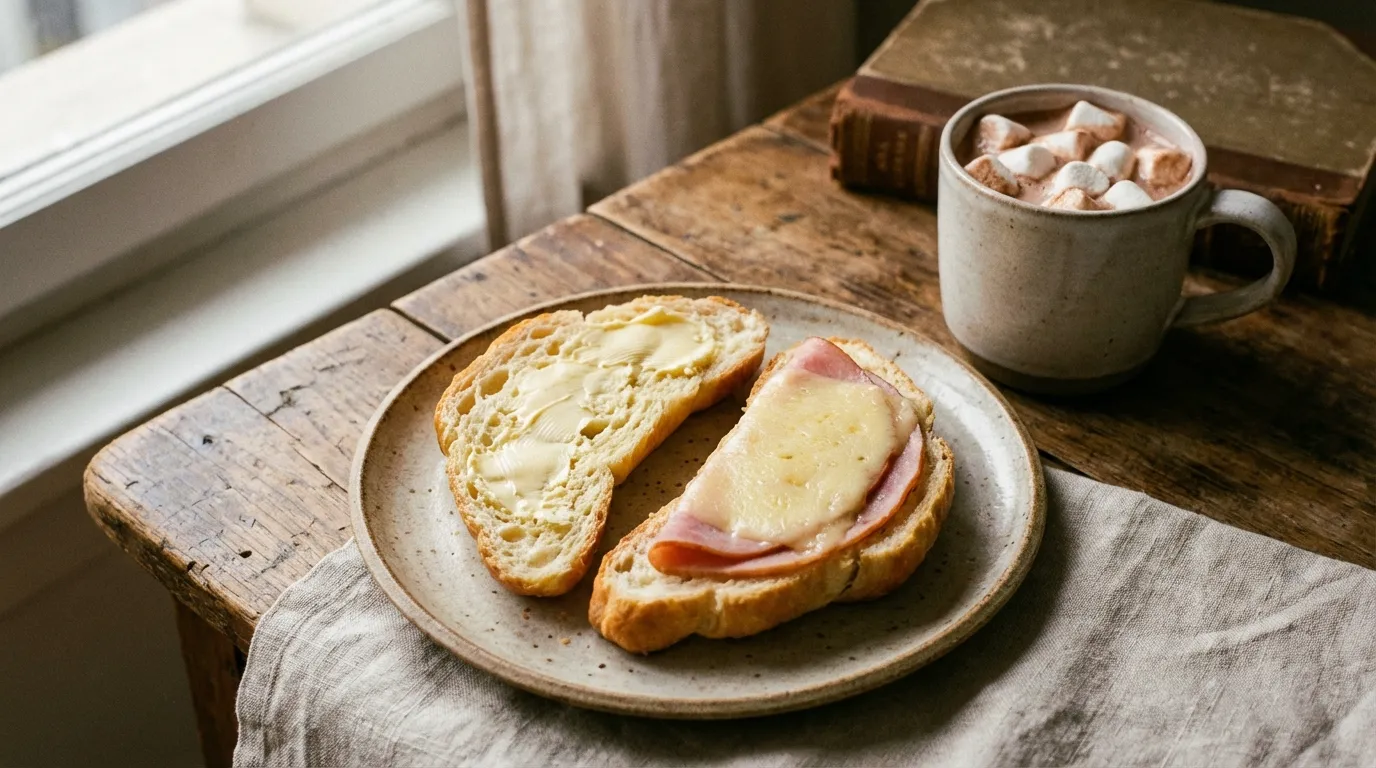
In Switzerland, a Gipfeli is rarely eaten alone. It is part of a ritual.
- The Classic: Serve with a “Schale” (café au lait) or a hot chocolate. Dunking is socially acceptable and highly encouraged!
- Savory: Slice horizontally and fill with ham, Gruyère cheese, and a pickle for a classic Swiss lunch snack.
- Sweet: A layer of apricot jam or good quality butter is all you need.
If you are looking to expand your baking repertoire beyond this classic pastry to pair with your breakfast spread, I highly recommend checking out some healthy baking recipes to balance out the indulgence of the butter Gipfeli.
Conclusion
Mastering this gipfeli recipe brings a piece of Swiss culture right into your home. There is a profound satisfaction in pulling a tray of golden, flaky pastries out of the oven, knowing you created those layers by hand. It takes a little patience, but the first bite of that shattering crust makes it all worth it.
Did you try this recipe? I would love to hear how it turned out! Leave a comment below or tag me in your photos.
Common Questions About Gipfeli Recipe
What is the difference between a Gipfeli and a Croissant?
While they are cousins in the pastry world, a swiss croissant (Gipfeli) is typically curved, has a slightly crisper and darker crust, and is often less sweet than its French counterpart. The interior crumb is also generally a bit tighter.
Can I use store-bought puff pastry?
Technically, yes, but the result will be different. Puff pastry lacks yeast, so it won’t have the soft, bread-like interior of a true Gipfeli. It will be flaky but hollow. For the real experience, you need to use a yeasted laminated dough as described in this gipfeli recipe.
Why did my butter leak out during baking?
This usually happens if the dough wasn’t proofed long enough before baking, or if the oven wasn’t hot enough. It can also happen if the butter melted during the folding process. Ensure your oven is fully preheated to 200°C before the tray goes in.
Can I make this gipfeli recipe with whole wheat flour?
You can substitute up to 30% of the white flour with whole wheat flour. Any more than that, and the bran in the whole wheat will cut through the gluten strands, resulting in a heavy, dense pastry that won’t rise properly.
How do I know when they are fully proofed?
The “wobble test” is best. Gently shake the baking sheet. If the Gipfeli wiggle like gelatin, they are ready. If they stay stiff, give them more time. If they collapse, they have over-proofed (bake them immediately!).