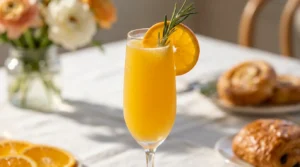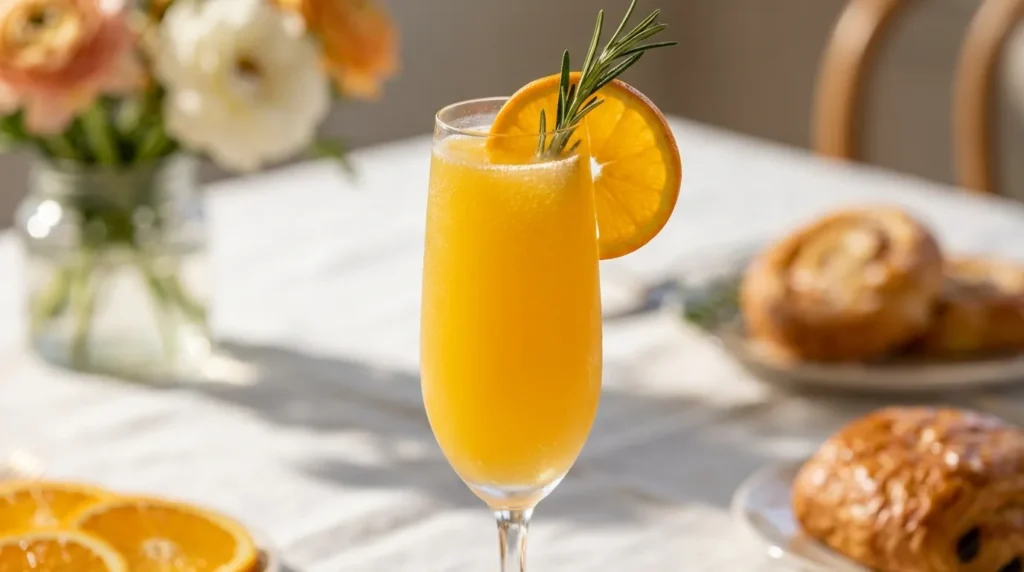
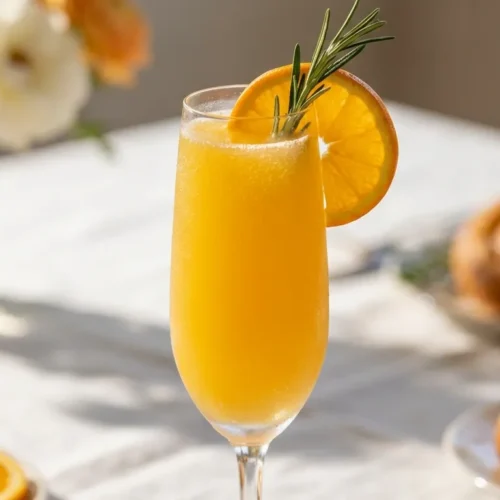
Sparkling Mockmosa Recipe
Equipment
- Champagne Flutes
- Juicer
Ingredients
Main Ingredients
- 1 cup Valencia orange juice freshly squeezed and chilled
- 1 cup Sparkling white grape juice well-chilled (or sparkling cider)
Garnishes
- Orange slices or twists
- Fresh rosemary sprigs optional
Instructions
- Phase 1: The Chill Factor – Thoroughly chill the orange juice and sparkling juice for at least 4 hours. Place champagne flutes in the freezer for 10 minutes prior to serving.
- Phase 2: The Pour – Tilt a chilled flute at a 45-degree angle. Fill halfway with sparkling white grape juice, then slowly top with the orange juice. Do not stir, as the juices will mix naturally.
- Phase 3: The Garnish – Add a thin slice of orange or a twist of peel to the rim. Add a sprig of rosemary or a frozen cranberry for extra visual appeal and aroma.
Notes
There is a specific sound that signals the start of a truly relaxing weekend: the sharp pop of a cork followed by the gentle hiss of carbonation hitting the glass. For years, I’ve catered brunches where the drinks menu was just as important as the eggs benedict, and I’ve learned that you don’t need alcohol to create that celebratory atmosphere. This mockmosa recipe is the result of countless trials to find the perfect balance between bright, acidic citrus and the refreshing bite of sparkling bubbles.
When I first started experimenting with non-alcoholic pairings, I found that many alternatives were cloyingly sweet or flat. A great drink needs structure. The beauty of this mockmosa recipe lies in its simplicity and its texture. It offers that classic, effervescent “bite” that wakes up your palate, making it the perfect companion to rich, savory breakfast dishes. Whether you are hosting a baby shower, navigating a sober month, or just want a festive drink the kids can enjoy, this is, without a doubt, the best version you will make at home.
Why You’ll Love This Mockmosa Recipe
When I develop recipes for my clients, I look for high reward with low effort. Here is why this specific mockmosa recipe has become a staple in my kitchen:
- Perfect Carbonation Balance: Unlike other recipes that go flat instantly, this method preserves the fizz, mimicking the mouthfeel of traditional champagne.
- Customizable Sweetness: By adjusting the ratio of juice to sparkling element, you control the sugar levels, making it suitable for different dietary needs.
- No “Mocktail” Aftertaste: Many mockmosa recipes rely on artificial syrups. This one uses pure ingredients for a clean, crisp finish.
- Visual Appeal: It looks identical to the classic cocktail, ensuring everyone feels part of the toast, regardless of what is in their glass.
Ingredients & Substitutions
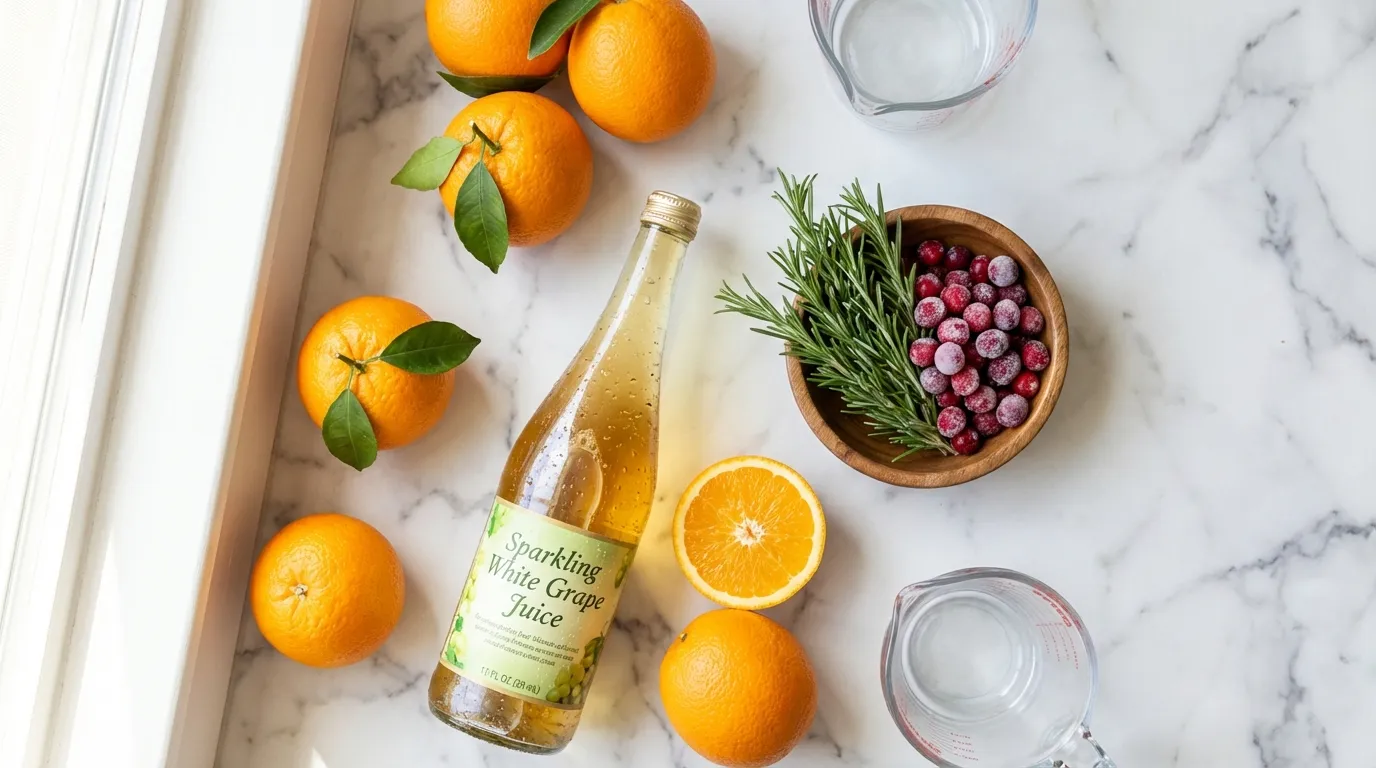
The secret to a restaurant-quality drink is often ingredient temperature and quality, not complexity. Since there are only two main components in a mockmosa, there is nowhere for low-quality ingredients to hide.
- Orange Juice: For the absolute best flavor, use freshly squeezed juice from Valencia oranges. They offer the perfect balance of tartness and sweetness. If you are buying store-bought, opt for “high pulp” if you want a rustic texture, or “pulp-free” for a cleaner look. Avoid concentrate; it tends to be too syrupy.
- Sparkling White Grape Juice: This is the classic substitute for champagne in a mockmosa mocktail recipe. It provides the necessary body and sweetness. Brands like Welch’s are standard, but look for artisanal cider brands for a drier finish.
- Alternative Bubbles: If you find grape juice too sweet, substitute it with a dry Sparkling Apple Cider or even a high-quality Club Soda or Sparkling Water. Using a citrus-flavored sparkling water (like LaCroix) cuts the sugar significantly while keeping the fizz.
- Garnishes: Fresh fruit is essential. Slices of orange, a twist of peel, or even a sprig of rosemary add aromatics that hit the nose before the drink hits the tongue.
How to Make Mockmosa Recipe
Executing this drink is about technique. We want to maintain the carbonation and ensure the drink is ice-cold without using ice cubes, which would dilute the flavor.
Phase 1: The Chill Factor
The most critical step happens before you even touch a glass. You must chill your ingredients thoroughly. Place your orange juice and sparkling grape juice in the coldest part of your fridge for at least 4 hours (or 30 minutes in the freezer, but don’t let them freeze solid!).
- Chef’s Tip: Chill your champagne flutes as well. Rinse them with water and place them in the freezer for 10 minutes. A frosted glass keeps the mockmosa crisp longer.
Phase 2: The Pour
There is a physics to pouring carbonated drinks. If you dump the sparkling juice in too fast, it foams up and you lose all the bubbles.
1. Tilt your champagne flute at a 45-degree angle.
2. Pour the sparkling white grape juice in first, filling the glass about halfway.
3. Slowly top with the orange juice.
4. Note: I prefer pouring the sparkling element first because the heavier orange juice will naturally sink through it, mixing the drink without needing to stir.
Phase 3: The Garnish
Garnishing isn’t just for looks; it adds aroma. Take a thin slice of orange or a twisted peel and place it on the rim or drop it into the glass. If you are feeling fancy, a single frozen cranberry or a mint leaf adds a beautiful color contrast.
Expert Tips for Perfect Results
I have served hundreds of these at events, and here are the professional tricks that elevate this mockmosa recipe from “good” to “unforgettable.”
- The “Dirty” Pour: If you want a sunrise effect (beautiful for photos), pour the sparkling juice, then the orange juice, and finally, slowly drizzle a teaspoon of grenadine down the side of the glass. It will settle at the bottom creates a stunning gradient.
- Don’t Stir: I cannot stress this enough. Stirring kills bubbles. If you pour the sparkling juice and orange juice correctly, they will mix themselves. If you absolutely must mix, use a long bar spoon and give it one gentle lift—not a swirl.
- Freshness Matters: Squeeze your oranges the morning of the event. Oxidation changes the flavor of citrus juice within a few hours, turning it slightly bitter.
- Glassware Choice: Use a tall, narrow flute. The shape is designed to reduce the surface area, which keeps the carbonation trapped in the liquid longer.
Storage & Reheating
Unlike a casserole or a stew, a mockmosa mocktail recipe does not store well. This is an “à la minute” preparation (made to order).
- Fridge: Once the bottle of sparkling juice is opened, it begins to lose carbonation immediately. You can keep an open bottle sealed with a champagne stopper in the fridge for up to 24 hours, but it won’t be as crisp.
- Freezing: Do not freeze the finished drink; the carbonation will expand and ruin the texture, and the juice will separate.
- Leftovers: If you have leftover flat mockmosa mixture, don’t throw it out! Pour it into popsicle molds for a delicious frozen treat the next day.
Serving Suggestions
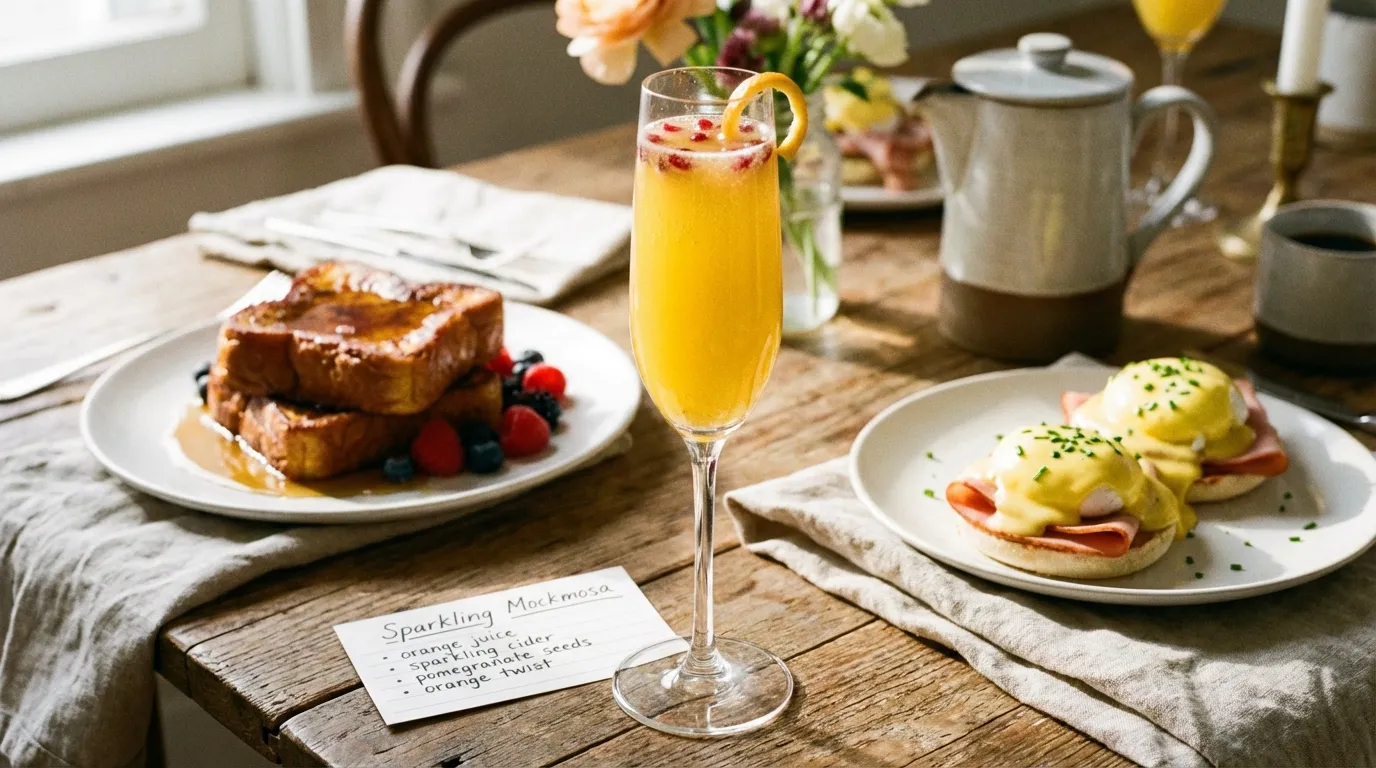
This mockmosa recipe is the queen of the brunch table. The acidity cuts through rich, fatty foods, making it the perfect palate cleanser.
- The Sweet Pairings: Serve this alongside fluffy brioche French toast, blueberry pancakes, or a stack of waffles with whipped cream. The citrus brightens up the heavy syrup flavors.
- The Savory Pairings: It works beautifully with Eggs Benedict, Quiche Lorraine, or crispy hash browns.
- The Alternative Option: If you are hosting a crowd, you likely have guests with different tastes. Some people prefer savory over sweet. For those guests, I highly recommend pairing this drink option with my Bloody Molly recipe, which is a fantastic tomato-based non-alcoholic alternative that balances out the menu.
Conclusion
Creating a memorable brunch isn’t about alcohol; it’s about flavor, presentation, and the company you keep. This mockmosa recipe delivers on all fronts. It is bright, bubbly, and brings a sense of occasion to even a simple Tuesday morning breakfast. The interplay between the tart citrus and the sweet grape creates a harmony that I honestly prefer over the alcoholic original.
I hope this becomes a staple in your home just as it has in mine. Next time you are planning a gathering, skip the wine aisle and head to the produce section—your guests will thank you.
Common Questions About Mockmosa Recipe
Can I make this mockmosa recipe for a large crowd?
Yes! To serve a crowd, mix the orange juice and sparkling grape juice in a large pitcher immediately before serving. However, for the best carbonation, I recommend setting up a “Mockmosa Bar” with the ingredients on ice so guests can pour their own fresh drinks.
Is this recipe suitable for kids?
Absolutely. Since there is no alcohol, mockmosa recipes are a hit with children. They love the fizz and the “grown-up” feeling of holding a fancy glass.
Can I use other juices besides orange?
Definitely. While this is a classic orange mockmosa recipe, you can swap the citrus for cranberry juice (a “Poinsettia”), grapefruit juice, or even pear nectar for different seasonal variations.
How do I reduce the sugar content?
If you find the standard mixture too sweet, swap the sparkling white grape juice for a plain or citrus-flavored sparkling water. This creates a lighter, lower-calorie version that is just as refreshing.
What is the difference between a mockmosa and a virgin mimosa?
There is no difference! The terms are used interchangeably. Whether you call it a virgin mimosa or use my mockmosa recipe, you are creating a delicious, non-alcoholic sparkling citrus drink.