

Portuguese Beans With Linguica
Equipment
- Large Pot or Dutch Oven
- Wooden Spoon
- Knife and Cutting Board
Ingredients
Main Ingredients
- 1 tbsp olive oil
- 1 lb linguica sausage sliced into coins
- 1 medium onion chopped
- 1 medium green bell pepper chopped
- 3 cloves garlic minced
- 1 tsp smoked paprika
- 2 cups chicken broth divided
- 1 can diced tomatoes 14.5 oz, undrained
- 2 cans pinto beans 15 oz each, rinsed and drained
- 2 bay leaves
- Salt and black pepper to taste
- Fresh parsley chopped, for garnish
Instructions
- Brown the Sausage and Soften the Veggies: Heat olive oil in a large pot or Dutch oven over medium-high heat. Add the sliced linguica and cook until browned, allowing the paprika-infused oils to release. Add the chopped onion and bell pepper to the pot. Sauté for 4-5 minutes until softened. Add the minced garlic and smoked paprika, stirring for 1 minute until fragrant.
- Deglaze and Combine: Pour in a splash of chicken broth and use a wooden spoon to scrape up any browned bits from the bottom of the pot. Pour in the remaining chicken broth, the can of diced tomatoes (juices included), rinsed beans, and bay leaves. Stir to combine.
- Let It Simmer and Mingle: Bring the mixture to a gentle boil, then reduce heat to low. Cover and simmer for at least 20 minutes (up to 40 minutes for deeper flavor) to allow the ingredients to meld.
- Finish and Season: Remove and discard the bay leaves. Taste the stew and season with salt (if needed) and fresh cracked black pepper. Garnish with fresh chopped parsley and serve hot.
Notes
Let’s talk about those busy weeknights. You know the ones—where you’re craving something truly comforting and satisfying, but you just don’t have the energy for a complicated mess?
For me, that’s when this Portuguese Beans with Linguica recipe comes to the rescue. It is the very definition of an “easy, happy meal.”
This is a wonderfully hearty stew that our family turns to again and again. What makes it so incredibly special is the linguica—a flavorful, smoky Portuguese sausage that does all the heavy lifting, infusing the entire dish with a rich, savory depth.
Paired with simple ingredients you probably already have in your pantry, it all comes together in one pot. If you’re looking for a new weeknight dinner that feels like a warm hug in a bowl (and guarantees no-fuss cleanup), you’ve found it.
Why You’ll Love This Easy, Happy Meal
This is one of those special recipes that gives you so much more than you put in. It’s a staple in my kitchen for a few very simple reasons, and I know you’ll love it just as much!
- A True One-Pot Meal: This is the best part! Everything, from browning the sausage to simmering the beans, happens in a single pot. That means minimal cleanup and maximum flavor.
- The Perfect Weeknight Dinner: On a busy evening, this recipe is a lifesaver. You can have this incredibly hearty and comforting stew on the table in under an hour.
- Built on Simple Ingredients: It’s a wonderfully budget-friendly meal that relies on pantry staples like canned beans and diced tomatoes. The linguica does all the work, so you don’t need a long list of complex spices.
- Incredibly Family-Friendly: The flavors are rich and savory but not overwhelmingly spicy (though you can easily add a kick!). It’s a guaranteed hit with both kids and adults, making it a perfect, stress-free family meal.
The Ingredients You’ll Need
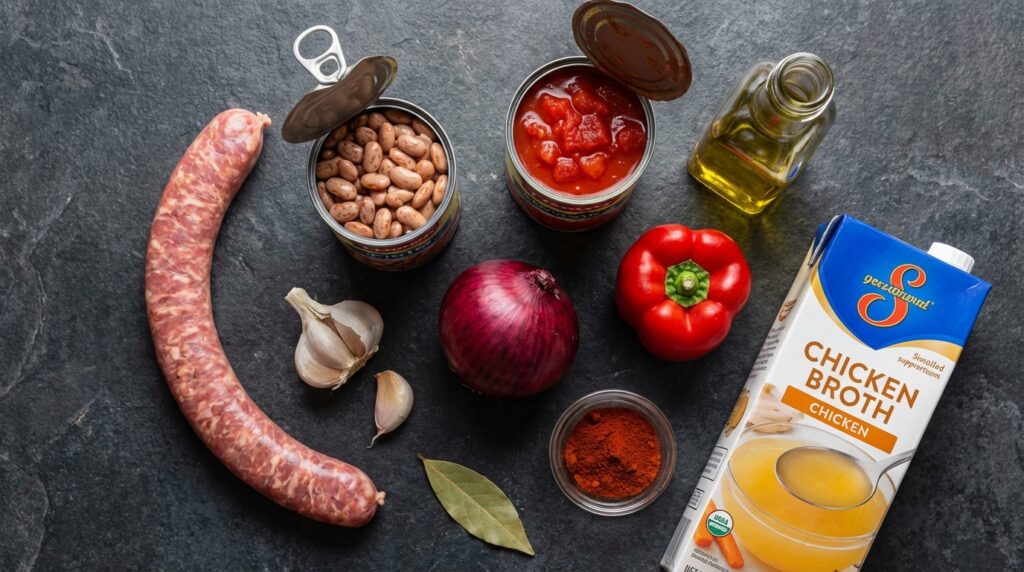
One of the best things about this recipe is how it uses simple, easy-to-find ingredients to build a truly robust flavor. No long, complicated shopping list here! Here’s what you’ll need:
- Linguica: This is the star of the show! Linguica is a fantastic Portuguese smoked sausage that’s packed with garlic and paprika. It’s not typically spicy, just deeply flavorful. (If you’re curious about its history and different varieties, you can read more about linguica here). You can usually find it in the refrigerated section near other cured sausages.
- Canned Beans: To keep this meal quick and easy, we’re using canned beans. I love using pinto beans or dark red kidney beans, but cannellini (white kidney beans) also work wonderfully. You’ll need two cans, rinsed and drained.
- Aromatics (The Flavor Base): This trio builds the foundation.
- 1 large yellow onion, chopped
- 1 bell pepper (red or green), chopped
- 4-5 cloves of garlic, minced (I like a lot, so feel free to adjust!)
- Pantry Staples:
- Olive Oil: For sautéing the sausage and vegetables.
- Canned Diced Tomatoes: A 28-ounce can. Don’t drain it! We want all those flavorful juices.
- Chicken Broth: This brings it all together into a hearty stew. Vegetable or beef broth also works perfectly.
- Smoked Paprika: This is my “secret weapon” to double down on that smoky, savory flavor from the sausage.
- Bay Leaves: Just one or two for that slow-simmered aroma.
- Salt & Black Pepper: To taste. Remember, the sausage and broth are already salty, so go easy at first and adjust at the end.
How to Make This One-Pot Meal
This all comes together in one pot, and the process is all about building flavor in layers. Let’s walk through it.
1. Brown the Sausage and Soften the Veggies
Grab a large pot or a Dutch oven and set it over medium-high heat with a splash of olive oil. Add your linguica slices. Let them cook for a few minutes per side; you’re looking for a nice brown color, and you’ll see the sausage release some of its own flavorful, paprika-infused oils.
Once the sausage is browned, add the chopped onion and bell pepper right into that same pot. Let them sauté for 4-5 minutes, stirring as they soften and soak up all that great flavor. Finally, add the minced garlic and smoked paprika. Stir this for just one minute until that wonderful garlic aroma hits you—this toasts the spice and wakes it up.
2. Deglaze and Combine
Now for the easy part. Pour in a small splash of your chicken broth and use a wooden spoon to scrape up any browned bits that might be stuck to the bottom of the pot. This is a crucial step—that’s a ton of concentrated flavor you don’t want to leave behind!
With the bottom of the pot all clean, pour in the rest of your chicken broth, the entire can of diced tomatoes (juices and all), the rinsed beans, and the bay leaves. Give everything a big stir to bring it all together.
3. Let It Simmer and Mingle
Turn the heat up to bring the stew to a lively bubble (a gentle boil). The moment it does, drop the heat to low, put the lid on the pot, and let it simmer.
You’ll want to give it at least 20 minutes. This is the most important wait! This simmering time is when all those separate ingredients stop being just ingredients and truly meld into a rich, cohesive stew. (If you have 30-40 minutes, it’s even better, but 20 works great on a busy night).
4. Finish and Season
Before you serve, fish out those bay leaves (they’ve done their job and won’t be pleasant to bite into). Now is the most important part: give it a taste. Ask yourself, “Does it need anything?” Because the linguica and broth are already salty, you might not need any extra salt at all. Now is the time to add a pinch, or a fresh crack of black pepper, to make it absolutely perfect for you. Serve it hot!
Pro Tips and Variations
After making this dish dozens of times, I’ve picked up a few little tricks. Here’s how you can make this recipe your own and ensure it’s perfect every single time.
My Favorite Pro Tips:
- Make it Ahead! This is one of those magic stews that tastes even better the next day. The flavors get a chance to settle and deepen overnight, making it a perfect make-ahead meal for an even faster dinner.
- For a Thicker Stew: If you like your stew extra thick and hearty, here’s an easy trick. After simmering, take about 1/2 cup of the beans, mash them with a fork until they form a paste, and stir them back into the pot. Let it simmer for another 2-3 minutes. The starches from the beans will thicken the stew beautifully.
- Don’t Over-Salt: The linguica and chicken broth both contain salt. Always wait until the stew has finished simmering to taste it, then add any extra salt and pepper.
Easy Variations to Try:
- Add Some Greens: Want to add a boost of nutrition? Stir in a few big handfuls of fresh spinach or chopped kale during the last 5 minutes of cooking. The greens will wilt right into the stew.
- Make it Spicy: If you like a little heat, add 1/2 teaspoon of crushed red pepper flakes when you sauté the garlic. A few dashes of your favorite hot sauce at the end also works great.
- Using Dried Beans: If you prefer using dried beans, you absolutely can! Just soak and cook 1.5 cups of dried pinto or kidney beans according to the package directions first. Then, add the cooked beans to the pot as instructed in the recipe.
Serving Suggestions: Completing the Meal
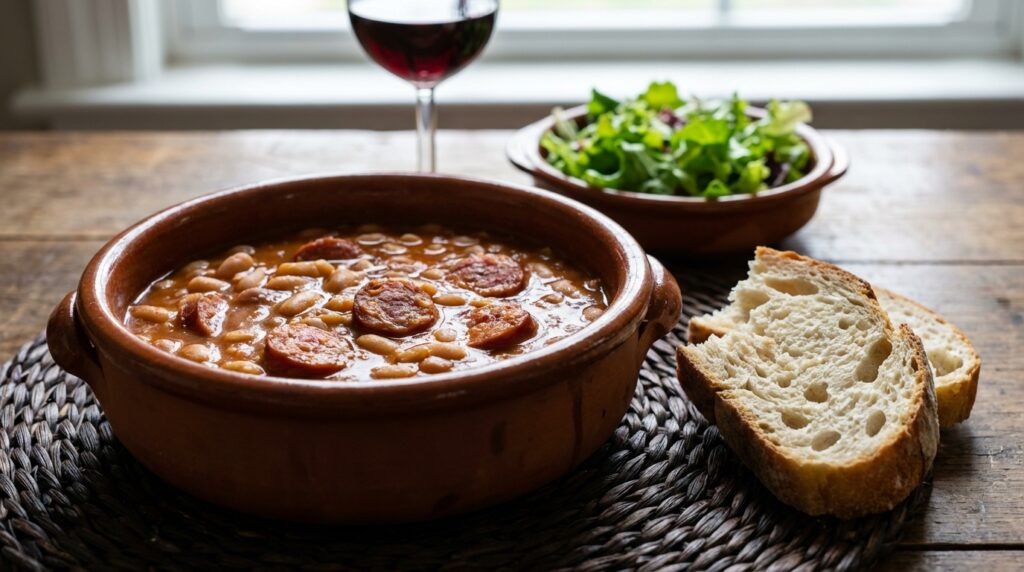
This Portuguese Beans with Linguica is so hearty it can easily stand on its own as a one-pot meal. But, if you want to make it a full, comforting spread, here are my favorite ways to serve it.
- Crusty Bread is Non-Negotiable!If you do just one other thing, please have some warm, crusty bread on the side. A good sourdough or a simple baguette is perfect. You will absolutely want something to sop up every last bit of that rich, smoky broth.
- Serve Over RiceTo make this meal stretch even further, spoon it over a simple bed of fluffy white rice. The rice soaks up the stew beautifully. Brown rice also works wonderfully if you prefer a whole-grain option.
- A Crisp Side SaladSince the stew is so warm and savory, I love pairing it with a simple side salad. Something with crisp greens and a bright, zesty vinaigrette adds a perfect, fresh contrast that cuts through the richness.
- A Fresh GarnishRight before serving, I always add a little garnish of fresh, chopped parsley over the top. It adds a lovely pop of green color and a final hint of freshness.
The Perfect One-Pot Comfort Meal
And there you have it! This Portuguese Beans with Linguica recipe is, for me, the very definition of an easy, happy meal. It’s proof that you don’t need a complicated process or a long list of ingredients to create a deeply satisfying, savory dinner that tastes like it’s been simmering all day.
This is a dish I turn to on busy nights when I’m craving real comfort food without the fuss. It’s become a new family favorite in our home, and I truly hope it becomes one in yours, too.
I hope you try this recipe soon! If you do, I would love to hear what you think. Please leave a comment below or tag me in a photo—it always makes my day to see your creations!
Your Questions, Answered!
Here are a few common queries that pop up when making this recipe. If your question isn’t here, please feel free to ask in the comments!
1. What is linguica, really?
I get this question all the time! Linguica is the flavor powerhouse of this entire dish. It’s a Portuguese smoked sausage (meaning it’s already cooked, not raw) that’s loaded with a deep, savory, garlicky flavor and a beautiful smoky color from paprika. It’s not typically a hot-spicy sausage, just incredibly flavorful, which makes it perfect for a family-friendly meal.
2. I looked everywhere! What’s a good substitute for linguica?
This is a tough one because linguica has such a distinct taste, but you have great options! The best substitute for linguica is a high-quality, smoked Spanish chorizo (the cured, link-style, not the fresh, ground Mexican kind). It brings a similar smoky, paprika-forward flavor. If you can only find Polish kielbasa, that will also work well.
- My Pro Tip: If you use kielbasa, I recommend adding an extra 1/2 teaspoon of smoked paprika to the pot when you add the garlic to help build back some of that smoky depth.
3. How long do leftovers last in the fridge?
Here’s the great news: this stew is one of those magic dishes that is arguably better the next day. After a night in the fridge, the flavors get to know each other and deepen. Once it’s fully cooled, store your leftovers in an airtight container for up to 3-4 days.
4. Can I freeze this bean stew?
Yes! This recipe freezes like an absolute dream, making it a perfect “cook once, eat twice” meal. Let the stew cool completely, then portion it into freezer-safe containers or heavy-duty bags (laying them flat saves space!). It will be fantastic for up to 3 months. When you’re ready to eat, just let it thaw in the fridge overnight and reheat gently on the stovetop.
5. Could this be made in a slow cooker?
You can definitely adapt this for a slow cooker. For the absolute best flavor, I strongly recommend still doing the first step (browning the linguica and sautéing the vegetables) in a skillet on the stove. This creates a flavor base that you just can’t get otherwise. After that, transfer everything to your slow cooker, stir, and cook on LOW for 4 to 6 hours or on HIGH for 2 to 3 hours.