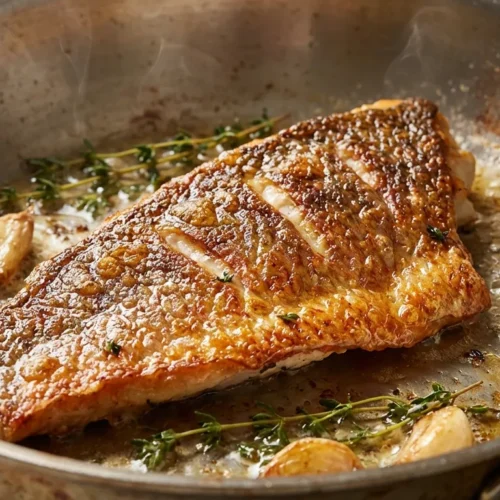
Pan-Seared Scarlet Snapper Recipe
Equipment
- Cast-iron or Stainless Steel Skillet
- Fish Spatula
Ingredients
The Fish
- 2 fillets Scarlet Snapper skin-on, firm to touch
- to taste Diamond Crystal Kosher Salt
- to taste Black Pepper
- 2 tbsp High-Smoke Point Oil Grapeseed or Avocado oil
The Baste & Finish
- 3 tbsp Unsalted Butter
- 2 cloves Garlic smashed
- 3 sprigs Fresh Thyme
- 1 wedge Lemon fresh juice
Instructions
- Prep the Fish: Remove fillets from the fridge 15 minutes prior to cooking. Pat them bone dry with paper towels. Score the skin lightly if fillets are thick. Season generously with kosher salt and black pepper just before cooking.
- Heat the Pan: Heat a large skillet over medium-high heat. Add oil and wait until it is shimmering and just starting to smoke.
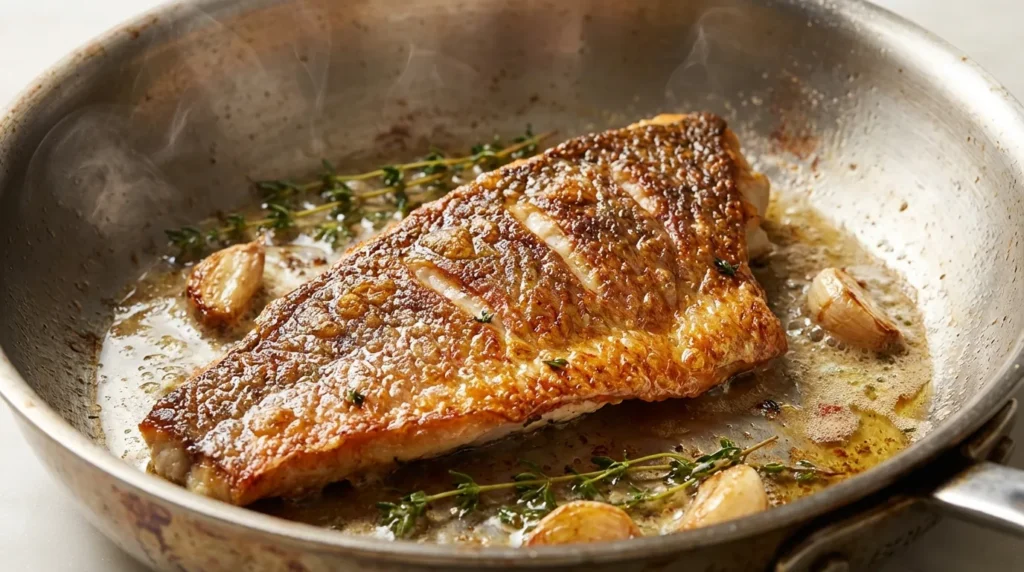
- Sear: Lay fillets skin-side down (away from you). Immediately press down with a spatula for 10-15 seconds to prevent curling. Reduce heat to medium and cook undisturbed for 3-4 minutes until skin is crispy.
- Flip and Baste: Flip the fillets. Add butter, smashed garlic, and thyme to the pan. Tilt the pan and spoon the foaming butter over the fish continuously for 1-2 minutes until internal temperature reaches 145°F (63°C).
- Finish: Remove from heat immediately and squeeze fresh lemon juice over the fish. Serve hot.
Notes
There is a specific sound that makes every chef’s heart beat a little faster: the aggressive sizzle of a cold fish fillet hitting a scorching hot cast-iron skillet. That sound promises one thing—crispy, golden skin. If you are looking to bring that restaurant-quality experience into your home kitchen, this scarlet snapper recipe is, without a doubt, the best place to start.
I still remember the first time I worked with scarlet snapper on the line. I was amazed by how the deep red skin transformed into a vibrant, appetizing crust, while the meat remained incredibly sweet and flaky. Unlike heavier fish that require strong marinades, this fish shines with simplicity.
Whether you are hosting a dinner party or just want to elevate a Tuesday night, this scarlet snapper recipe delivers high-end flavor with minimal effort. It’s light, healthy, and finishes with a garlic-herb butter sauce that you will want to sop up with crusty bread. Let’s get cooking.
Why You’ll Love This Scarlet Snapper Recipe
I have tested countless methods for cooking white fish, from poaching to baking, but pan-searing is superior for this variety. Here is why this specific scarlet snapper recipe deserves a spot in your weekly rotation:
- Crispy Skin, Tender Meat: The technique we use ensures the skin shatters like glass while the inside remains moist and pearlescent.
- Ready in Under 20 Minutes: This is not an all-day affair. From prep to plate, you are looking at a very short window, making it perfect for busy evenings.
- Minimal Ingredients: You don’t need a pantry full of exotic spices. The natural sweetness of the snapper does the heavy lifting.
- High Protein, Low Fat: It’s a nutrient-dense meal that feels indulgent because of the butter baste, but is actually quite lean.
Ingredients & Substitutions
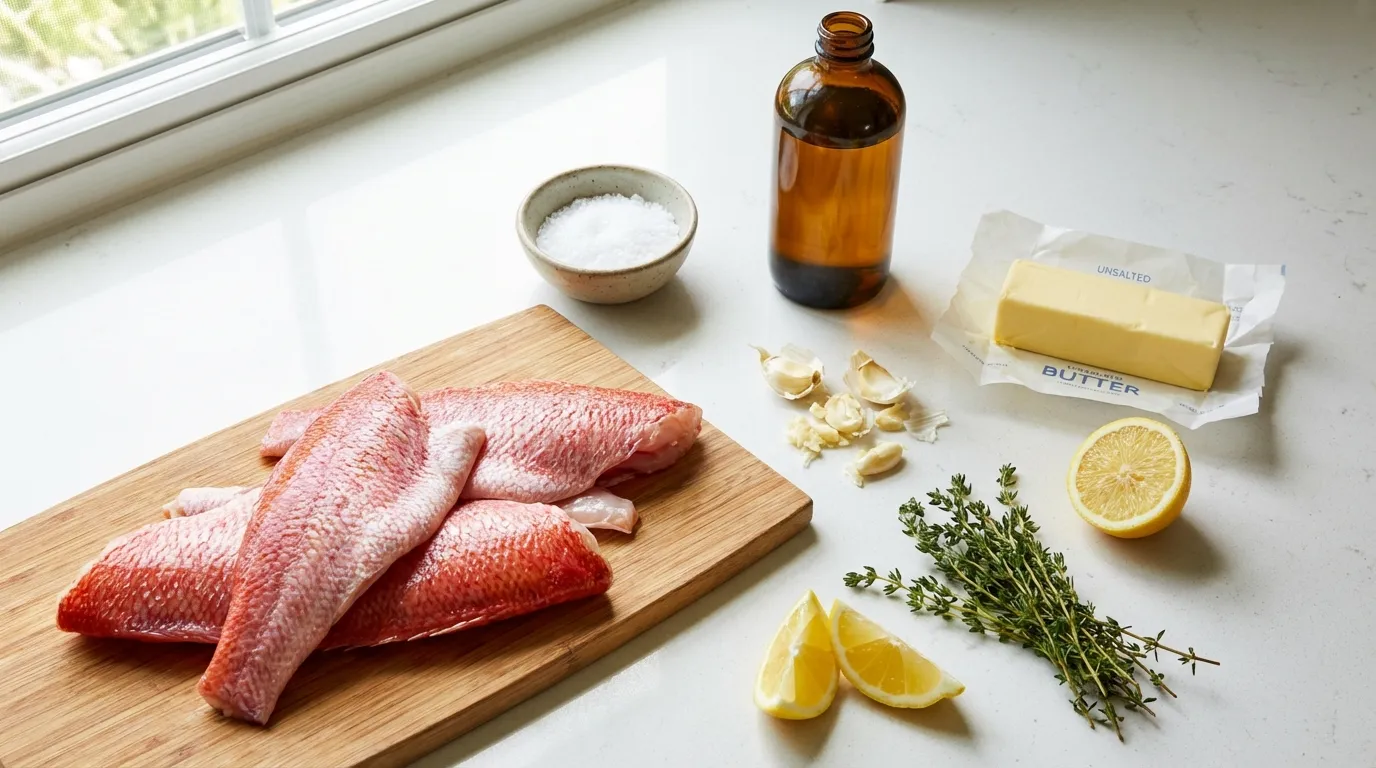
To execute this scarlet snapper recipe perfectly, ingredient quality matters. Because there are so few components, there is nowhere for poor quality to hide.
- Scarlet Snapper Fillets: Look for fillets that are firm to the touch with the skin on. The skin is essential for protecting the delicate meat during the sear. If you cannot find Scarlet Snapper specifically, a standard snapper recipe works well with Red Snapper or Vermilion Snapper.
- Kosher Salt: I always use Diamond Crystal Kosher Salt. It adheres better to the fish and is less salty by volume than table salt, making it harder to over-season.
- High-Smoke Point Oil: You need an oil that can handle heat without burning. Grapeseed oil or Avocado oil are my top choices. Avoid Extra Virgin Olive Oil for the initial sear; it will burn and turn bitter.
Unsalted Butter: We finish the dish with a technique called arroser* (basting). Using unsalted butter allows you to control the sodium level.
- Aromatics (Garlic & Thyme): Fresh garlic cloves (crushed, not chopped) and fresh thyme sprigs infuse the butter with a subtle earthiness that complements the sweet fish.
- Lemon: A squeeze of fresh lemon juice at the end cuts through the richness of the butter.
Dietary Substitutions:
- Dairy-Free: Substitute the butter for a high-quality vegan butter block, or simply stick to olive oil for the finishing step.
- Gluten-Free: This recipe is naturally gluten-free.
How to Make Scarlet Snapper Recipe
This process moves fast. Once the fish hits the pan, you won’t have time to chop garlic or find your spatula. Mise en place (having everything in place) is vital here.
Phase 1: The Crucial Prep
The number one mistake home cooks make with scarlet snapper recipes is putting wet fish into a hot pan. Moisture is the enemy of the crisp.
1. Take the fillets out of the fridge 15 minutes before cooking to take the chill off.
2. Using paper towels, pat the fish extremely dry. I mean bone dry. Wipe the skin side and the flesh side.
3. Score the skin lightly with a sharp knife if the fillets are thick. This prevents the fish from curling up when the skin contracts in the heat.
4. Season generously with kosher salt and black pepper just before cooking. Do not salt too early, or it will draw out moisture.
Phase 2: The Sear
1. Heat a large stainless steel or cast-iron skillet over medium-high heat. Add 2 tablespoons of oil. Wait until the oil is shimmering and just starting to smoke.
2. Carefully lay the fillets into the pan, skin-side down. Lay them away from you to avoid splashing hot oil.
3. Chef’s Tip: Immediately press down on the fillets with a fish spatula for 10-15 seconds. The skin will naturally want to shrink and curl; pressing it ensures even contact with the pan for that uniform golden crust.
4. Turn the heat down slightly to medium. Let the fish cook undisturbed for about 3 to 4 minutes. Do not touch it! You will see the flesh turn opaque from the bottom up.
Phase 3: The Flip and Baste
1. Test the fish. If it releases easily from the pan, it’s ready. If it sticks, give it another 30 seconds. Flip the fillets carefully.
2. Add 3 tablespoons of butter, the smashed garlic cloves, and thyme sprigs to the pan.
3. Tilt the pan slightly so the melting butter pools at the bottom with the aromatics. Using a large spoon, continuously scoop the foaming, nutty butter and pour it over the fish. This baste cooks the fish gently from the top while keeping it moist.
4. Cook for another 1-2 minutes until the internal temperature reaches 145°F (63°C) or the flesh flakes easily with a fork.
5. Remove from heat and squeeze fresh lemon juice over the fish immediately.
Expert Tips for Perfect Results
I have ruined a few fillets in my day, so learn from my mistakes. Here are the secrets to nailing this scarlet snapper recipe every single time:
- The “Shimmer” Test: If you put the fish in before the oil is hot enough, the skin will stick and tear. The oil should look like it’s dancing (shimmering) in the pan.
- Don’t Overcrowd: If you are cooking for a crowd, cook in batches. If you pack too many fillets into one pan, the temperature drops, and the fish will steam in its own juices rather than searing. Steamed snapper is fine, but it’s not what we are aiming for here.
Carryover Cooking: Fish is delicate. Pull it off the heat just* before you think it’s perfectly done. The residual heat in the fillet will finish the cooking process on the plate.
- Butter Management: If your butter starts to turn black instead of golden brown, your heat is too high. Lift the pan off the burner for a moment to cool it down. You want Brown Butter (Beurre Noisette), not Burnt Butter.
Storage & Reheating
While I strongly advocate for eating this fresh out of the pan, leftovers can be salvaged if handled correctly.
- Fridge: Store leftovers in an airtight container for up to 2 days.
- Freezing: I do not recommend freezing cooked snapper; the texture becomes rubbery upon thawing.
- Reheating: Do not microwave this. The microwave will turn your crispy skin into a soggy mess and overcook the fish instantly. Instead, place the fillets on a wire rack over a baking sheet. Reheat in a 275°F (135°C) oven for about 10-12 minutes until just warm. This method preserves the texture of the skin.
Serving Suggestions
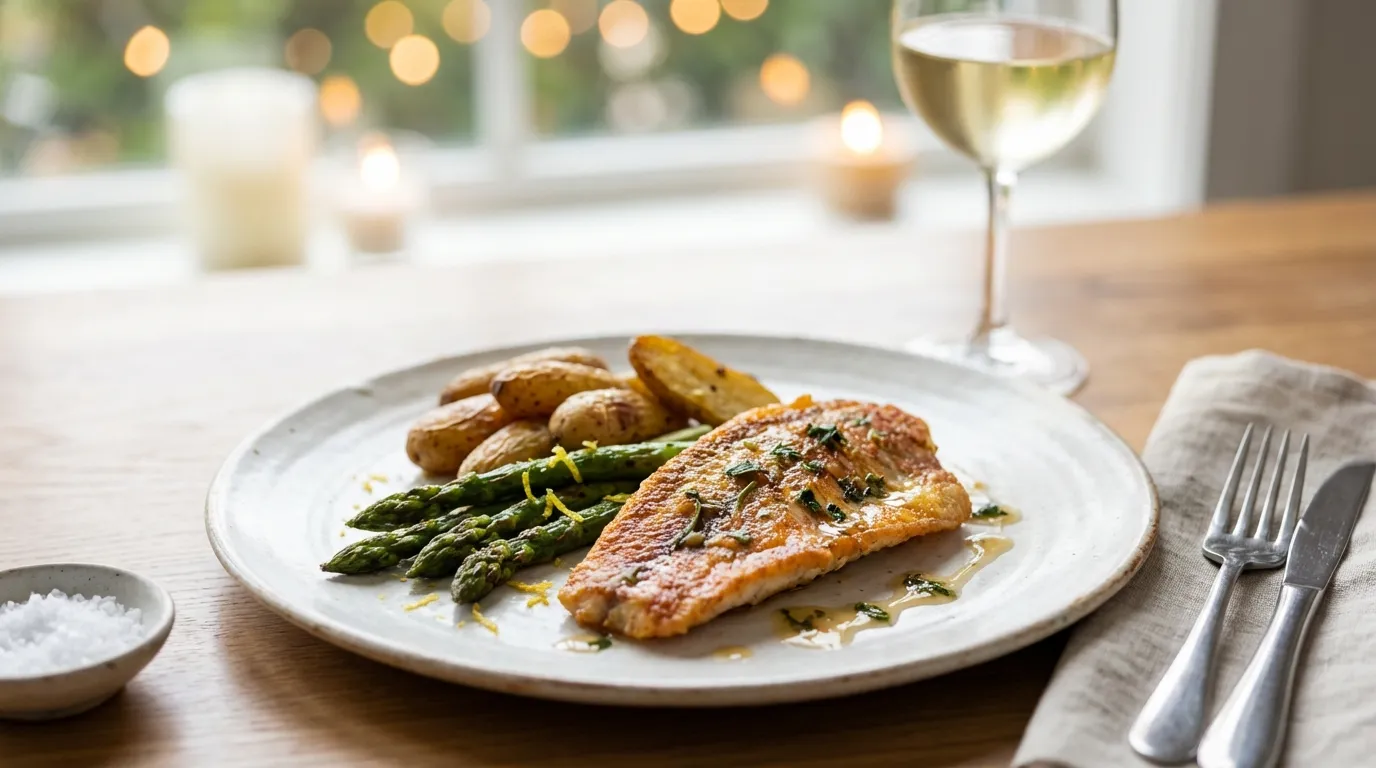
Because the fish is rich with butter and garlic, I like to pair it with sides that have some acidity or brightness.
- Vegetables: Grilled asparagus with lemon zest, sautéed spinach, or a crisp fennel and orange salad are fantastic pairings.
- Carbs: A creamy saffron risotto or roasted fingerling potatoes work beautifully to soak up the extra sauce.
- Wine Pairing: A glass of Sauvignon Blanc or a dry Chardonnay cuts through the buttery sauce perfectly.
If you enjoy elegant, crispy-skin fish dishes like this one, you should definitely try my Branzino fillet recipe for your next seafood night. It uses a similar technique but offers a different, delicate flavor profile that is equally impressive.
Conclusion
Mastering this scarlet snapper recipe is a feather in the cap of any home cook. It creates a dish that looks incredibly sophisticated but is rooted in simple, honest cooking techniques. The contrast between the crunch of the skin and the meltingly tender meat is a texture lover’s dream.
I hope this recipe brings a little bit of the coast to your kitchen table. Don’t be intimidated by the skin—get that pan hot, trust the process, and enjoy the delicious results.
Did you make this? Rate the recipe below and let me know how your sear turned out!
Common Questions About Scarlet Snapper Recipe
How do you prepare red snapper if you don’t have a cast-iron skillet?
If you don’t have cast iron, a heavy-bottomed stainless steel pan is the next best option for how do you prepare red snapper. Avoid thin non-stick pans if possible, as they don’t hold heat well enough to create a truly premium sear, although they are safer for beginners worried about sticking.
Can I use frozen fish for this?
Yes, but you must thaw it completely in the refrigerator overnight. Frozen fish tends to hold more water, so you must be extra diligent about patting it dry with paper towels, or the skin will not crisp up.
What is the difference between Scarlet Snapper and Red Snapper?
They are very similar and often confused. Scarlet Snapper generally refers to a specific deep-water variety that has a brighter, more vivid red color. Flavor-wise, they are almost identical—sweet, nutty, and mild—so they are interchangeable in most scarlet snapper recipes.
How do I know when the fish is done?
The most accurate way is a meat thermometer (aim for 145°F). Visually, the meat will turn from translucent to opaque white and will flake easily when you gently twist a fork into the thickest part of the fillet.
Can I make the sauce ahead of time?
This recipe uses a “pan sauce” method, meaning the sauce is made with the fish in the moment. However, you can prep your garlic, measure your butter, and wash your herbs ahead of time to make the cooking process smooth.