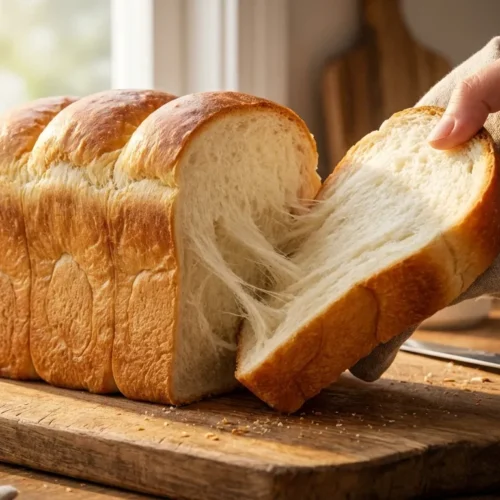
Fluffy & Milky Shokupan (Japanese Milk Bread)
Equipment
- Stand Mixer
- Loaf Pan (Pullman or Standard)
- Small Saucepan
- Digital Scale
Ingredients
Tangzhong (Water Roux)
- 20 g bread flour
- 100 ml water or milk
The Dough
- 350 g bread flour high protein (12-13%)
- 40 g sugar
- 6 g instant yeast SAF Gold recommended
- 6 g salt
- 110 ml warm milk approx 30°C/86°F
- 40 ml heavy cream room temperature
- 1 large egg room temperature
- 30 g unsalted butter room temperature, softened
- 2 tbsp milk powder optional, for extra flavor
Egg Wash
- 1 egg beaten with a splash of milk
Instructions
- Make the Tangzhong: In a small saucepan, whisk together 20g of bread flour and 100ml of water (or milk) until no lumps remain.
- Place over low-medium heat. Cook, stirring constantly, for about 3-4 minutes until the mixture thickens into a paste that resembles glue or mashed potatoes (lines left by the spoon don’t fill back in).
- Transfer to a small bowl, cover with plastic wrap touching the surface, and let cool to room temperature.
- Mix the Dough: In the bowl of a stand mixer, combine dry ingredients: bread flour, sugar, instant yeast, and salt (keep salt away from yeast). If using milk powder, add it here.
- In a separate jug, whisk the warm milk, heavy cream, and egg. Add this liquid mixture and the cooled Tangzhong to the dry ingredients.
- Knead: Mix on low speed until a shaggy dough forms. Increase to medium-low and knead for 5-7 minutes. The dough will be sticky.
- Add the softened butter one tablespoon at a time, waiting for each to incorporate. Once all butter is in, turn mixer to medium-high and knead for 8-10 minutes until the dough passes the Windowpane Test (stretches thin without tearing).
- First Rise: Shape dough into a smooth ball. Place in a greased bowl, cover, and let rise in a warm spot (25°C-28°C) for 60-90 minutes, or until doubled in size.
- Shape: Punch down gently. Divide into 3 equal pieces. Roll into rounds, cover, and rest for 15 minutes.
- Roll each ball into a long oval. Fold sides into the center (letter fold), flatten gently, then roll up into a tight spiral. Place spirals into a greased loaf pan.
- Final Proof: Cover and let rise for 45-60 minutes. The dough should rise to about 1 inch below the rim (for Pullman) or cresting the top (for open loaf).
- Bake: Preheat oven to 350°F (175°C). Brush the top gently with egg wash. Bake for 30-35 minutes. Tent with foil if browning too fast. Internal temp should reach 190°F (88°C).
- Remove from pan immediately and cool completely on a wire rack for at least 1 hour before slicing.
Notes
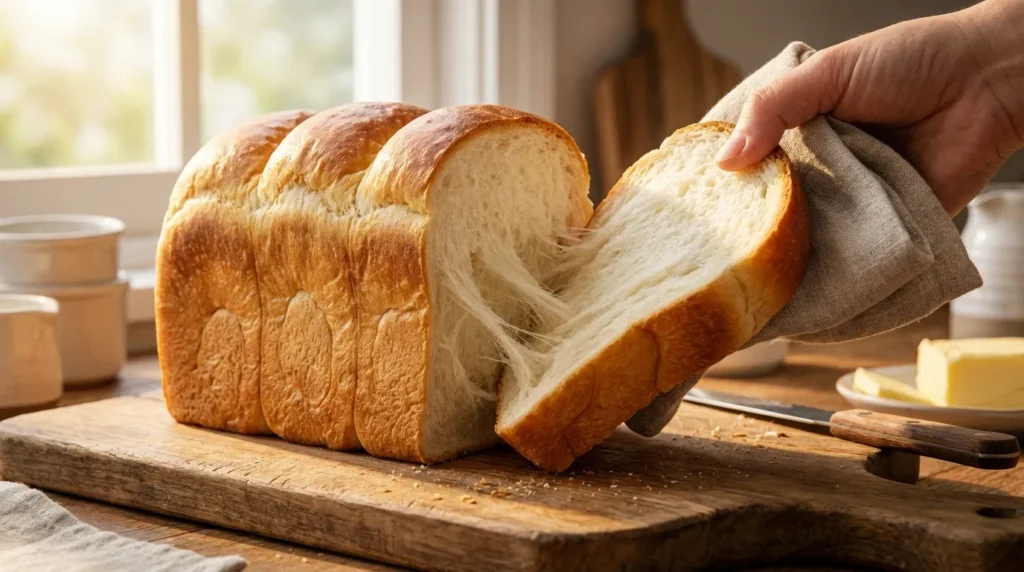
There is a moment when you pull apart a fresh loaf of Japanese milk bread that is purely magical. The crust yields instantly, revealing a steaming, cotton-like interior that shreds into wispy, cloud-like layers. If you have ever wondered how Japanese bakeries achieve that impossible softness that puts standard white bread to shame, you are in the right place. After years of testing hydration levels and flour types in my own kitchen, I’ve finally perfected a shokupan recipe that delivers that signature “mochi-mochi” (chewy and soft) texture without requiring commercial additives.
This isn’t just another white bread. This is the holy grail of sandwich loaves. The secret lies in a Japanese technique involving a cooked water-roux, which gelatinizes the starch and allows the dough to hold more moisture. The result? A loaf that stays soft for 3 to 4 days on the counter. Whether you want to make the perfect egg salad sando or just want the best buttered toast of your life, this shokupan recipe will change the way you view homemade bread.
Why You’ll Love This Shokupan Recipe
If you are intimidated by yeast breads, don’t be. This recipe is surprisingly forgiving once you understand the texture of the dough. Here is why this specific shokupan recipe has become a staple in my home:
- Unmatched Texture: By using the Tangzhong method (a cooked flour paste), we lock moisture into the dough. This creates a crumb that is incredibly bouncy, fluffy, and resistant to staling.
- No Preservatives: Unlike store-bought white bread which is often laden with stabilizers, this recipe shokupan uses simple, wholesome ingredients to achieve that pillowy consistency.
- Versatile Slicing: Because of its tight crumb structure, you can slice this bread paper-thin for sandwiches or cut distinctively thick “Texas toast” style slabs for French toast.
- Bakery Quality at Home: Friends often ask me which bakery I bought this from. Telling them it came out of my standard home oven is always the best part.
Ingredients & Substitutions
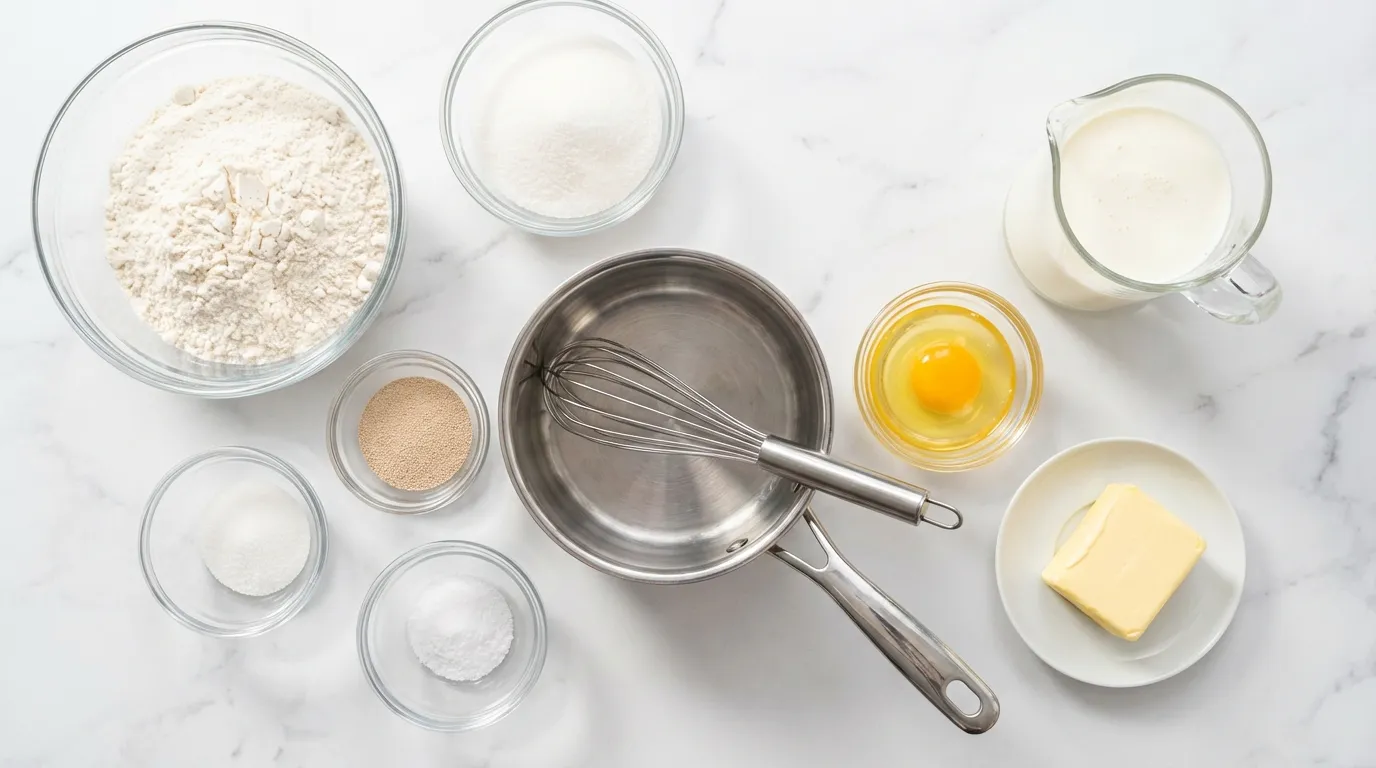
To get that authentic taste and texture, ingredient precision matters. Here is what you need to know before you shop.
- Bread Flour: This is non-negotiable. You need a high protein content (at least 12-13%) to develop the strong gluten network required to lift this bread. All-purpose flour will result in a flatter, denser loaf that lacks the signature chew.
- Milk & Heavy Cream: Many shokupan recipes use only milk, but I swap a portion of the milk for heavy cream. This adds milk fat, which tenderizes the gluten strands and gives the bread a rich, milky aroma.
- Sugar: We use a slightly higher amount of sugar than standard Western loaves. It doesn’t make the bread “sweet” like a cake, but it complements the milky flavor and helps with browning.
- Yeast: I prefer using Instant Yeast (SAF Gold is excellent for enriched doughs) because you can add it directly to the flour. If you only have Active Dry, you must bloom it in the warm milk first.
- Tangzhong (Water Roux): This isn’t an ingredient you buy, but a mixture you make with flour and water (or milk). It is the backbone of this shokupan.
- Milk Powder (Optional): If you want that extra “milky” punch found in Asian bakery loaves, add 2 tablespoons of dry milk powder.
Dietary Note: If you cannot do dairy, you can use oat milk and vegan butter, but the texture will be slightly less fluffy than the traditional dairy-full shokupan recipe.
How to Make Shokupan Recipe
This process requires patience. We aren’t just mixing and baking; we are building structure. I have broken this down into phases to make it manageable.
Phase 1: Making the Tangzhong (The Secret Weapon)
The Tangzhong method is a technique with origins in Japan (often associated with Yukone or Yudane) that involves cooking a portion of the flour and liquid.
1. In a small saucepan, whisk together 20g of bread flour and 100ml of water (or milk) until no lumps remain.
2. Place over low-medium heat. Cook, stirring constantly, for about 3-4 minutes.
3. The mixture will thicken into a paste that resembles glue or mashed potatoes. When your spoon leaves trails in the mixture (lines that don’t immediately fill back in), it is done.
4. Chef’s Tip: Transfer this to a small bowl and cover it with plastic wrap touching the surface to prevent a skin from forming. Let it cool to room temperature. Do not use it hot, or you will kill your yeast!
Phase 2: The Dough & The Knead
This is where the magic happens. This dough will be sticky. Do not panic.
1. In the bowl of a stand mixer, combine your dry ingredients: bread flour, sugar, instant yeast, and salt. (Keep the salt away from direct contact with the yeast initially).
2. In a separate jug, whisk the warm milk (approx. 30°C/86°F), heavy cream, and egg.
3. Add the cooled Tangzhong and the liquid mixture to the dry ingredients.
4. Mix on low speed with the dough hook until a shaggy dough forms.
5. Turn the speed up to medium-low and knead for about 5-7 minutes. The dough will look sticky and adhere to the sides.
6. Add the room-temperature butter one tablespoon at a time, waiting for each piece to incorporate before adding the next.
7. Chef’s Tip: Once the butter is in, turn the mixer to medium-high. Knead for another 8-10 minutes. You are looking for the “Windowpane Effect.” Take a small piece of dough and stretch it. If it stretches into a thin, translucent membrane without tearing, your shokupan dough is ready. If it tears, keep kneading!
Phase 3: The First Rise (Bulk Fermentation)
1. Shape the dough into a smooth ball. It should feel tacky but smooth, like a baby’s cheek.
2. Place it in a lightly greased bowl. Cover with a damp towel or plastic wrap.
3. Let it rise in a warm spot (ideally 25°C-28°C) for 60 to 90 minutes, or until it doubles in size.
4. Chef’s Tip: If your kitchen is cold, place the bowl in the oven (turned off) with a cup of boiling water next to it to create a warm, humid environment.
Phase 4: Shaping the Loaf
The shaping technique gives shokupan its characteristic shreddable texture.
1. Punch the dough down gently to release gas. Divide the dough into equal pieces (usually 3 pieces for a standard loaf pan).
2. Roll each ball into a neat round, cover, and let them rest on the bench for 15 minutes. This relaxes the gluten so you can roll it out.
3. Take one ball and roll it out into a long oval. Fold the left side into the center, then the right side over it (like a letter).
4. Roll over this folded strip gently to flatten it slightly, then roll it up from the bottom to the top into a tight spiral (like a snail).
5. Repeat with the other pieces.
6. Place the spirals into your greased loaf pan (Pullman tin or standard loaf pan).
Phase 5: Final Proof & Bake
1. Cover the pan and let it rise again. This usually takes 45-60 minutes. The dough should rise until it is about 1 inch below the rim of the pan (if using a lid for a square loaf) or cresting the top (for a rounded top).
2. Preheat your oven to 350°F (175°C).
3. Brush the top gently with an egg wash (egg mixed with a splash of milk) for a golden shine.
4. Bake for 30-35 minutes. If the top gets too dark too quickly, tent it with aluminum foil after 20 minutes.
5. Chef’s Tip: To ensure it is done, tap the bottom of the loaf; it should sound hollow, or register 190°F (88°C) on an instant-read thermometer.
6. Remove from the pan immediately and let it cool on a wire rack.
Expert Tips for Perfect Results
I have made many mistakes with shokupan recipes so you don’t have to. Here are the keys to restaurant-quality bread:
- Weigh Your Ingredients: I cannot stress this enough. Cups are unreliable. Using a digital scale ensures the hydration ratio is perfect. Too much flour makes a brick; too much liquid makes a mess.
- The Windowpane Test is King: Do not rely solely on time when kneading. Depending on your mixer’s strength and the humidity, kneading can take 15 minutes or 25 minutes. If you don’t pass the windowpane test, the bread will not rise as high or be as fluffy.
- Don’t Slice It Hot: I know, the smell is intoxicating. But if you slice shokupan while it’s hot, the steam escapes rapidly, the starch structure collapses, and the bread becomes gummy. Wait at least 1 hour until it is completely cool.
- Room Temperature Ingredients: Cold milk or cold eggs can shock the yeast and slow down fermentation. Make sure everything is at room temperature before you start.
Storage & Reheating
Because of the Tangzhong, this bread has a better shelf life than standard loaves.
- Counter Storage: Store the bread in an airtight bag or bread box at room temperature. It will stay soft for 3-4 days.
- Freezing: This is the best way to store it long-term. Slice the entire loaf, wrap slices individually in plastic wrap, and place them in a freezer bag. They last for up to 2 months.
- Reheating: Do not refrigerate this bread; the cold air crystallizes the starch and makes it stale faster. To reheat, simply pop a frozen slice directly into the toaster. It will taste freshly baked. If you want it soft (not toasted), microwave a slice for 15-20 seconds with a small mug of water in the microwave to keep it moist.
Serving Suggestions
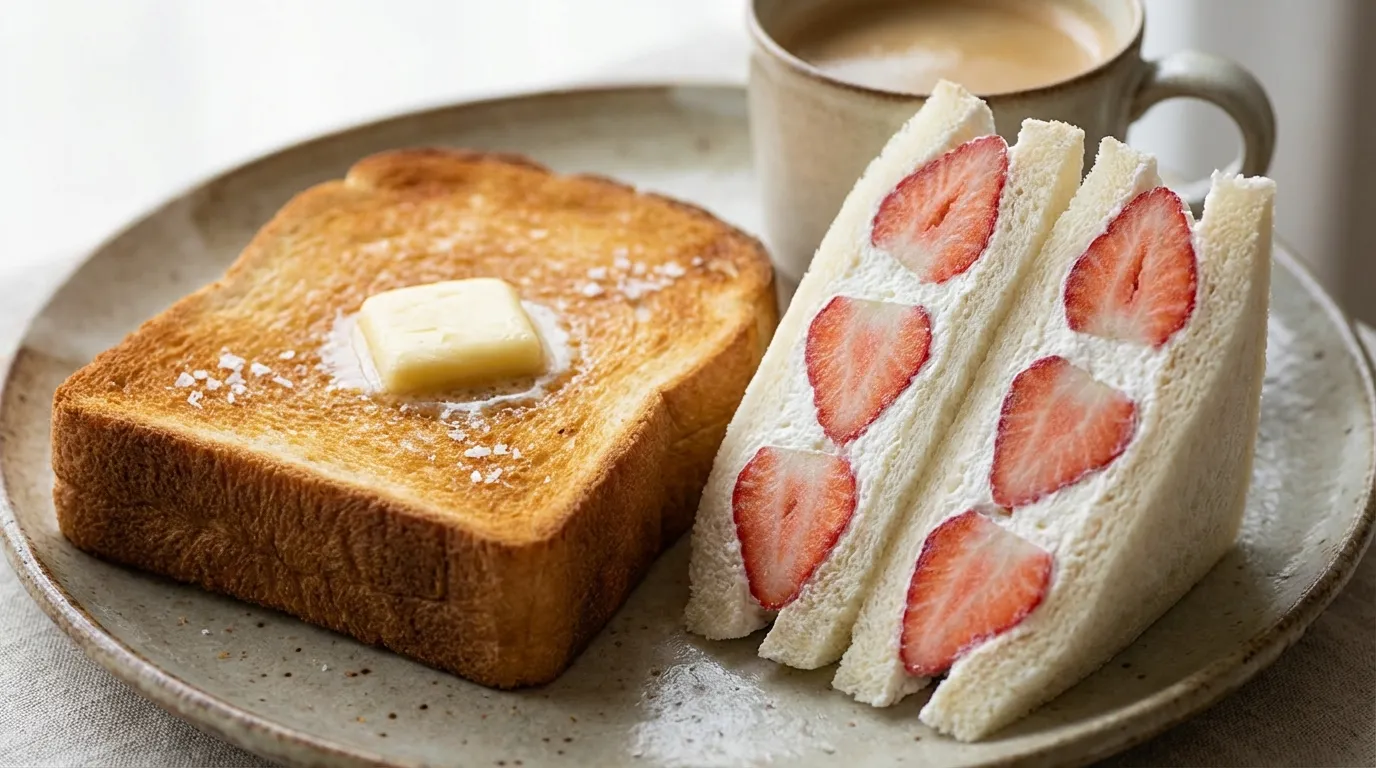
You have made this beautiful loaf, now how should you eat it?
- The Classic Toast: Slice it thick (at least 1 inch), toast until golden, and slather with salted butter. The contrast between the crunchy exterior and the milky, soft interior is incredible.
- Japanese Fruit Sando: Use two slices of fluffy shokupan, fill with sweetened whipped cream and fresh strawberries or kiwi. Slice off the crusts for the traditional look.
- Tamago Sando: Mash hard-boiled eggs with Japanese mayonnaise (Kewpie) and scallions. The soft bread pairs perfectly with the creamy egg salad.
If you love homemade loaves but prefer a tangier flavor profile or a more hands-off approach, you should check out this sourdough bread machine recipe for a completely different texture profile that pairs beautifully with savory soups.
Conclusion
Mastering this shokupan recipe feels like a major culinary achievement, yet the steps are simple enough for a weekend project. There is a deep satisfaction in watching the dough rise and smelling that sweet, milky aroma fill your kitchen. Once you try this, you will find it very hard to go back to the plastic-wrapped loaves at the supermarket.
The effort of making the Tangzhong and the patience required for the double rise pays off the moment you take that first bite. It is soft, slightly sweet, and utterly comforting.
Did you make this recipe? I’d love to see your fluffy loaves! Rate the recipe below and leave a comment about how it turned out.
Common Questions About Shokupan Recipe
Can I make this dough by hand?
Yes, you can, but be prepared for a workout! The dough is very sticky initially. Using the “slap and fold” technique works best for high-hydration doughs like this. It may take 20-30 minutes of hand kneading to reach the windowpane stage.
Why did my shokupan collapse after baking?
This usually happens if the bread was under-baked (the structure wasn’t set) or if it over-proofed before going into the oven. If the dough rises too much in the pan, the gluten structure becomes too weak to hold up the heavy dough, causing it to sink.
Do I need a Pullman loaf pan (with a lid)?
No, a standard loaf pan works perfectly fine for this shokupan recipe. A Pullman pan with a lid gives you a perfectly square loaf (great for sandwiches), while an open tin gives you a rounded, mountain-top loaf. Both taste exactly the same.
Can I use active dry yeast instead of instant?
Absolutely. If using active dry yeast for this shokupan recipe, mix it with the warm milk and a pinch of sugar first. Let it sit for 10 minutes until it gets foamy, then proceed with the recipe.
What is the difference between Shokupan and Brioche?
While both are enriched breads, Brioche relies heavily on a massive amount of butter and eggs for its richness. Shokupan relies on the Tangzhong method and milk/cream for moisture. Shokupan is generally lighter, fluffier, and less “cake-like” than Brioche, making it better for savory sandwiches.